Nail care doesn’t mean you have to visit a salon or have an incredibly large drawer full of tools. With proper nail care tools, you can keep your nails in good condition, strong, and properly shaped at home. It does not matter if you are a novice or want to improve your routine; it really makes a difference to know which tools are indispensable.
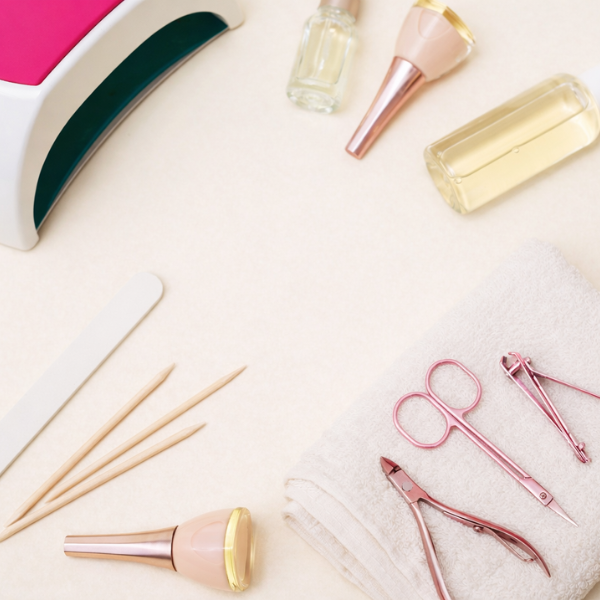
This guide clears the air by presenting the basic nail care tools, ways to use them safely, and teaching which ones are worth investing in—no confusion involved.
Why Using the Right Nail Care Tools Changes Everything
The application of incorrect manicure instruments could result in the occurrence of cracks, peeling, and the destruction of cuticles. But correct tools for nail care can:
- No more splitting nails and jagged edges
- Cuticles stay clean and healthy
- At-home manicures appear professional and perfect, similar to well-maintained clean girl nails or minimalist regular nail styles.
- Less frequent trips to the beauty salon
Luxury does not define good tools—they rather refer to nail care and regularity.
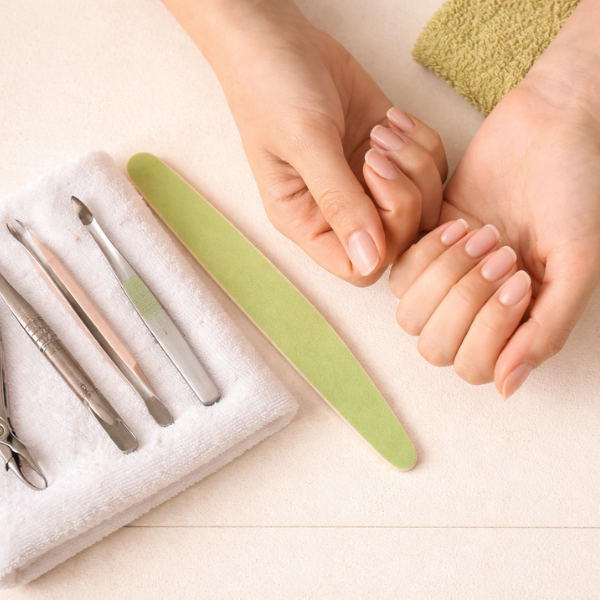
Must-Have Nail Care Tools for a Basic At-Home Manicure
You don’t need everything—just the essentials.
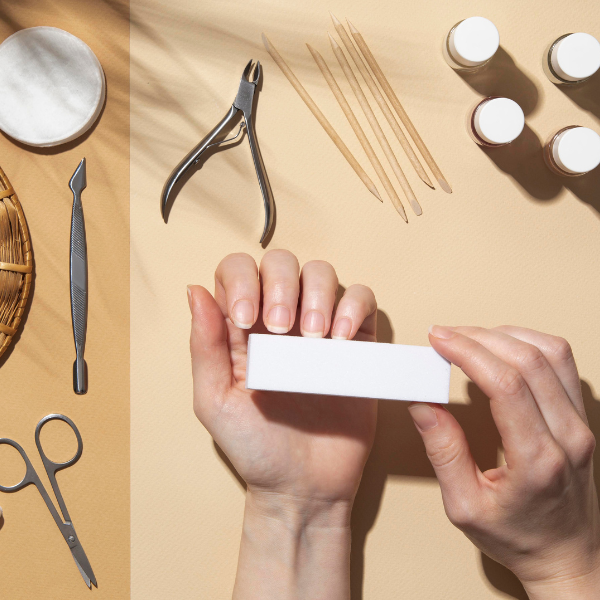
Nail Clippers & Nail Files
- Superior nail trimmers for smooth edges
- Glass nail files and/or fine-grit files to avoid breaking
- Buffers for ridges equalization
Nail-Friendly Cuticle Instruments
- Cuticle pusher for soft shaping
- Cuticle snips (limited use)
- Cuticle oil to maintain moisture in the spot
Tools for Cleansing & Preparation
- Nail scrubber for cleansing
- Polish remover (preferably acetone-free)
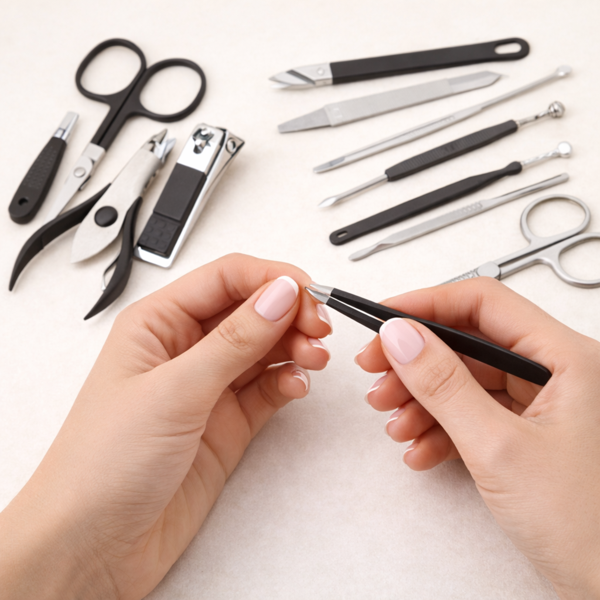
This is the kind of basic setup I actually use for at-home manicures—what I use for home manicures—because it covers all the essentials without feeling overwhelming.
Nail Care Tools Beginners Should Start With (Safe Picks)
If you are unacquainted with nail care, commence with basics. The top-notch nail care implements for novices are manageable and with little chances of causing harm.
The essentials for a beginner:
- Clippers for nails
- Nail file made of glass
- Cuticle pusher
- Nail brush
- Basic buffer
Do not use electric tools in the beginning unless you are sure—they are useful, but not really needed at first.
Best Nail Care Tools for Healthy, Natural Nails
If you’re aiming for growth and strength, then concentrate on protective tools rather than those that aggressively shape. Tools to be sought after are:
- Nail shapers with fine grit.
- Manicure tools made out of stainless steel.
- Tools meant for natural nails.
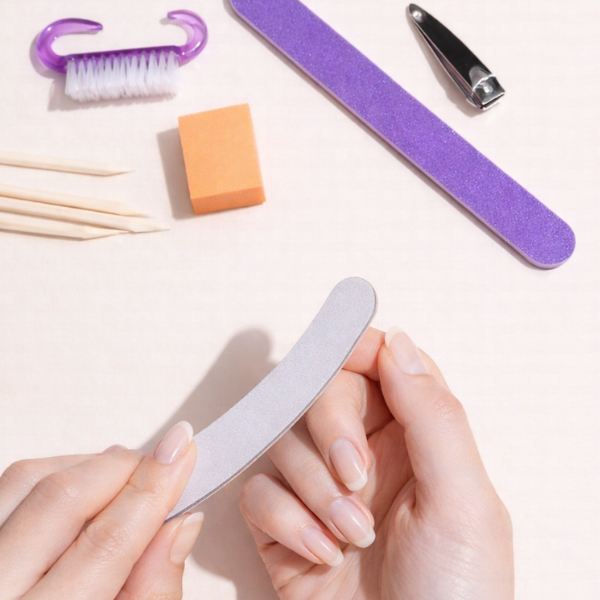
This works well if the focus is keeping natural nails strong and healthy rather than over-shaping them. For healthy nail care, it feels gentle and supports growth without unnecessary damage.
Electric vs Manual Nail Care Tools — Which Is Better?
Both methods are appropriate for different situations.
Manual nail care tools
Manual tools are safer and easier for beginners, offering better control with less risk of nail damage. They’re ideal for basic shaping and routine nail care.
Electric nail tools
Electric tools work faster and are useful for gel polish removal, especially if you regularly wear gel nails or gel X nails or thicker nails, but they require practice. If you’re new to nail care, start with manual tools and switch to electric options once you’re more confident.
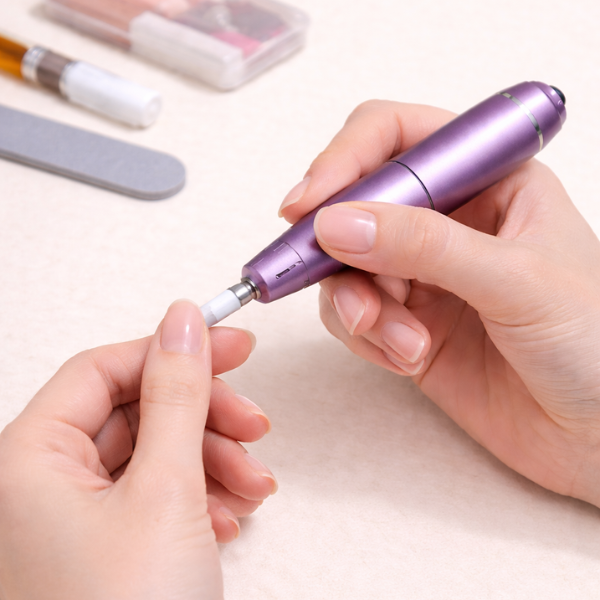
This is a beginner-friendly option that feels easy to control at home. Helpful when extra control is needed, it makes easing into electric tools less intimidating.
Advanced Nail Tools (For Salon-Style Results at Home)
Once you’re comfortable with basic nail tools, upgrading to a gel manicure kit can help you achieve longer-lasting, salon-style results at home. These kits are ideal for regular gel users who want glossy, chip-resistant nails without frequent salon visits.
Nail Care Tools Based on Nail Problems
Different nails need different solutions.
For Brittle or Peeling Nails
- Glass nail file
- Gentle buffer
- Nail strengthening tools
In case of Overgrown or Dry Cuticles
- Cuticle pusher
- Cuticle oil
- Precision cuticle trimmer
For Uneven Nail Shape
- Nail file with controlled grit
- Buffer block
Deciding on your nail problem solving tools results in quicker outcomes.
How to Make Nail Care Tools Last Longer
Tool maintenance matters more than most people realize.
- Clean tools after every use
- Disinfect cuticle tools regularly
- Store manicure tools in a dry case
- Replace files once they wear down
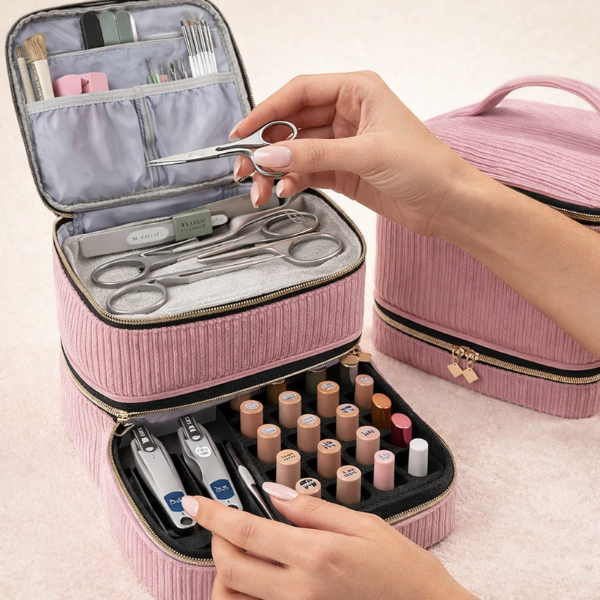
Keeping everything clean and in one place makes nail care feel much less chaotic. Tools stay organized, so everything is easy to find and properly stored.
Mistakes That Ruin Nails (Even with Good Tools)
If you are doing these blunders, even the most excellent nail care kit won’t help you:
- Grinding back and forth very harshly
- Cutting cuticles rather than gently pushing
- Employing blunt nails clippers
- Neglecting tools cleanliness
A minor change results in a huge difference.
How to Build a Simple Nail Care Routine at Home
A low-maintenance routine works best.
Weekly
- Trim and shape nails
- Push cuticles gently
- Clean tools
Monthly
- Replace worn tools
- Deep clean manicure tools
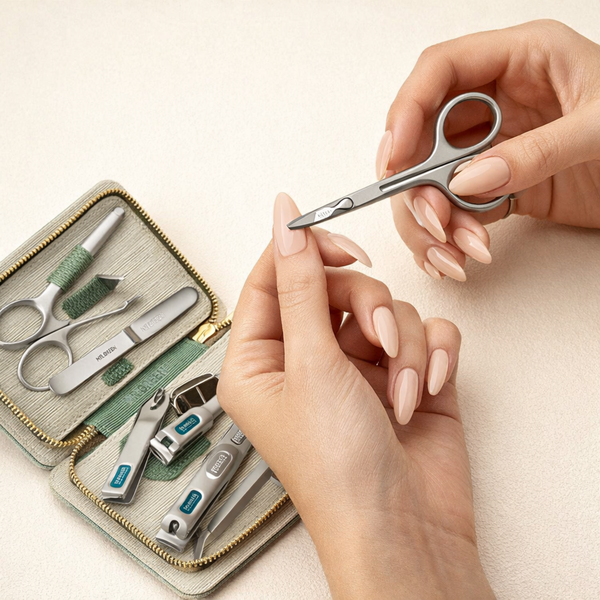
This is a good option if you want one setup that supports a consistent routine at home. A solid home nail routine stays simple and manageable with tools like this.
FAQs About Nail Care Tools
How often should nail care tools be replaced?
Files and buffers every few months; metal tools last years with care.
Are professional nail tools worth it?
Yes, especially stainless steel tools—they’re safer and more durable.
Can beginners use professional manicure tools?
Yes, if they start with basic, manual options.
Final Thoughts
Correct nail care instruments make the whole process of nail maintenance easy, low-priced, and efficient. Don’t think about number of tools, rather, their quality and also pick those which will be most beneficial to your nails, then gradually develop a daily routine that you can maintain.
Nails with proper care are not a big deal—you only have to rely on the right instruments.

Hi, I’m Amber — the creator behind Dazzle Me Nails. I started this site because I’ve always believed nails aren’t just about beauty — they’re about confidence, self-expression, and feeling put together in the simplest way. Like many of you, I’ve struggled with weak nails, chipped polish, and designs that looked good online but didn’t work in real life, which is why I created Dazzle Me Nails to share nail ideas that are practical, wearable, and easy to recreate. Here, you’ll find minimalist nail designs, trend-inspired looks, and simple nail care tips to help you achieve clean, polished nails without over complicating your routine. If you love soft, classy, and effortless nail styles — you’re in the right place