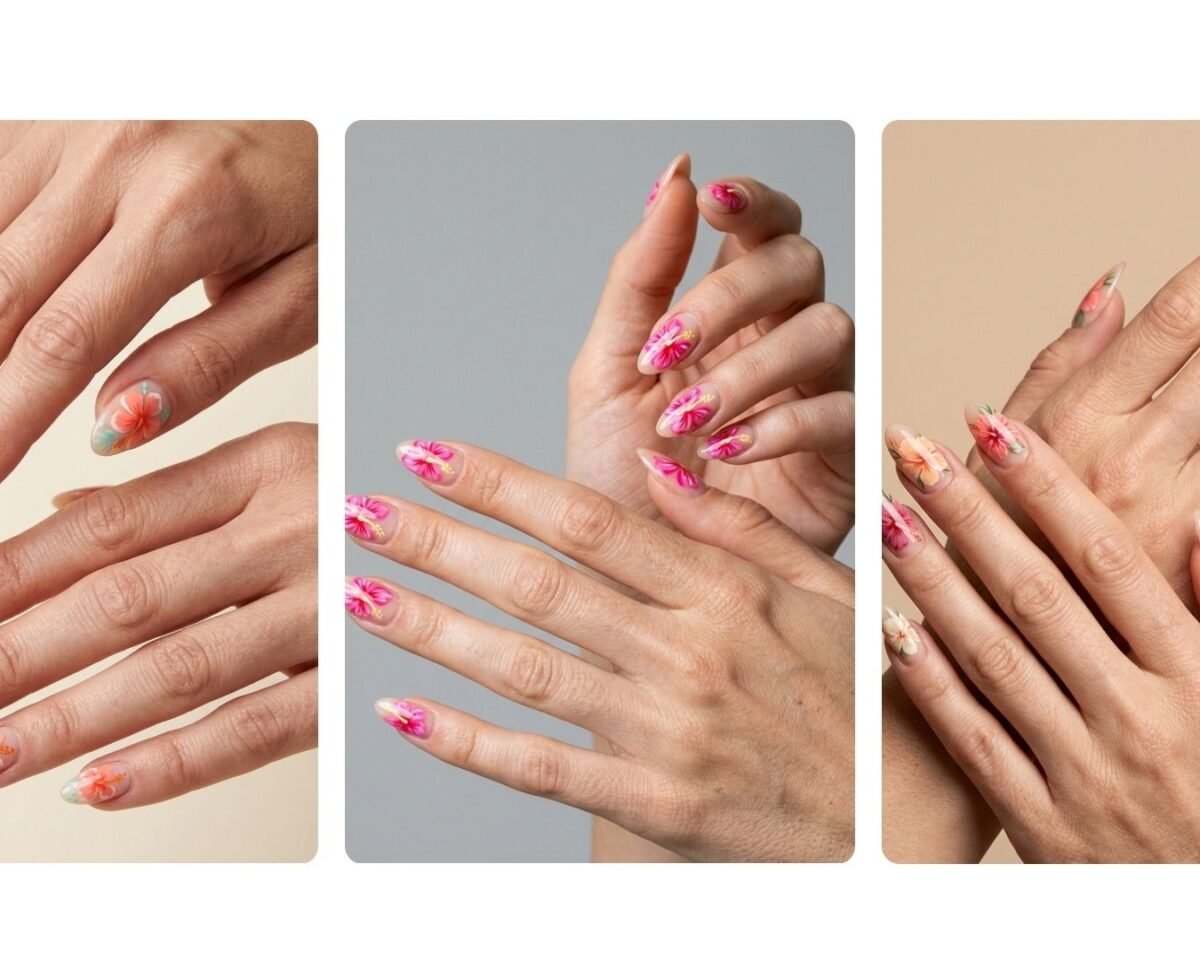
If there’s one floral manicure that instantly brings tropical vacations, sun-soaked beaches, and playful summer beauty to mind, it’s the hibiscus flower nail trend. Unlike tiny daisies or delicate botanical details, hibiscus flowers naturally command attention. Their sweeping petals, distinctive centers, and vibrant tropical colors make them perfect for manicures that feel feminine, artistic, and full of personality.
Today’s hibiscus manicures also go far beyond the traditional Hawaiian flower painted over a bright base. Nail artists are experimenting with blurred airbrushed petals, watery finishes, nostalgic Y2K patterns, unexpected color combinations, negative space, and creative flower placement. These details give the trend a fresh, fashion-forward personality while preserving the tropical energy that makes hibiscus designs instantly recognizable.
Another reason the hibiscus flower nail aesthetic works so well is its versatility. You can keep the design delicate with a translucent nude base and a single flower, or embrace something much more expressive with colorful French tips and oversized tropical blooms. Different nail lengths, shapes, and finishes can completely change the personality of the manicure.
If you want to recreate these looks at home, having a versatile nail art brush set can make it much easier to paint fine petal edges, flower centers, and delicate tropical details.
Below are 10 fresh hibiscus-inspired manicure ideas, starting with five creative designs in Part 1.
Why Hibiscus Flower Nail Art Is Taking Over Right Now
Floral nails return every spring and summer, but hibiscus designs feel particularly relevant because they naturally fit several beauty trends happening at the same time.
Tropical and vacation-inspired manicures remain popular during warmer months, while Y2K beauty has brought glossy finishes, colorful French tips, pearlescent textures, bright patterns, and playful florals back into focus. Hibiscus flowers fit perfectly into both worlds.
The flower itself is also incredibly adaptable. A hibiscus doesn’t have to be recreated like a botanical illustration to remain recognizable. Nail artists can blur the petals, simplify them into outlines, enlarge them until only part of the flower appears, or spread a single bloom across multiple nails.
That creative flexibility gives hibiscus flower nail art much more range than a traditional repeated floral pattern.
Color is another reason the trend feels fresh. Pink, coral, and red remain natural choices, but they’re no longer the only options. Ocean blue, watermelon green, butter yellow, pearlescent shades, deep plum, and translucent neutrals can all create completely different interpretations.
The finish matters too. A high-shine gel top coat can give tropical colors that glossy, freshly finished salon appearance while helping detailed floral artwork look crisp and dimensional.
Whether you prefer minimalist nails, colorful Y2K manicures, artistic designs, or full tropical glamour, there’s room to interpret hibiscus flowers in a way that still feels personal.
1. Airbrushed Sunset Hibiscus Nails
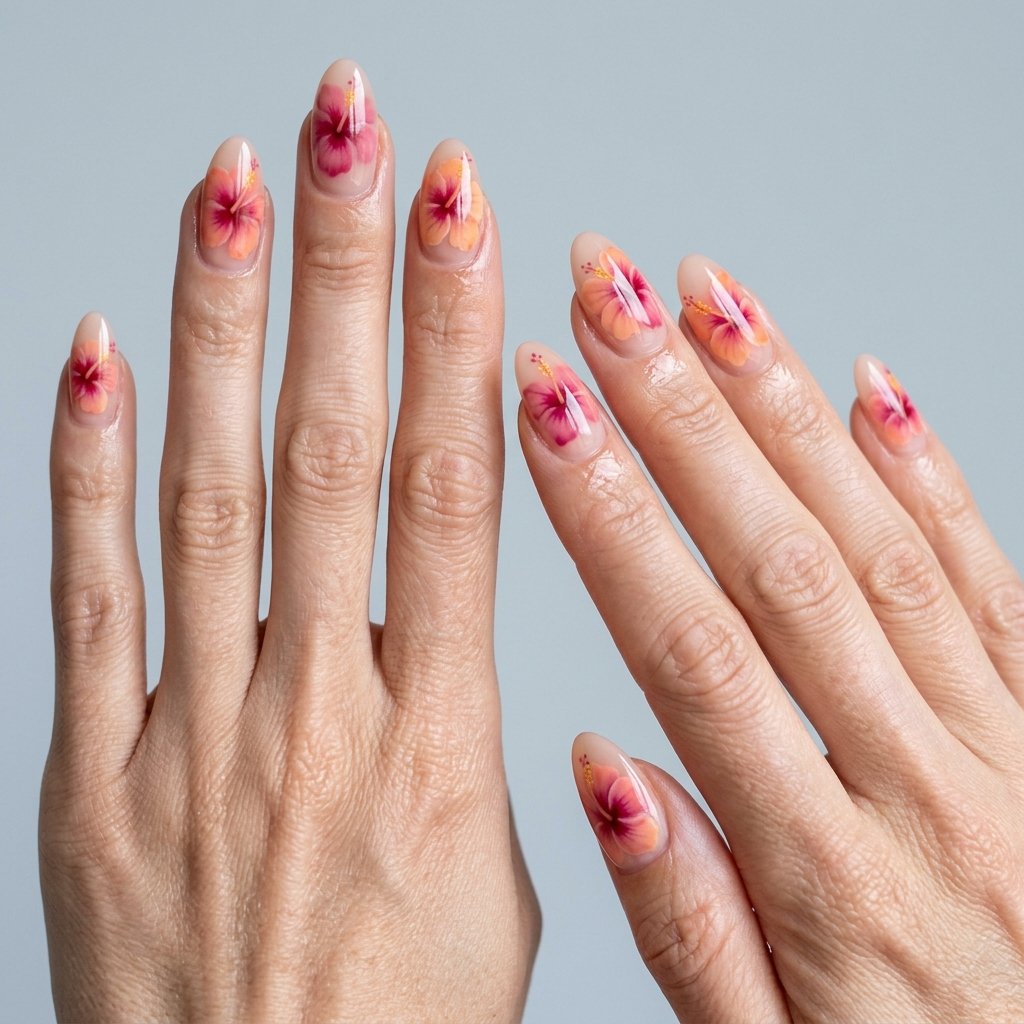
Soft-focus floral artwork gives hibiscus nails an almost dreamy quality. Rather than defining every petal with a dark, precise outline, this design allows coral, raspberry pink, peach, and warm orange to softly blend together.
The result resembles the colors of a tropical sunset.
Start with a translucent milky or sheer nude base so the warm shades remain the focus. Larger hibiscus flowers can be positioned across two or three accent nails, with the edges gradually fading into the base. A slightly deeper shade through the center keeps the flower recognizable while preserving the diffused effect.
What makes this manicure especially interesting is its movement. The petals don’t appear rigid or perfectly symmetrical. Instead, their soft edges create the impression of flowers caught in hazy golden-hour light.
For an even more editorial interpretation, let one oversized bloom extend beyond the visible nail area. Only part of the flower needs to appear for the design to make sense.
The hibiscus flower nail trend feels particularly sophisticated in this softer form because you get tropical color without relying on heavy outlines or overly busy artwork.
Style Insight: Ask for diffused, airbrushed edges rather than solid blocks of color. Keep the flower centers slightly deeper to maintain definition.
Who It Suits: Anyone who loves tropical manicures but prefers dreamy, artistic designs over graphic florals.
When to Wear: Summer vacations, resort weekends, beach dinners, honeymoons, and sunset events.
2. Watermelon Palette Hibiscus Nails
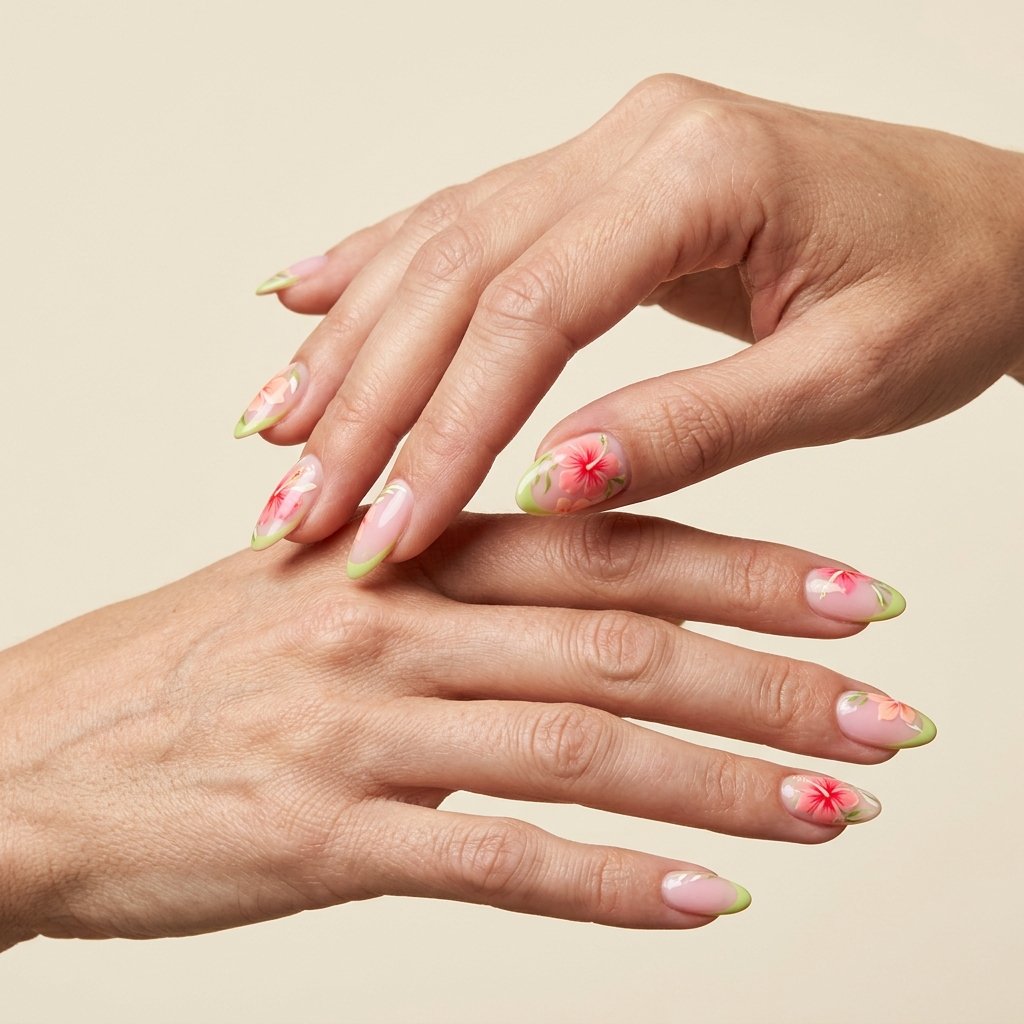
Fruit-inspired manicures don’t always need literal fruit illustrations. Sometimes borrowing the colors creates a more wearable result.
For this look, combine juicy watermelon pink with fresh green, soft peach, and small touches of creamy white. The palette immediately feels energetic and summery while giving traditional tropical florals a playful update.
Begin with a sheer pink base. Paint coral or watermelon-pink hibiscus flowers on selected nails, then introduce lime or leafy green through French tips, tiny accents, or delicate tropical leaves.
The trick is controlling how much green appears. It should complement the flowers rather than compete with them.
A collection of bright summer gel nail polishes can be useful for recreating this type of manicure because you can combine pink, coral, peach, and green shades while keeping the finish consistent across the entire set.
You can also alternate the intensity from finger to finger. One nail might feature an oversized flower, another a bright green tip, while a third stays mostly translucent with a tiny floral accent.
That variation keeps the manicure interesting without making every nail look unrelated.
Style Insight: Let pink and coral dominate the palette while using vivid green as an accent. This keeps the hibiscus flowers visually prominent.
Who It Suits: Color lovers who enjoy bright summer manicures, tropical palettes, and playful Y2K styling.
When to Wear: Pool parties, tropical vacations, summer festivals, birthdays, and sunny weekends.
3. Aquatic Blue Hibiscus Nails
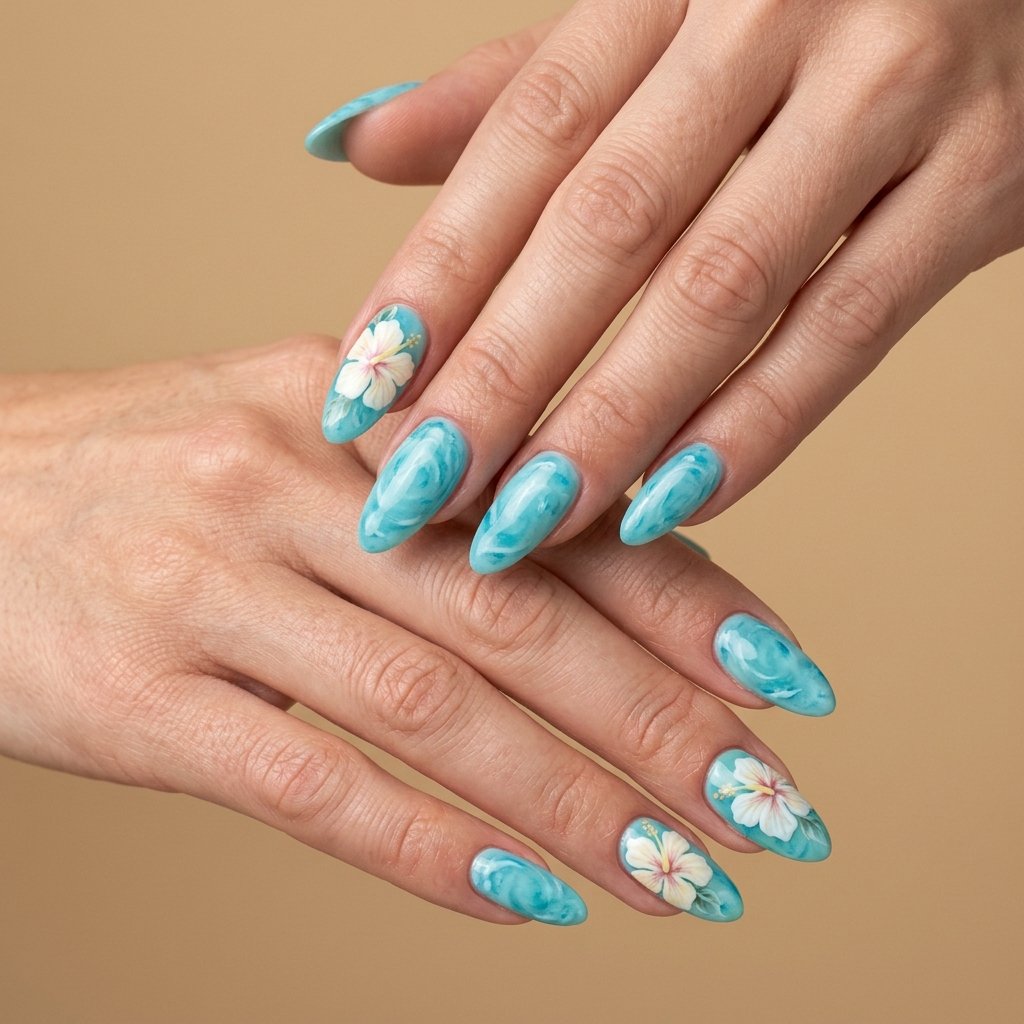
Tropical nail art is often associated with warm pinks and oranges, but cool ocean shades can make hibiscus flowers look just as striking.
This design starts with turquoise, aqua, or lagoon blue inspired by clear tropical water. Instead of using one flat color, subtle translucent layers can create depth, while faint ripple-like details mimic the appearance of sunlight moving across the surface of a swimming pool or ocean.
White or soft ivory hibiscus flowers provide the contrast.
Against the blue background, every petal becomes clearly visible, making this one of the most refreshing ways to interpret hibiscus flower nail art.
The design doesn’t need palm trees, seashells, or several additional beach motifs. The watery base establishes the coastal mood while the hibiscus brings in the tropical element.
For a cleaner manicure, keep several nails predominantly blue and reserve detailed flowers for two or three fingers. Tiny white highlights can then be repeated across the remaining nails to connect everything visually.
Style Insight: Use white, ivory, or very pale pink for the flowers. Dark blue floral artwork can disappear into the aquatic background.
Who It Suits: Anyone who prefers cool-toned manicures or loves ocean and water-inspired nail art.
When to Wear: Beach holidays, cruises, island vacations, poolside parties, and peak summer.
4. Y2K Pink Paisley Hibiscus Nails
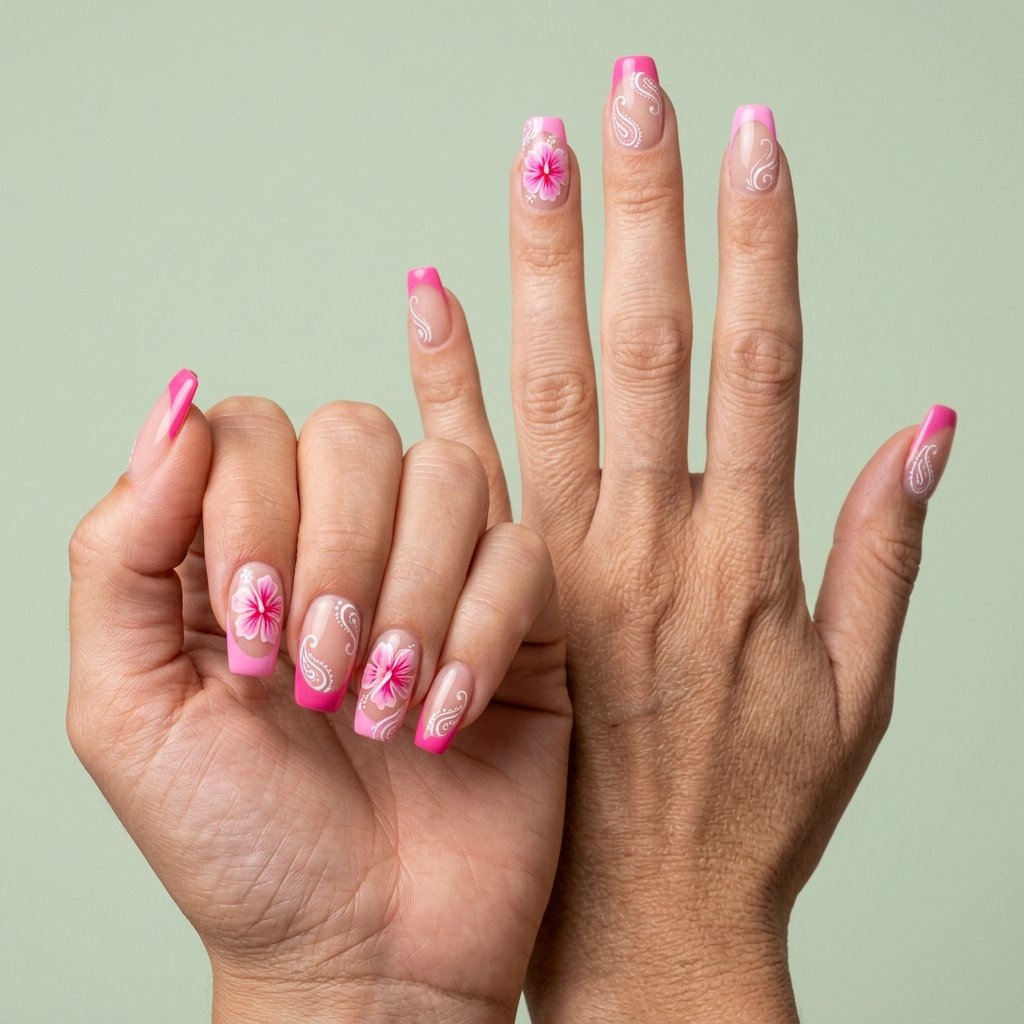
The Y2K revival has brought playful patterns, bright French tips, glossy finishes, and nostalgic beach style back into beauty, and hibiscus flowers fit naturally into that aesthetic.
Start with a sheer nude or translucent pink base and add glossy bubblegum or hot-pink French tips. Then layer hibiscus flowers with flowing paisley curves, tiny swirls, and fine white accents.
Not every nail needs the same pattern.
One finger can feature a large tropical bloom, another can carry a curved paisley motif, while a third might have only a pink French tip with one tiny white detail. Repeating the same core colors prevents the manicure from looking chaotic.
This design is especially effective on almond or medium square nails because there’s enough surface area for decorative patterns while still allowing the sheer base to remain visible.
A thin nail art liner brush is particularly helpful for recreating the fine paisley curves, petal outlines, and delicate white details that give this manicure its intricate Y2K appearance.
For extra visual interest, vary the flower scale. One nail might show a large cropped hibiscus while another features a miniature flower tucked into the side of the French tip.
Style Insight: Stick to one dominant pink plus white detailing and a neutral base. The limited palette keeps multiple patterns visually connected.
Who It Suits: Fans of Y2K fashion, colorful French manicures, nostalgic beauty, and playful patterns.
When to Wear: Summer parties, concerts, vacations, festivals, and girls’ trips.
5. Corner-Petal Hibiscus French Nails
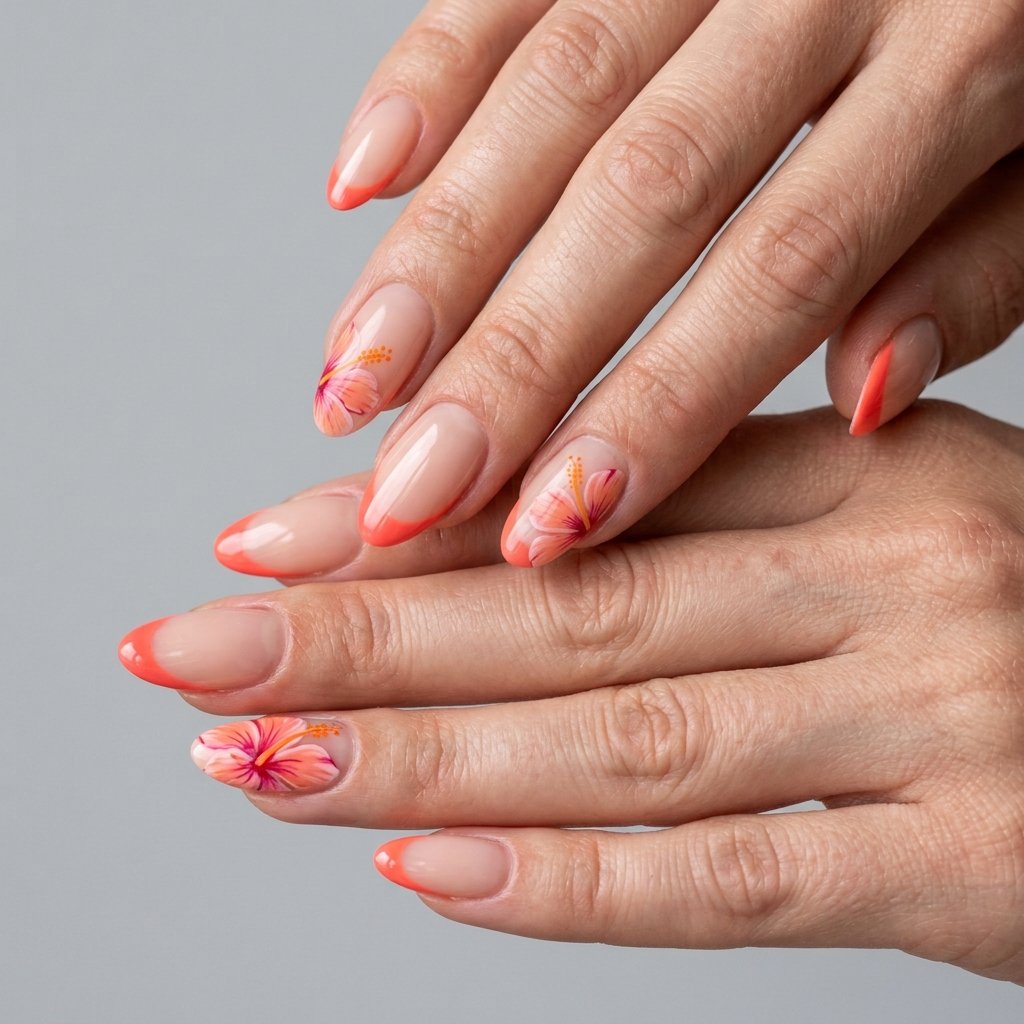
One of the simplest ways to make floral nail art look more contemporary is to rethink where the flower sits.
Rather than centering a complete hibiscus on every nail, this design positions oversized petals along the outer corner or edge. Only part of the flower is visible, almost as though the manicure captured a close-up photograph of a bloom extending beyond the frame.
Start with a clean sheer nude base. Add coral, peach, or tangerine French tips to create a subtle tropical foundation, then introduce large pink or red hibiscus petals on selected fingers.
The petals can slightly overlap the French tip, making the design feel layered rather than separated into two different techniques.
This placement gives hibiscus flower nail art a more editorial personality. Because the flowers are intentionally cropped, there’s no need to squeeze a tiny complete bloom into the center of every nail.
Negative space also becomes part of the design. Leaving areas of the natural-looking base visible allows the oversized petals to feel dramatic without making the manicure too busy.
If you want to recreate the clean translucent foundation at home, a sheer nude gel polish provides a neutral base that allows coral and pink floral artwork to stand out clearly.
For a more understated variation, keep three nails as simple French tips and use corner petals on only two accent fingers. If you prefer something bolder, change the direction and placement of the flower on every nail.
Style Insight: Keep the flowers intentionally oversized. The cropped petal placement is what separates this look from ordinary floral French nails.
Who It Suits: Anyone who enjoys artistic floral manicures but still prefers clean bases and plenty of negative space.
When to Wear: Summer brunches, vacations, beach weddings, daytime events, and everyday warm-weather outfits.
6. Split Hibiscus Flower Nails
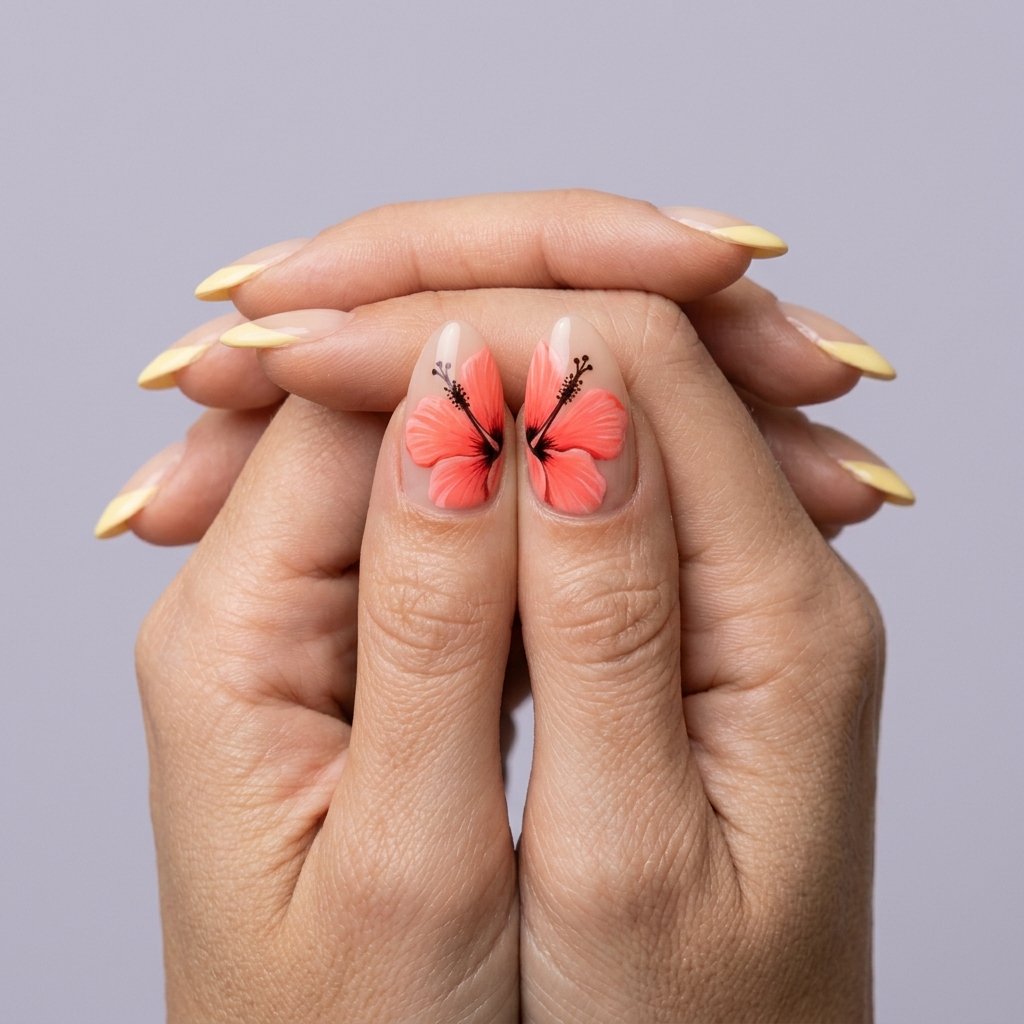
If you want floral nail art that feels genuinely creative without relying on rhinestones or heavy embellishments, split hibiscus nails are one of the most interesting ways to continue the trend.
Instead of painting a complete flower onto a single finger, one oversized hibiscus is divided between two neighboring nails. Half of the petals appear on one nail while the remaining portion continues onto the next. When the fingers naturally rest beside each other, the complete flower comes together.
A sheer nude or milky base keeps the artwork clean, while butter-yellow French tips can introduce a sunny tropical contrast. Add a vivid pink or coral hibiscus across two nails, then keep the surrounding fingers simpler with coordinating French tips.
The placement is what makes this hibiscus flower nail design special. Even though the manicure can look relatively minimal from a distance, bringing the two fingers together reveals the complete artwork.
You can also change the idea depending on your preferred color palette. A white hibiscus over coral French tips creates a bright resort look, while a deep red flower over a translucent pink base feels richer and more dramatic.
Because alignment is important, the petals should be planned while the two fingers are positioned next to one another. This ensures the flower connects naturally instead of looking like two unrelated halves.
Style Insight: Keep the surrounding nails relatively simple. The split flower should be the visual centerpiece rather than competing with several other complex designs.
Who It Suits: Nail-art lovers who appreciate clever details, coordinated designs, and unexpected flower placement.
When to Wear: Summer celebrations, birthdays, vacations, resort trips, and special weekends.
7. Iridescent Mermaid Hibiscus Nails
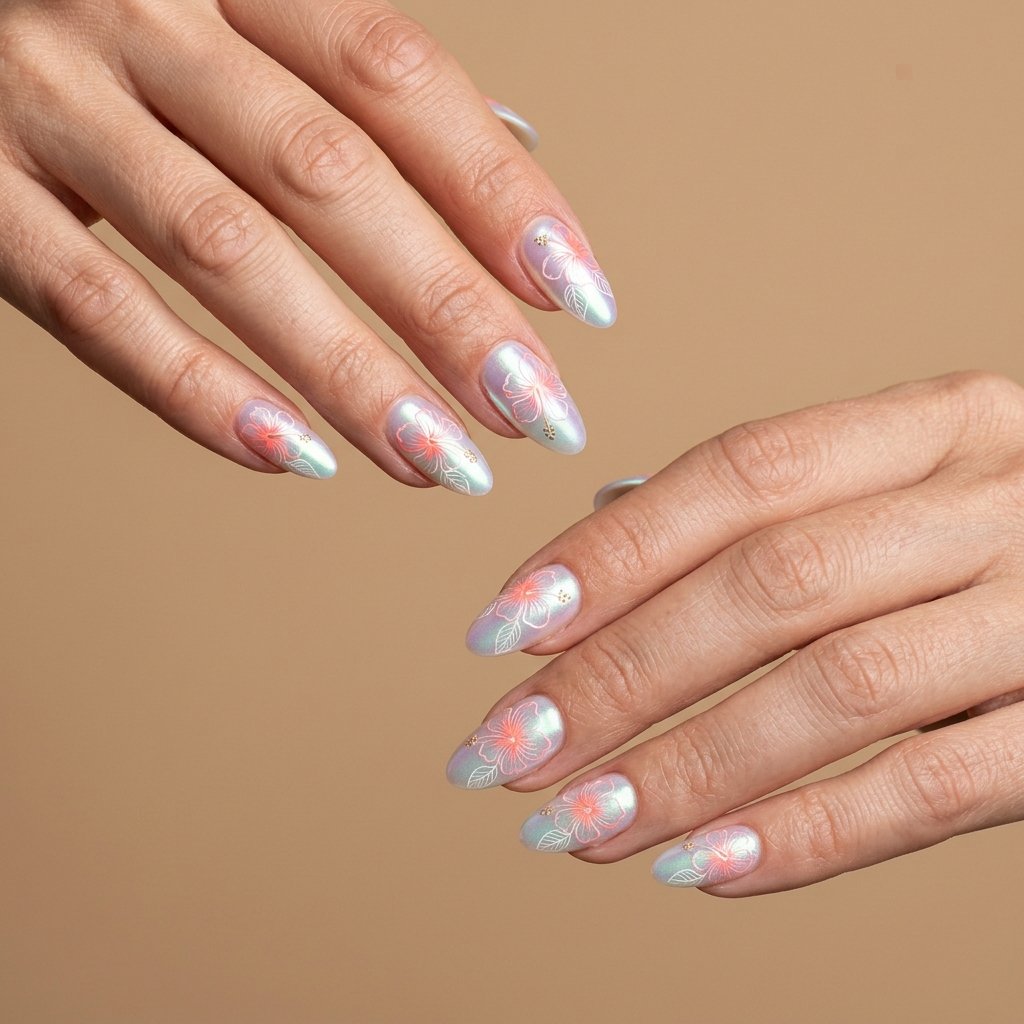
Pearlescent finishes bring a completely different personality to tropical florals. Instead of relying on bright opaque backgrounds, this manicure uses an iridescent surface that subtly shifts as your hands move through the light.
Think soft pearl, pale lavender, seafoam green, and hints of aqua appearing across the same manicure. Over that luminous foundation, fine hibiscus outlines create a delicate tropical focal point.
The combination has an unmistakable Y2K feel without needing to cover the nails in obvious early-2000s symbols.
For the most balanced version, keep the floral artwork relatively delicate. Thick opaque petals could hide the shifting base underneath, while thin white, coral, or pink outlines allow the pearlescent finish to remain visible.
You can also introduce a subtle watery texture on one or two nails while keeping others smooth. This adds dimension without making the entire manicure overly complicated.
What makes this hibiscus flower nail interpretation particularly appealing is how different it looks depending on the lighting. Indoors, the base can appear softly pearlescent; in sunlight, the aqua, lavender, and green reflections become much more noticeable.
Style Insight: Use delicate floral lines and translucent details so the iridescent base remains an important part of the design.
Who It Suits: Anyone who loves mermaidcore, Y2K beauty, pearlescent manicures, and whimsical tropical details.
When to Wear: Beach vacations, poolside parties, festivals, summer evenings, and tropical getaways.
8. Moody Plum Hibiscus Nails
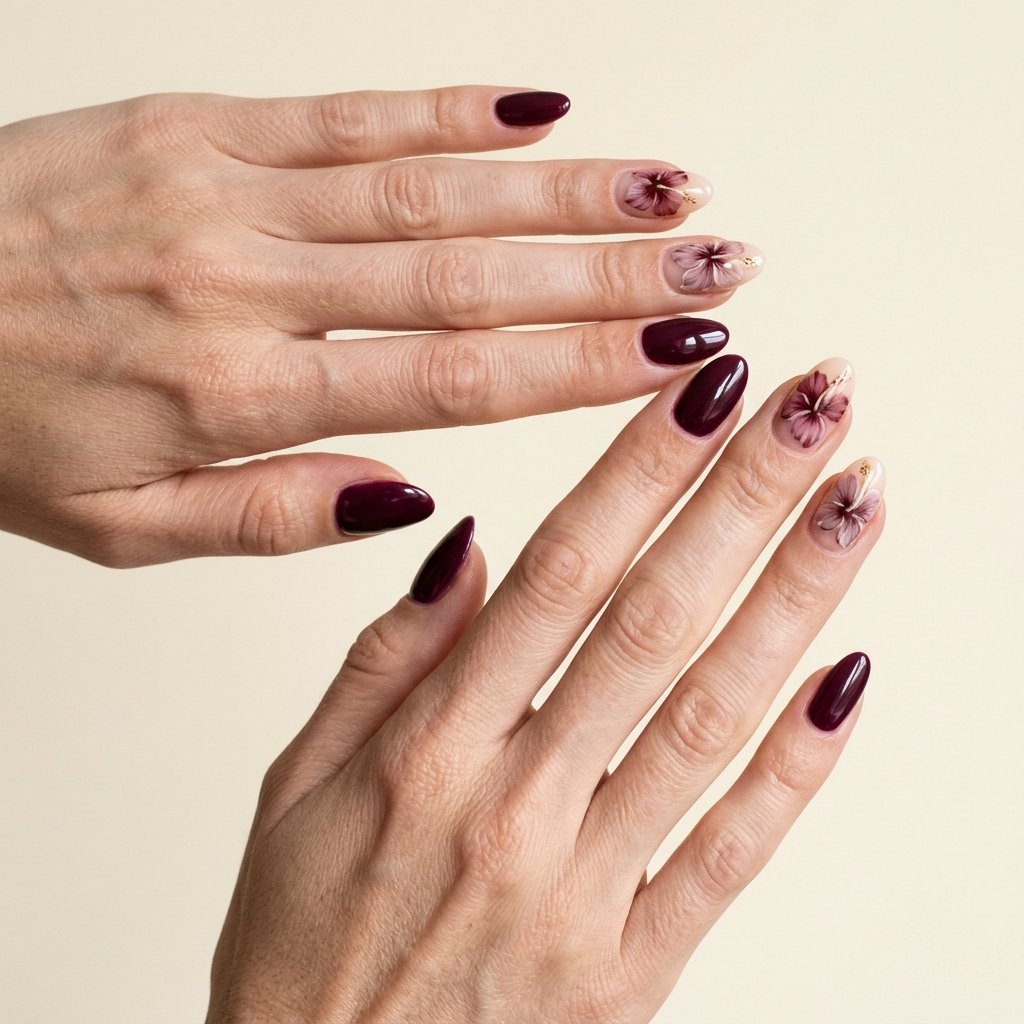
Hibiscus manicures are usually associated with vivid summer shades, but deeper colors can make the tropical flower feel surprisingly sophisticated.
Plum is especially beautiful because it still provides noticeable color without the brightness of neon pink or orange. Pair glossy plum nails with dusty mauve, creamy nude, or translucent blush accents, then introduce burgundy or wine-colored hibiscus flowers.
Instead of decorating every finger, concentrate the floral artwork on a few lighter accent nails. The deeper flowers will remain visible against the soft base while the solid plum fingers anchor the entire manicure.
This is also an excellent way to transition tropical nail art toward late summer or early fall.
The flowers still reference warm-weather beauty, but the richer palette makes the manicure work with darker outfits, gold jewelry, and evening styling.
For a softer variation, use plum only in the flower centers and gradually fade the petals into mauve. For something more dramatic, reverse the contrast with a deep plum background and pale blush hibiscus artwork.
Style Insight: Combine plum with mauve, blush, or creamy nude instead of adding too many dark shades. Lighter supporting colors help preserve the softness of the flowers.
Who It Suits: Anyone who prefers sophisticated, moodier colors but still wants a floral manicure.
When to Wear: Late summer, early fall, evening dinners, date nights, and transitional-season events.
9. Blooming Gel Hibiscus Nails
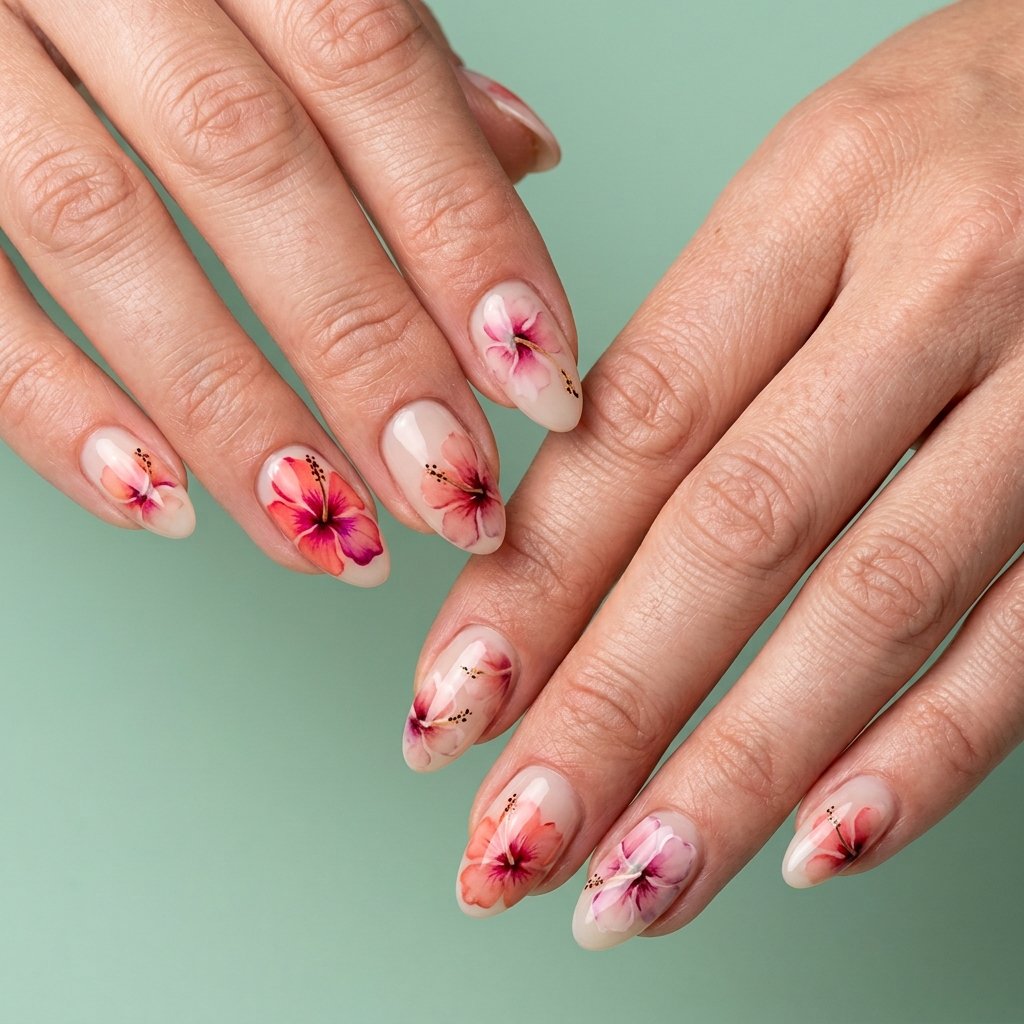
For floral artwork that feels softer and more organic, blooming gel can give hibiscus petals an almost watercolor-like appearance.
Rather than painting completely solid flowers, the color gently spreads across the nail to create diffused edges and natural variation. This works beautifully with translucent coral, pink, raspberry, and magenta shades.
Begin with a milky or sheer neutral base. Add individual petal shapes over blooming gel and allow each one to softly expand before defining the center with a deeper color. Fine lines through the middle can then suggest the hibiscus stamen without making the flower look overly precise.
The finished manicure feels hand-painted and artistic, but the blurred movement keeps it different from traditional floral nail art.
This technique also makes it easy to vary the flowers from finger to finger. One nail can feature a larger bloom, another can show only two or three petals, while a third can remain mostly sheer.
The softness of blooming gel makes hibiscus flower nail art especially wearable for anyone who likes tropical designs but doesn’t necessarily want graphic, sharply outlined flowers.
Style Insight: Use two or three related flower shades instead of introducing too many contrasting colors. A controlled palette makes the watercolor effect look intentional.
Who It Suits: Fans of soft floral art, watercolor effects, translucent manicures, and artistic salon designs.
When to Wear: Summer vacations, garden parties, beach weddings, brunches, and everyday warm-weather wear.
10. Abstract Hibiscus Art Nails
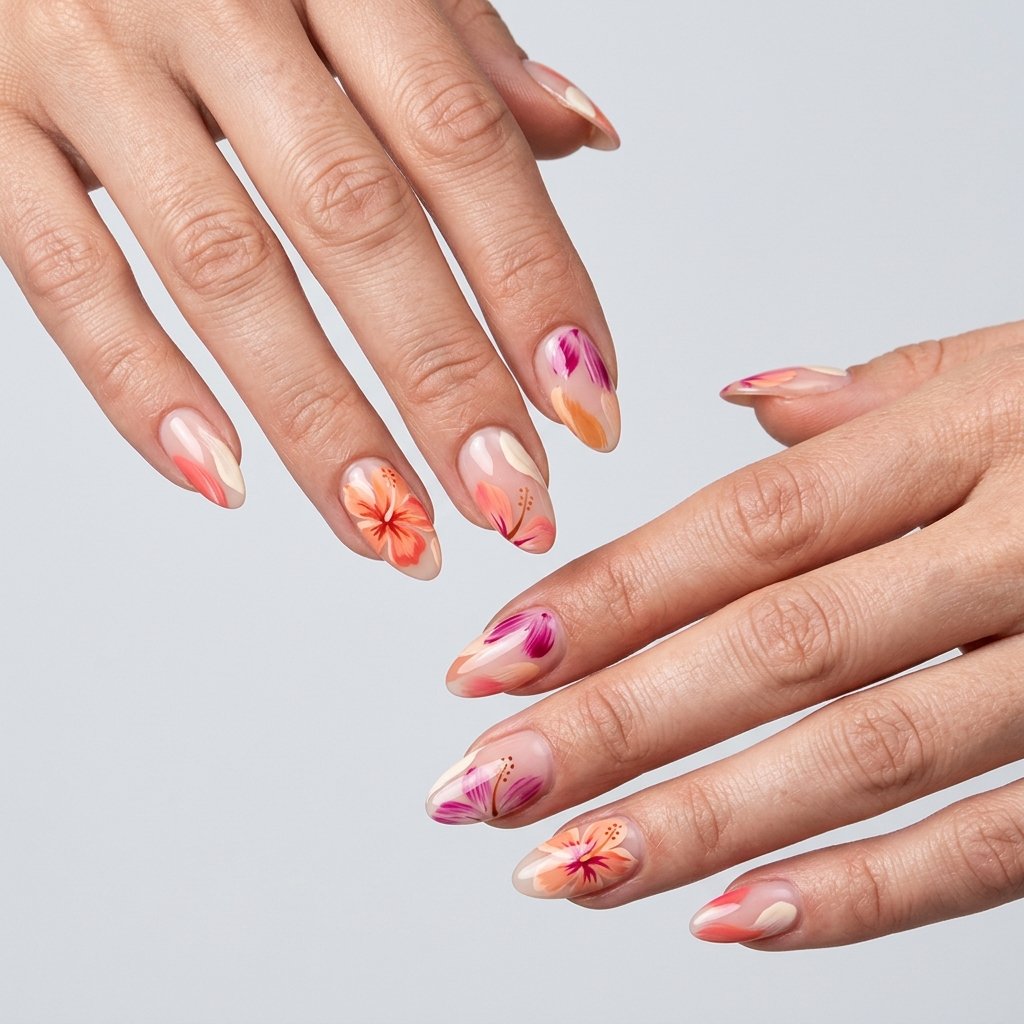
For the final look, forget about creating perfectly symmetrical flowers. Abstract hibiscus nails capture the personality of the bloom through color, movement, and recognizable petal shapes rather than botanical precision.
Start with a sheer nude or translucent blush background. Then use sweeping coral, magenta, warm orange, and creamy white brushstrokes to suggest oversized petals. A few fine lines extending from the center are enough to establish the hibiscus inspiration.
Each nail can show a different portion of the flower.
One might feature an oversized cropped petal, another could have a loose floral outline, while a third carries only a curved sweep of tropical color. Keeping the same palette throughout the manicure ensures the different compositions still feel connected.
This approach works particularly well when you want hibiscus flower nail art that looks more editorial than literal. The flowers remain recognizable, but the manicure feels like miniature contemporary artwork rather than a repeated floral pattern.
Negative space is important here. Leaving parts of the sheer base untouched gives the bold brushwork room to stand out and prevents the design from becoming visually crowded.
Style Insight: Choose three or four coordinating tropical shades and repeat them throughout the set. Let the shapes vary while keeping the color story consistent.
Who It Suits: Creative nail lovers who prefer artistic, unconventional designs over perfectly painted flowers.
When to Wear: Vacations, creative events, summer parties, resort dinners, and whenever you want your manicure to become part of your outfit.
Which Hibiscus Flower Nail Design Matches Your Energy?
The beauty of hibiscus-inspired nail art is that the same flower can create completely different moods depending on how it’s interpreted.
If you love soft, artistic manicures, airbrushed sunset petals and blooming gel flowers offer a dreamy approach. Watermelon colors and Y2K paisley are better suited to someone who wants playful summer energy, while aquatic blues and iridescent mermaid finishes bring the beach directly into the manicure.
For something more subtle, corner-petal placement gives you tropical detail without filling every nail. Split flowers offer an unexpected artistic element, while plum hibiscus nails prove that the trend doesn’t have to disappear once summer begins winding down.
And if perfectly painted florals aren’t your style, abstract hibiscus artwork allows you to experiment with sweeping petals, negative space, and expressive color.
The right manicure ultimately comes down to what you already enjoy wearing. Consider your usual nail length, favorite colors, everyday outfits, and how much detail you want before choosing a design. Tropical nail art can be bold, but it can also be surprisingly polished when the colors and placement are carefully considered.
Frequently Asked Questions
What is a hibiscus flower nail design?
A hibiscus flower nail design is a manicure inspired by the recognizable tropical hibiscus bloom. The flower can be recreated through hand-painted petals, airbrushing, blooming gel, fine outlines, abstract artwork, decals, or dimensional techniques.
Modern hibiscus manicures often combine the flower with French tips, gradients, pearlescent finishes, Y2K patterns, or negative space rather than repeating the same traditional floral design across every finger.
What colors look best for hibiscus nails?
Pink, coral, red, orange, and white are classic choices because they naturally complement the tropical theme. However, you don’t have to stay within the traditional palette.
Turquoise and aqua create a refreshing ocean-inspired manicure, while butter yellow can make pink flowers appear even brighter. Pearl and iridescent finishes work beautifully for Y2K designs, and plum or mauve can give hibiscus artwork a more sophisticated appearance.
The most important consideration is contrast. Your flowers should remain clearly visible against the background rather than blending into it.
Can hibiscus designs work on short nails?
Yes. Short nails can carry hibiscus artwork beautifully when the scale of the design is adjusted.
Instead of fitting a large complete flower onto every finger, try a tiny bloom near the cuticle, partial corner petals, delicate outlines, or one detailed accent nail. Leaving negative space around the artwork also prevents shorter nails from appearing crowded.
Short oval, round, and squoval shapes are particularly suitable for smaller floral details.
Which nail shape works best for hibiscus nail art?
There isn’t one required shape.
Almond nails provide a graceful surface for elongated petals and artistic florals, while square and coffin shapes provide more room for larger flowers, paisley details, and split designs. Longer nails can accommodate complex artwork, but short oval nails work equally well for minimalist interpretations.
Choose the shape you find comfortable first, then adjust the size and placement of the hibiscus artwork accordingly.
How can I make tropical hibiscus nails look more sophisticated?
Focus on balance rather than adding every tropical element at once.
Choose a controlled color palette, leave some areas of negative space, and decide which feature should attract the most attention. If you’re using a large hibiscus flower, surrounding nails can remain simple. If the base has an iridescent or aquatic texture, use finer floral artwork so both details remain visible.
A clean shape and smooth glossy finish can also make colorful tropical artwork feel more polished.
Ready to Bring Hibiscus Energy to Your Next Manicure?
The hibiscus flower nail trend proves that tropical florals can be much more versatile than the classic vacation manicure.
Airbrushed petals create a soft sunset mood, watermelon shades make the flowers playful, aquatic blue brings refreshing coastal energy, and Y2K paisley gives the design a nostalgic twist. Split flowers and corner petals experiment with placement, while iridescent finishes, blooming gel, deep plum, and abstract artwork show just how differently one tropical flower can be interpreted.
You don’t need to choose the brightest or most detailed option for your manicure to make an impact. The best design is the one that works with your nail length, personal style, and favorite colors.
Save the ideas that immediately stand out to you and show your favorites to your nail artist at your next appointment. Whether you choose a subtle floral accent or an expressive tropical set, hibiscus nails can bring that carefree summer feeling straight to your fingertips.
Hi, I’m Amber, the creator behind Dazzle Me Nails. I started this site because I’ve always believed nails aren’t just about beauty, they’re about confidence, self expression, and feeling put together in the simplest way. Like many of you, I’ve struggled with weak nails, chipped polish, and designs that looked good online but didn’t work in real life. That’s why I created Dazzle Me Nails to share nail ideas that are practical, wearable, and easy to recreate.
Here, you’ll find minimalist nail designs, trend inspired looks, and simple nail care tips to help you achieve clean, polished nails without over complicating your routine. If you love soft, classy, and effortless nail styles, you’re in the right place.