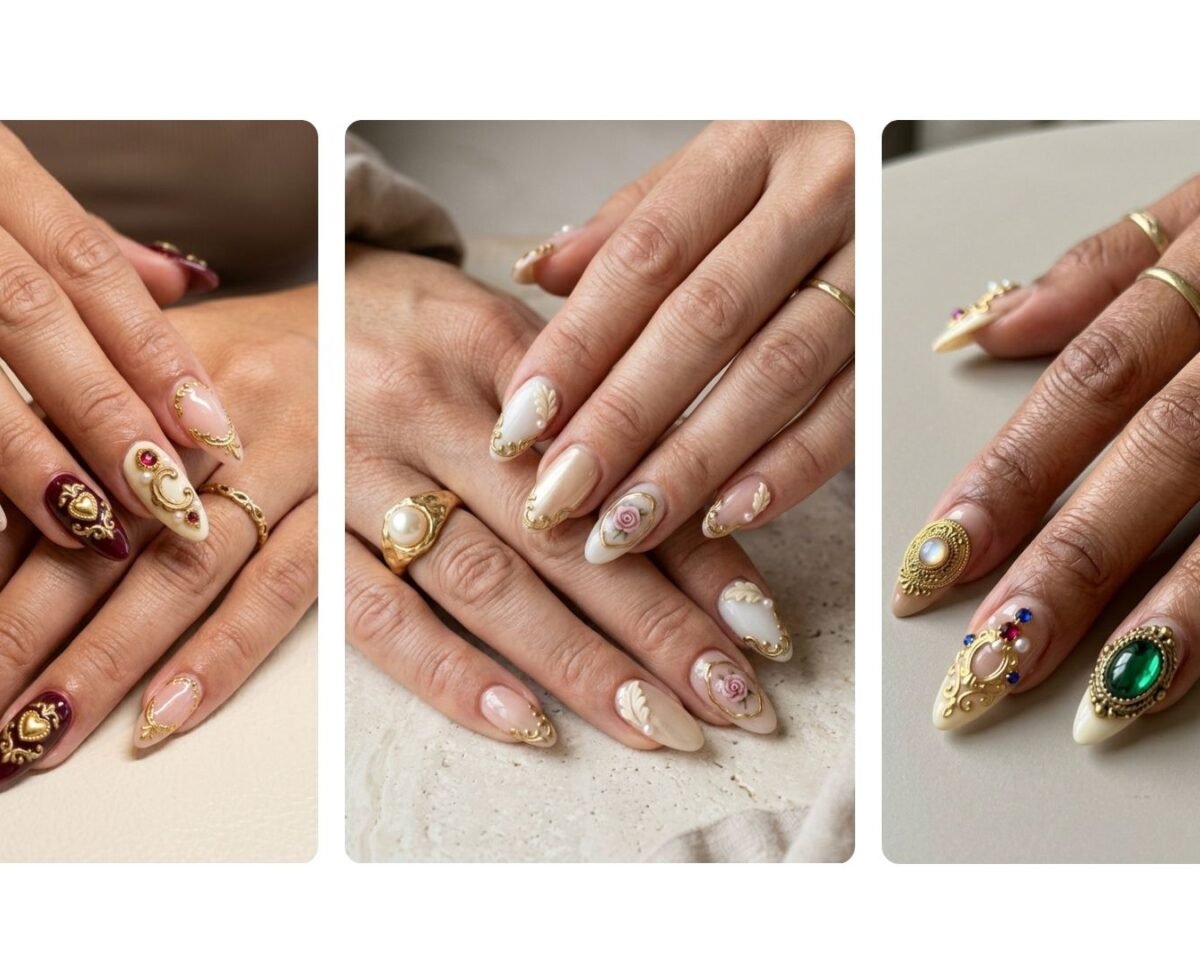
If there’s one manicure trend bringing old-world luxury into modern beauty, it’s baroque nails. Inspired by the elaborate interiors of European palaces, gilded mirrors, antique jewelry, and centuries-old artwork, this aesthetic transforms ordinary manicures into miniature masterpieces. Think sculpted gold scrollwork, delicate porcelain roses, ornamental frames, and intricate embellishments that look like they belong inside a royal jewelry collection.
Unlike simple metallic manicures or traditional rhinestone designs, this trend celebrates artistic craftsmanship and decorative beauty. Every detail has a purpose, whether it’s a curling gold vine inspired by an antique mirror, a miniature portrait enclosed in an ornamental frame, or delicate floral artwork reminiscent of hand-painted European porcelain.
What makes this aesthetic especially fascinating is its versatility. Some designs embrace dramatic colors, sculpted embellishments, and richly decorated surfaces, while others take a softer approach with pastel shades, miniature flowers, and graceful Rococo-inspired details.
And although elaborate nail art might seem intimidating, you don’t necessarily need extra-long acrylics or oversized charms to embrace the look. Even a few thoughtfully placed gold flourishes can turn a simple manicure into something artistic and memorable.
Whether you love vintage-inspired elegance or enjoy experimenting with creative nail art, these ten baroque nail designs offer plenty of inspiration for your next salon appointment.
Why Baroque Nails Are Taking Over Right Now
The growing interest in baroque nails reflects a renewed appreciation for expressive beauty, intricate details, and manicures that feel like wearable artwork. While minimalist nail trends focus on clean finishes and understated colors, this aesthetic celebrates decorative craftsmanship and individuality.
The inspiration comes from the Baroque period, which influenced European art, architecture, and interior design throughout the 17th and early 18th centuries. Grand ornamental details, dramatic contrasts, gilded surfaces, and flowing decorative patterns were defining characteristics of the movement.
Today, nail artists reinterpret those historical influences using modern techniques such as 3D sculpting gel, metallic chrome powder, fine-line painting, and carefully arranged gemstone embellishments.
Another important influence is Rococo, a decorative style that developed after the Baroque period. While traditional Baroque art often emphasizes dramatic grandeur, Rococo introduces a lighter, more romantic personality through pastel colors, delicate roses, shell motifs, and playful ornamental curves.
This combination creates endless possibilities. You might choose rich jewel-toned nails with elaborate gold frames for a formal occasion or soft ivory nails with delicate raised details for a more understated interpretation.
The secret to achieving a luxurious finish is thoughtful placement. Instead of covering every nail with heavy decorations, many of the most beautiful manicures balance one or two elaborate accent nails with smaller complementary details.
If you’re ready to explore something more artistic than an ordinary glossy manicure, these baroque nail ideas are worth saving.
1. Antique Gold Filigree Nails
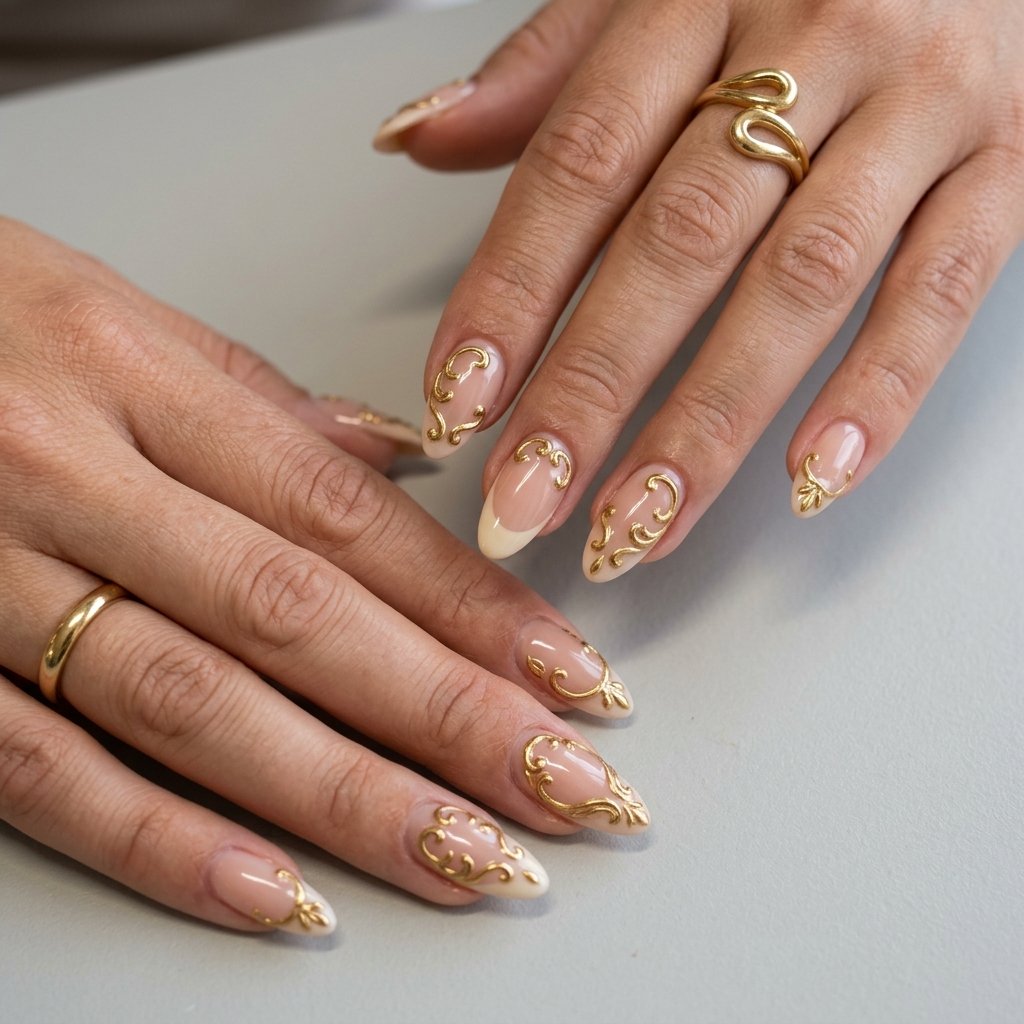
Antique gold filigree nails capture one of the most recognizable elements of historical decorative design: elaborate curling metalwork. Inspired by gilded picture frames, vintage mirrors, and ornamental furniture, this manicure transforms intricate gold patterns into beautiful nail art.
The design begins with a soft nude, warm ivory, or translucent beige base that allows the metallic details to stand out. Delicate C-shaped and S-shaped scrolls curve across the nail surface, connecting into graceful ornamental patterns that resemble handcrafted filigree.
What makes this look particularly interesting is its dimensional finish. Rather than relying entirely on flat painted lines, raised sculpting gel creates subtle ridges that mimic engraved metal. Once finished with metallic powder, the patterns catch the light and reveal every delicate curve.
If you’re recreating this design at home, a fine nail art brush and Antique Gold Chrome Nail Powder can help achieve the gilded appearance, although the raised detailing requires patience and a steady hand.
For a balanced manicure, concentrate the elaborate scrollwork on two or three nails while decorating the remaining fingers with smaller gold flourishes near the cuticles.
Style Insight: Choose a slightly muted antique-gold finish instead of bright yellow glitter. The softer metallic tone gives the ornamentation a more authentic vintage appearance.
Who It Suits: Anyone who appreciates historical architecture, intricate jewelry, and elegant decorative details.
When to Wear: Formal dinners, engagement celebrations, elegant parties, and special evening occasions.
2. Rococo Porcelain Rose Nails
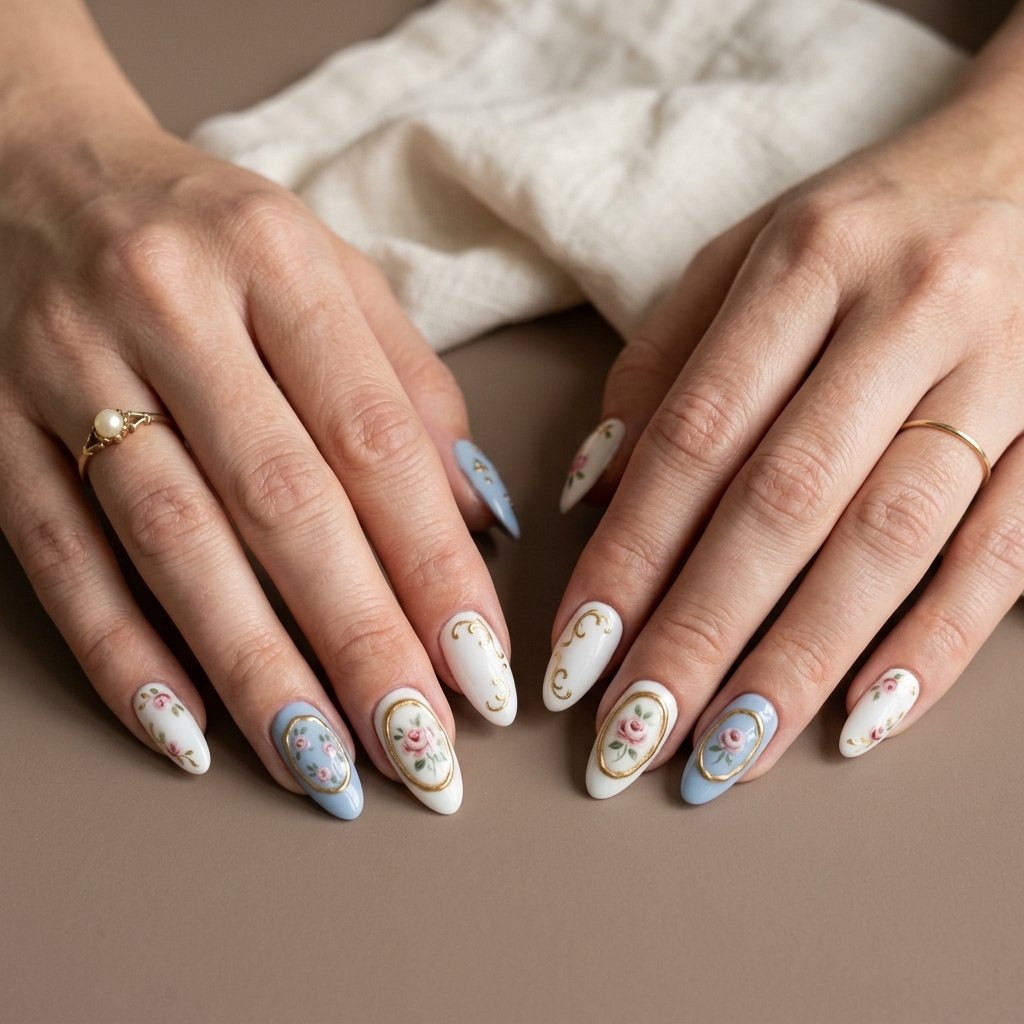
For a softer interpretation of baroque nails, Rococo porcelain rose designs offer an enchanting combination of romantic florals, pastel colors, and delicate ornamental framing. Inspired by antique European ceramics and hand-painted decorative objects, this manicure feels artistic without becoming overly dramatic.
The foundation is usually creamy porcelain white, although powder blue, pale blush, and soft buttercream also work beautifully. Tiny dusty-pink roses are painted across selected nails, accompanied by miniature sage-green leaves and subtle petal shading.
What separates this design from ordinary floral manicures is its decorative framing. Thin gold borders surround some of the roses, creating miniature ornamental panels that resemble antique porcelain jewelry boxes or intricately painted ceramic plates.
The flowers should look carefully painted rather than perfectly identical. Slight variations in petal shapes, brushstroke intensity, and leaf placement make the artwork feel more natural and handcrafted.
For a balanced manicure, choose one or two nails with elaborate framed floral arrangements and decorate the remaining fingers with smaller rosebuds or delicate gold curls.
This design also offers an opportunity to experiment with different color combinations. Pale blue backgrounds create a classic porcelain-inspired appearance, while blush pink introduces a warmer, more romantic personality.
Style Insight: Ask your nail artist for miniature hand-painted roses with softly shaded petals and thin gold frames. Avoid oversized floral stickers that could overpower the delicate porcelain effect.
Who It Suits: Romantic personalities who love vintage florals, pastel shades, and feminine decorative details.
When to Wear: Spring weddings, bridal showers, garden parties, afternoon celebrations, and romantic occasions.
3. Sacred Heart Baroque Nails
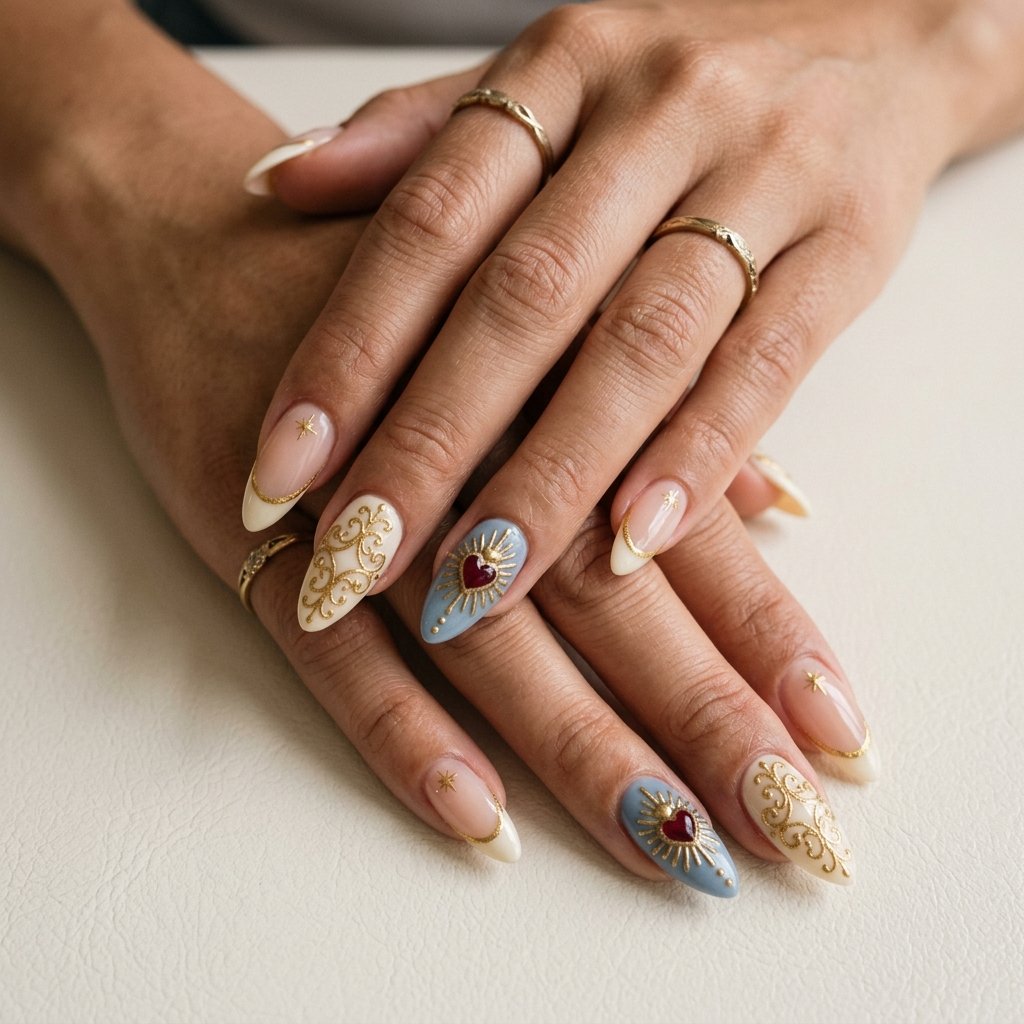
Sacred Heart-inspired nail art brings a powerful historical motif into contemporary manicure design. Drawing inspiration from devotional artwork, antique pendants, and ornate religious imagery, this style features a decorative heart surrounded by gilded rays, intricate scrollwork, and carefully arranged embellishments.
A rich burgundy, deep royal blue, or creamy ivory base provides a striking foundation for the centerpiece. The heart itself can be painted in a luminous ruby-red shade or represented by a small heart-shaped gemstone enclosed within a raised gold border.
Fine metallic rays extend outward from the central motif, while curling ornamental details frame the composition. Depending on the interpretation, tiny pearls, decorative flourishes, or miniature cross motifs can add another layer of historical inspiration.
For a dimensional centerpiece, small Ruby Red Heart Nail Rhinestones can be incorporated into the design, giving the heart a jewel-like appearance that contrasts beautifully with the surrounding metallic artwork.
Because the central design contains several intricate elements, placement is particularly important. Rather than repeating the elaborate heart across every finger, feature it on the middle or ring nail and surround it with simpler ornamental details.
A few delicate gold curls near the cuticles can connect the remaining nails to the centerpiece without competing for attention.
Style Insight: Use a dimensional ruby-red heart surrounded by fine antique-gold rays. Keep the surrounding scrollwork delicate so the central motif remains clearly visible.
Who It Suits: Those who appreciate meaningful artistic imagery, historical symbolism, and distinctive statement manicures.
When to Wear: Artistic celebrations, themed gatherings, special events, and dramatic evening looks.
4. Baroque Cameo Portrait Nails
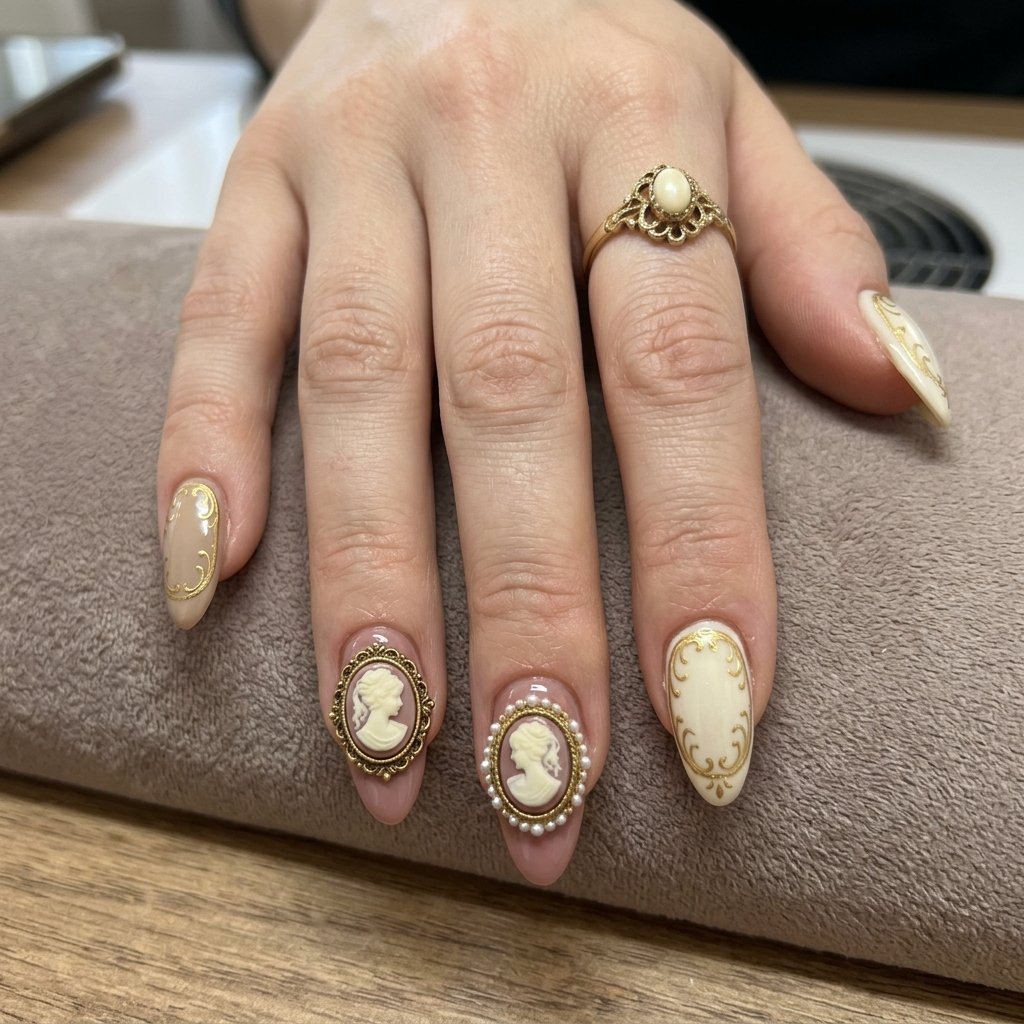
Cameo portrait nails offer a fascinating way to incorporate antique jewelry inspiration into modern nail art. Traditional cameo brooches often feature raised portrait silhouettes set against contrasting backgrounds, surrounded by decorative metal frames.
This manicure recreates that distinctive appearance on the nails, turning each accent finger into a miniature piece of vintage jewelry.
The design typically begins with a muted background such as dusty rose, antique beige, creamy ivory, or deep burgundy. A small oval centerpiece sits near the middle of the nail, enclosed within a carefully sculpted gold or bronze frame.
Inside the frame, a delicate ivory silhouette appears against a contrasting background. The portrait might feature a classical side profile, a softly sculpted face, or a simplified vintage-inspired figure.
Tiny pearl accents, miniature metallic beads, or curling gold ornaments can decorate the outer border, making the frame resemble an heirloom brooch.
Because cameo artwork requires precision, medium or long almond nails provide enough space for the portrait to remain recognizable. However, a simplified silhouette can also look beautiful on shorter oval nails.
To keep the overall manicure balanced, feature the cameo on one or two nails while decorating the remaining fingers with smaller ornamental borders or subtle gold details.
Style Insight: Choose a contrasting oval background and a raised ivory portrait silhouette. The difference in color and texture helps recreate the appearance of traditional carved cameo jewelry.
Who It Suits: Vintage fashion enthusiasts, antique jewelry lovers, and anyone drawn to artistic manicures with historical character.
When to Wear: Museum outings, vintage-themed celebrations, elegant dinners, and formal gatherings.
5. Royal Blue Cartouche Nails
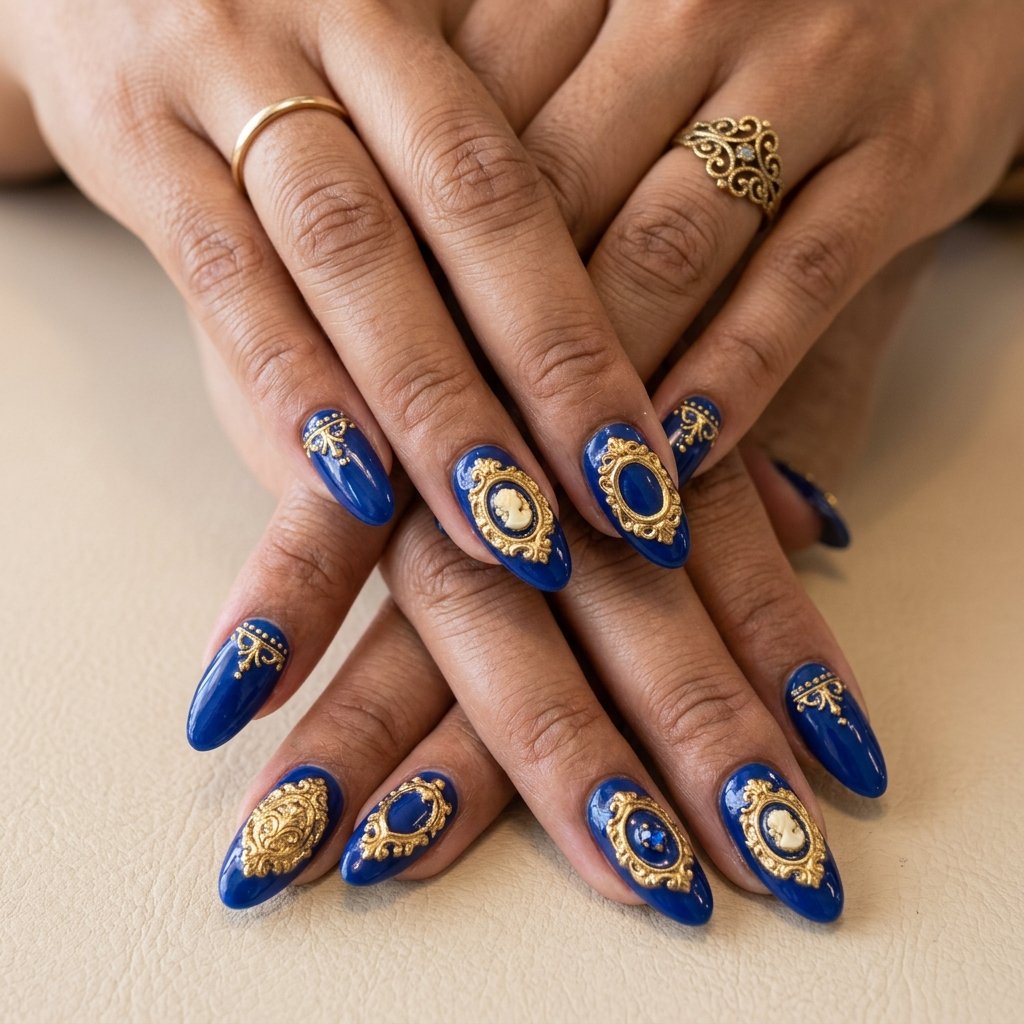
Royal blue cartouche nails bring architectural elegance to the fingertips through rich color and elaborate decorative framing. A cartouche is an ornamental frame or panel frequently found in historical architecture, carved furniture, and decorative artwork.
This manicure uses a saturated royal blue or deep cobalt background to create a striking contrast against raised gold embellishments. Each accent nail features a miniature ornamental frame with curling edges, symmetrical flourishes, and sculpted borders.
Some frames can remain empty to emphasize the decorative metalwork, while others contain tiny gemstones, painted flowers, or a contrasting ivory centerpiece.
The combination of deep blue and warm gold feels especially luxurious because the colors create beautiful visual contrast. The blue background adds depth, while the metallic details make the manicure appear almost three-dimensional.
For the most convincing effect, raised gel detailing can be finished with Metallic Gold Nail Chrome Powder, creating reflective ornamental borders that resemble gilded architectural decorations.
One of the most appealing aspects of this design is its flexibility. You can create elaborate frames across several nails or use a single ornate cartouche as the focal point of an otherwise simple royal blue manicure.
A glossy finish enhances the richness of the background color, while carefully placed metallic details preserve the historical inspiration.
Style Insight: Create symmetrical gold cartouche frames on royal blue nails, allowing the ornate borders to become the main decorative feature rather than adding unnecessary embellishments.
Who It Suits: Those who love rich colors, architectural patterns, and sophisticated statement manicures.
When to Wear: Winter celebrations, formal dinners, evening parties, and special occasions.
6. Pearl-Framed Medallion Nails
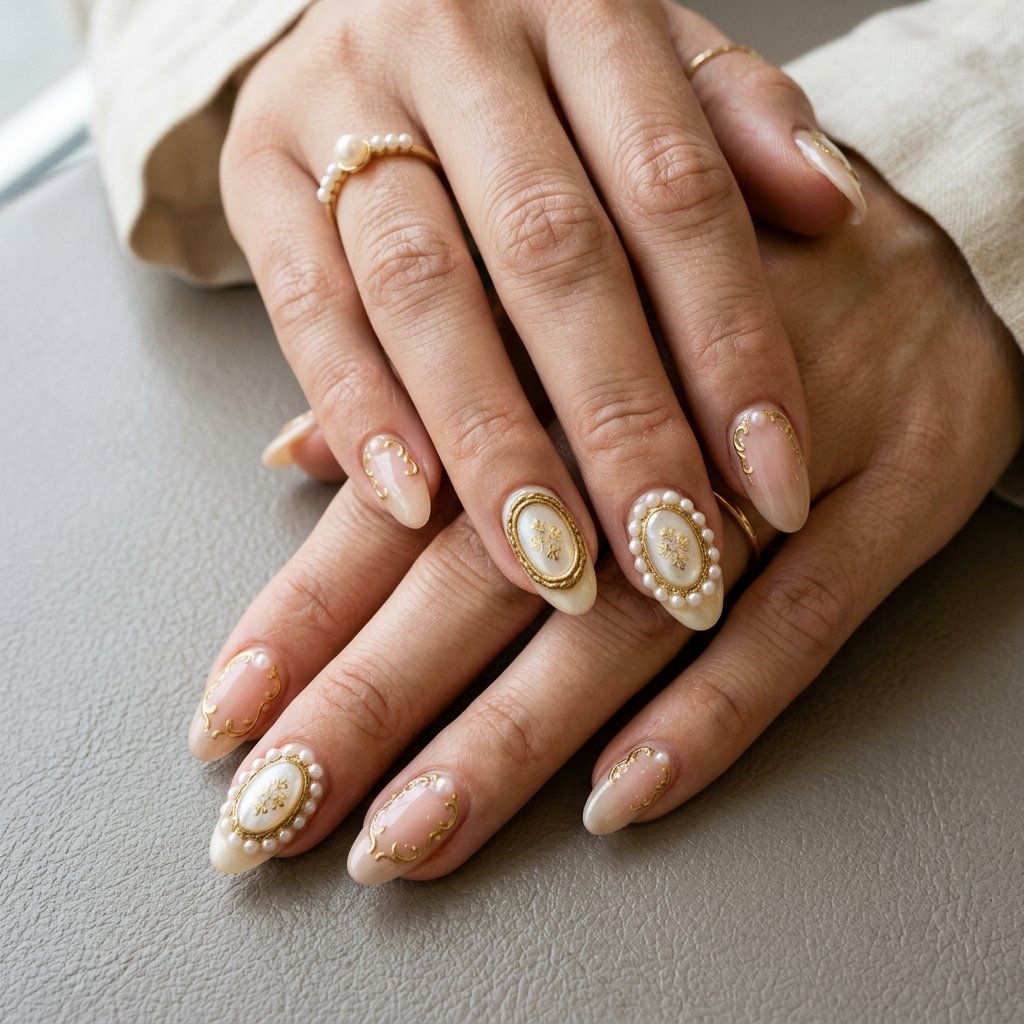
Pearl-framed medallion nails bring the elegance of antique jewelry into modern nail art through delicate embellishments and beautifully structured decorative frames. Inspired by vintage brooches, ornamental pendants, and heirloom accessories, this design combines luminous pearls with intricate metallic detailing to create a manicure that feels romantic and luxurious.
The foundation usually features a soft champagne, warm ivory, or muted blush shade. These understated colors allow the decorative elements to remain prominent without making the manicure feel overwhelming.
At the center of selected nails, miniature oval medallions are outlined with thin gold borders. Tiny pearls are then arranged around the frames, creating the appearance of carefully crafted antique jewelry. Some medallions feature delicate floral paintings, while others contain subtle metallic ornaments or softly shimmering pearlescent centers.
What makes this design particularly interesting is the placement of the pearls. Instead of scattering them randomly across the nail surface, each embellishment contributes to a recognizable ornamental pattern.
For a realistic jewelry-inspired finish, miniature Flat-Back Pearl Nail Embellishments can be placed around the medallion borders, adding dimension while keeping the decorative arrangement delicate and balanced.
If you prefer a simpler interpretation, feature one pearl-framed medallion on each ring finger and decorate the remaining nails with fine gold borders or tiny pearl accents near the cuticles.
The finished manicure feels like a miniature collection of vintage accessories, combining soft femininity with the elaborate craftsmanship associated with historical decorative art.
Style Insight: Arrange tiny pearls around oval gold frames rather than covering the entire nail. The structured placement creates a more authentic antique-medallion appearance.
Who It Suits: Anyone who loves romantic accessories, vintage jewelry, and feminine nail designs with carefully arranged embellishments.
When to Wear: Bridal celebrations, engagement parties, anniversaries, elegant dinners, and special occasions.
7. Ivory Acanthus Leaf Nails
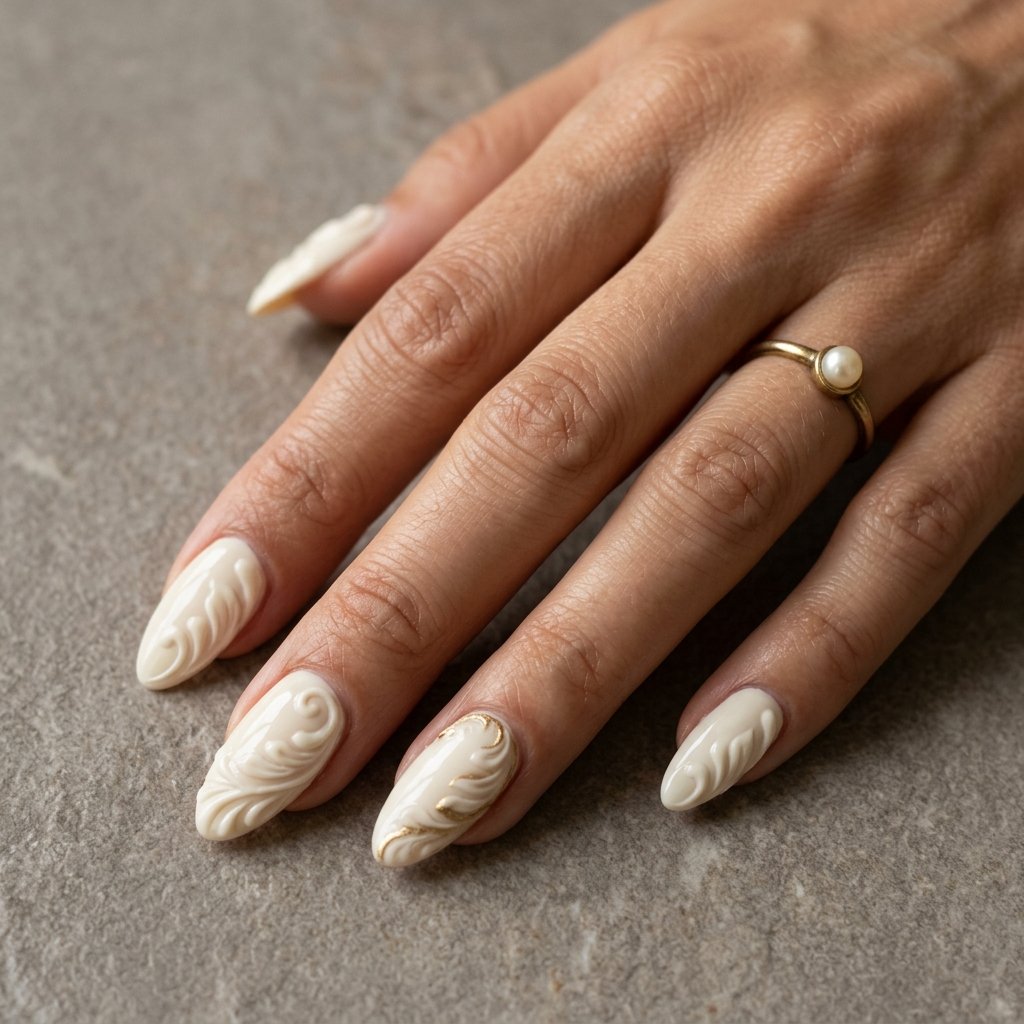
If you appreciate decorative nail art but prefer something more understated than colorful gemstones, ivory acanthus leaf nails offer a beautifully sculptural alternative. Inspired by classical architectural ornamentation, this manicure transforms the flowing shapes of acanthus leaves into delicate raised artwork.
Acanthus leaves frequently appear in historic European architecture, ornamental columns, carved furniture, and elaborate gilded frames. Their distinctive curling edges and layered botanical shapes make them especially suitable for dimensional nail designs.
The manicure begins with a creamy ivory, soft beige, or warm porcelain base. Instead of painting ordinary leaves in contrasting colors, the design uses raised sculpting gel to create botanical patterns that closely match the background shade.
This monochromatic approach gives the artwork a carved appearance, almost like decorative plasterwork found inside an old European palace.
As natural light moves across the nails, subtle shadows reveal the raised leaf patterns, highlighting their delicate curves and layered structure. The effect is sophisticated without relying on glitter, crystals, or oversized charms.
For a more elaborate interpretation, thin antique-gold accents can trace selected leaf edges. However, keeping most of the artwork ivory preserves the design’s sculptural elegance.
Medium almond or oval nails work particularly well because their elongated surfaces complement the flowing botanical shapes.
Unlike heavily embellished baroque nails, this interpretation relies on texture and craftsmanship to create visual interest, making it an excellent choice for anyone who prefers quieter luxury.
Style Insight: Keep the raised acanthus leaves close in color to the base and allow natural shadows to emphasize the sculpted details. A glossy finish can enhance the dimensional effect without introducing additional decoration.
Who It Suits: Minimalists who appreciate artistic textures, architectural details, and elegant monochromatic manicures.
When to Wear: Formal gatherings, sophisticated everyday looks, gallery visits, and special celebrations.
8. Baroque Shell Ornament Nails
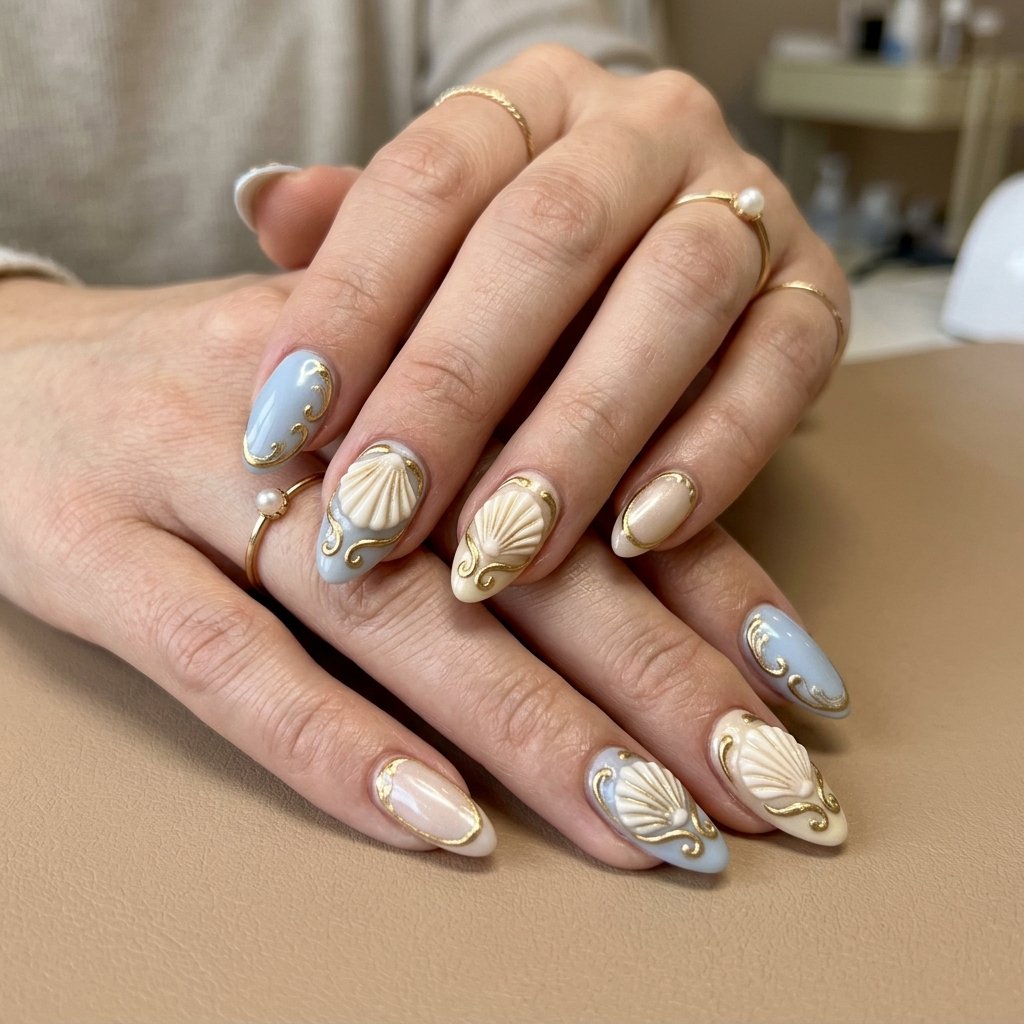
Baroque shell ornament nails introduce an unexpected decorative element inspired by the graceful curves of antique architecture and Rococo interiors. Rather than featuring ordinary seashell illustrations, this design focuses on sculpted shell-shaped ornaments that resemble carved decorations found on vintage furniture, mirrors, and ornamental wall panels.
The manicure typically begins with a soft powder blue, pale peach, or creamy champagne background. Raised shell motifs are then positioned near the cuticles, along the nail tips, or at the center of selected accent nails.
Each shell features delicate ridges that fan outward from a central point, creating a realistic carved appearance. Fine gold outlines can highlight the edges, while small curling flourishes connect the shell ornaments to the surrounding decorative artwork.
One particularly beautiful interpretation combines pale blue nails with ivory shell details and muted gold accents. The contrast between the cool background and warm metallic elements creates a soft, romantic appearance.
Another option uses a champagne base with pearlescent shell ornaments, giving the manicure a subtle luminous finish that changes beautifully under different lighting.
The key is to treat the shells as architectural ornaments rather than beach-themed accessories. Avoid adding starfish, ocean waves, or tropical decorations, as these would shift the design away from its historical inspiration.
For a balanced look, feature sculpted shells on two or three nails while decorating the remaining fingers with smaller ornamental curls or delicate gold borders.
Style Insight: Choose raised fan-shaped shell ornaments with fine ridges and subtle gilded edges. Keep the surrounding artwork minimal enough for the sculpted shapes to remain clearly visible.
Who It Suits: Romantic personalities who enjoy unusual decorative motifs, pastel manicures, and intricate 3D nail artistry.
When to Wear: Spring celebrations, garden parties, bridal events, artistic gatherings, and elegant daytime occasions.
9. Emerald Cabochon Jewelry Nails
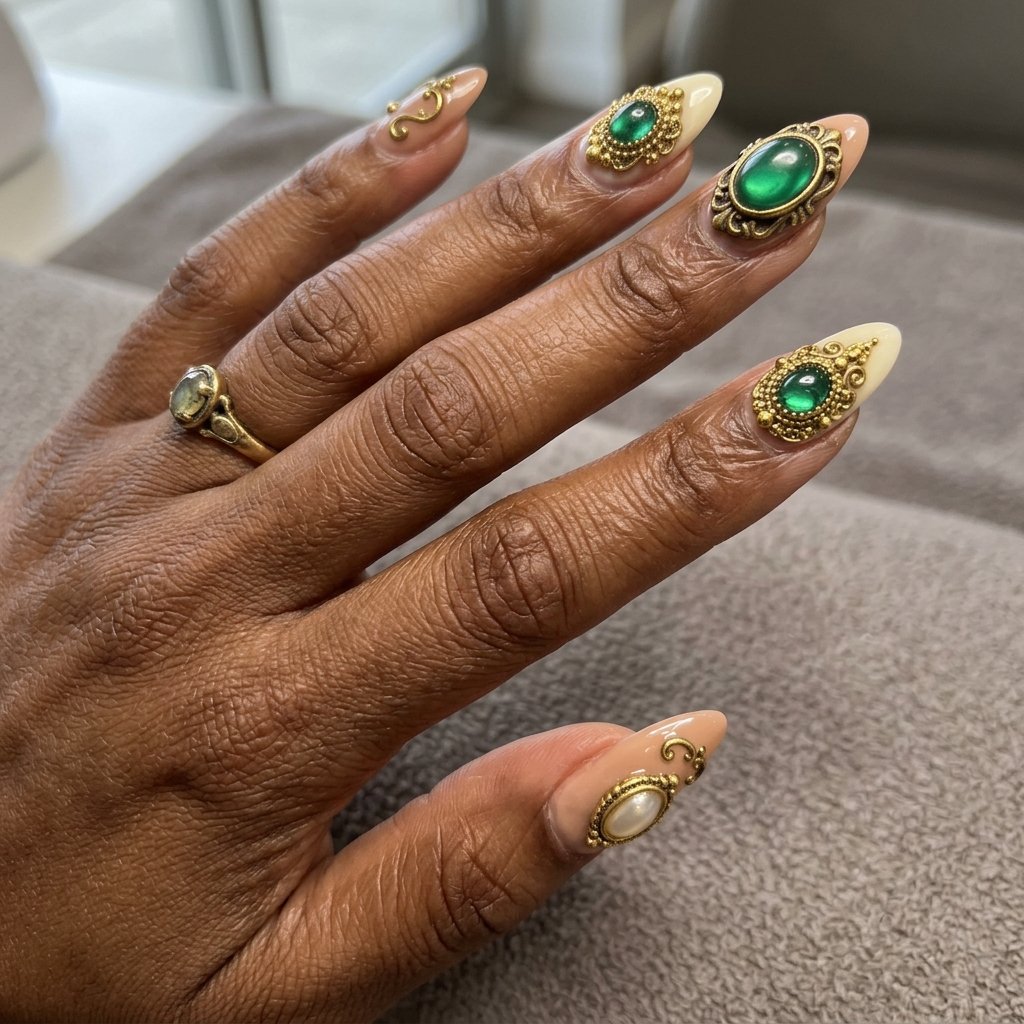
Emerald cabochon jewelry nails take inspiration from antique gemstone settings, transforming rich green stones and elaborate gold frames into miniature decorative masterpieces.
Unlike ordinary rhinestone manicures, this design focuses on the appearance of cabochon gemstones. These stones have smooth, rounded surfaces rather than the sharply faceted appearance commonly associated with modern crystals.
The manicure begins with a warm nude, deep forest green, or muted ivory background. At the center of selected nails, oval emerald-colored stones are enclosed within raised gold settings that resemble miniature vintage rings or ornate pendants.
Tiny metallic beads, delicate curling scrolls, and decorative borders surround the gemstones, creating the impression of handcrafted antique jewelry.
What makes this look especially captivating is the contrast between the smooth, glass-like gemstone surface and the textured metallic frame. The combination adds depth without requiring complicated painted illustrations.
For a more dramatic interpretation, place a larger emerald centerpiece on the middle finger and use smaller gemstone accents on the surrounding nails. Alternatively, keep the stones limited to two accent nails and decorate the remaining fingers with delicate gold flourishes.
A slightly translucent green gemstone can create a particularly convincing appearance because light passes through the surface, producing the depth associated with polished stones.
For a similar jewel-inspired effect, oval Emerald Green Cabochon Nail Charms can be paired with sculpted gold borders, creating the appearance of miniature antique gemstone settings.
The finished manicure feels luxurious, distinctive, and perfectly suited to anyone who loves vintage jewelry with a dramatic personality.
Style Insight: Choose smooth, domed emerald-colored stones rather than heavily faceted rhinestones. Surround them with raised gold settings to recreate the appearance of antique cabochon jewelry.
Who It Suits: Gemstone lovers, vintage accessory enthusiasts, and anyone who enjoys richly decorated statement nails.
When to Wear: Holiday celebrations, formal dinners, winter gatherings, and glamorous evening events.
10. Burgundy Damask Pattern Nails
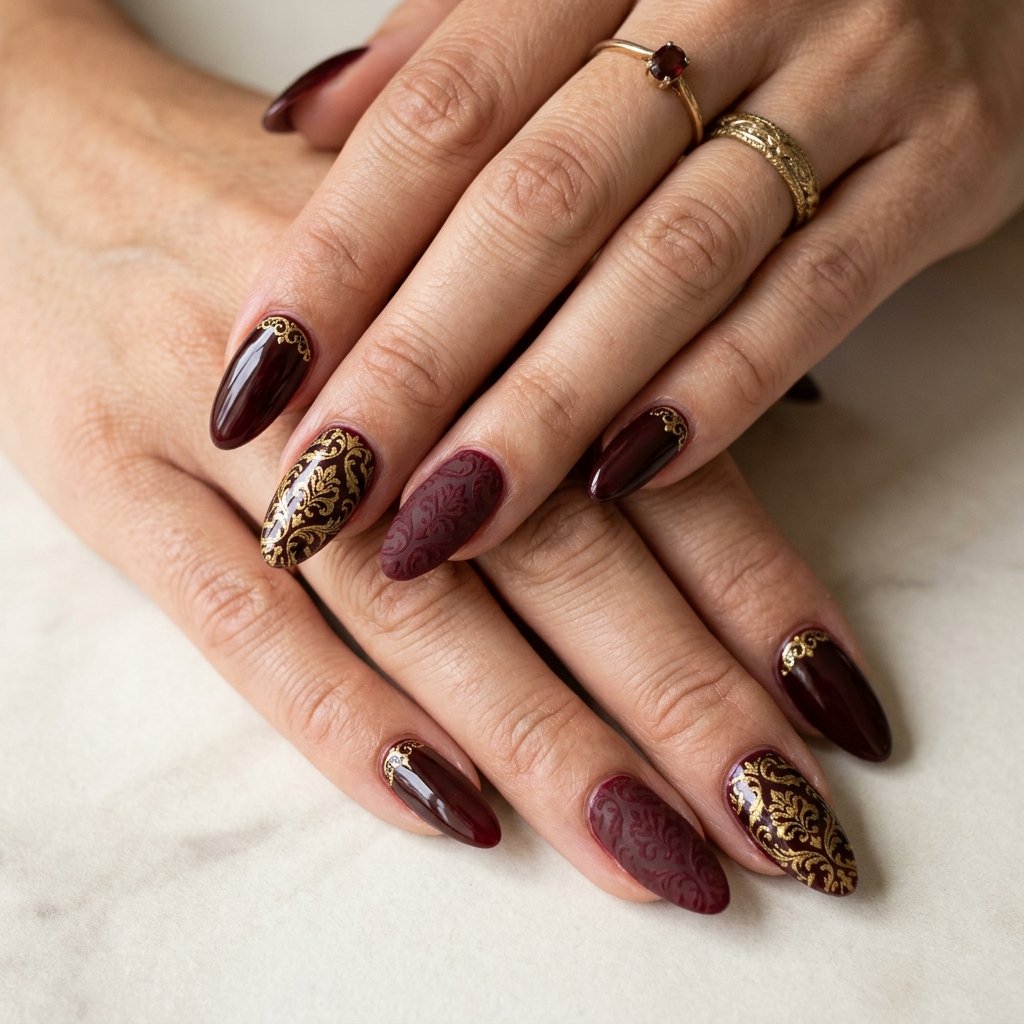
Burgundy damask pattern nails offer a sophisticated way to incorporate historic decorative textiles into contemporary nail art. Inspired by ornate wallpaper, woven fabrics, and richly patterned interiors, this design combines deep color with intricate symmetrical ornamentation.
The foundation features a rich burgundy, dark wine, or muted oxblood shade. Over this background, delicate damask patterns appear in antique gold, soft bronze, or a slightly darker shade of burgundy.
Traditional damask-inspired designs often include symmetrical floral shapes, curling leaves, decorative vines, and repeating ornamental patterns. When adapted to nail art, these details create a refined textured appearance that resembles luxurious fabric.
One particularly beautiful interpretation uses a glossy burgundy base with subtle matte patterns in the same color. The difference between the finishes allows the design to become visible as light moves across the nails, creating an elegant tone-on-tone effect.
For a more dramatic manicure, antique-gold patterns can be added to selected nails while the remaining fingers feature simpler burgundy finishes.
The key is maintaining a recognizable ornamental pattern rather than covering the nails with unrelated decorative shapes. Symmetry and repetition help create the distinctive appearance associated with damask textiles.
Long almond and coffin nails provide additional room for elaborate patterns, although smaller repeating motifs can also work beautifully on shorter nails.
Unlike ordinary burgundy manicures, this interpretation emphasizes decorative texture and historic textile inspiration, giving the familiar shade an entirely different personality.
Style Insight: Combine deep burgundy polish with symmetrical damask patterns in muted gold or a matching matte finish. The repeating ornamental shapes create a luxurious fabric-inspired appearance.
Who It Suits: Those who love rich colors, vintage interiors, sophisticated patterns, and elegant statement manicures.
When to Wear: Fall celebrations, winter parties, formal dinners, holiday gatherings, and special evening occasions.
Which Baroque Nail Design Matches Your Energy?
The beauty of baroque nails lies in their ability to express different personalities through historical inspiration, artistic details, and decorative craftsmanship. While some designs celebrate dramatic ornamentation, others introduce a softer interpretation through delicate colors and carefully sculpted textures.
If you love traditional elegance, Antique Gold Filigree Nails offer a timeless combination of flowing metallic patterns and neutral backgrounds. Their intricate detailing feels luxurious without depending on oversized gemstones.
For romantic personalities, Rococo Porcelain Rose Nails and Pearl-Framed Medallion Nails provide softer alternatives. Miniature florals, delicate pearls, and ornamental frames create a feminine appearance that feels especially beautiful for weddings and special celebrations.
If you prefer dramatic statement manicures, Sacred Heart Nails, Royal Blue Cartouche Nails, and Emerald Cabochon Jewelry Nails bring richer colors and elaborate decorative elements into the spotlight.
Vintage enthusiasts may find themselves drawn to Cameo Portrait Nails, which recreate the distinctive appearance of antique brooches through miniature silhouettes and sculpted frames.
For a more understated interpretation, Ivory Acanthus Leaf Nails offer intricate texture without heavy embellishments. Their monochromatic appearance makes them surprisingly wearable while preserving the artistic character of the trend.
Meanwhile, Baroque Shell Ornament Nails introduce a playful Rococo influence, and Burgundy Damask Pattern Nails deliver sophisticated elegance inspired by historic decorative textiles.
Ultimately, the best manicure is the one that reflects your personal style. Whether you prefer delicate artwork, sculpted textures, or gemstone embellishments, these designs prove that decorative beauty can feel both historical and modern.
Frequently Asked Questions
What are baroque nails?
Baroque nails are decorative manicures inspired by the elaborate art, architecture, jewelry, and ornamental craftsmanship associated with the historical Baroque period. They commonly feature intricate gold scrollwork, sculpted details, decorative frames, gemstones, pearls, and miniature painted artwork.
The aesthetic emphasizes artistic complexity and luxurious ornamentation, although modern interpretations can range from dramatic statement designs to subtle manicures with carefully placed decorative details.
What is the difference between Baroque and Rococo nail designs?
Baroque-inspired manicures typically emphasize dramatic ornamentation, rich colors, sculpted metallic details, and elaborate decorative frames.
Rococo-inspired designs generally introduce a lighter, more romantic approach through pastel shades, delicate flowers, shell motifs, porcelain-inspired finishes, and graceful ornamental curves.
Both styles share an appreciation for decorative craftsmanship, and many contemporary nail artists combine their elements to create unique manicures.
What colors work best for Baroque nail art?
Antique gold, ivory, burgundy, royal blue, emerald green, and deep jewel tones work beautifully for traditional interpretations.
For softer Rococo-inspired designs, powder blue, blush pink, champagne, pale peach, and creamy white create a romantic appearance.
The most effective combinations usually feature a contrasting background that allows intricate ornamentation to remain clearly visible.
Can you create Baroque-inspired designs on short nails?
Absolutely. Short nails can capture the aesthetic through simplified gold scrollwork, miniature floral paintings, small ornamental frames, and delicate raised patterns.
Instead of using oversized gemstones or complicated compositions, focus on one recognizable decorative element per nail.
Short oval and squoval shapes work particularly well for subtle interpretations, while longer almond or coffin nails provide additional space for elaborate artwork.
How do nail artists create 3D Baroque nail art?
Nail artists commonly use thick sculpting gel or dimensional nail-art gel to create raised ornamental patterns. Fine liner brushes help form curling scrolls, botanical motifs, decorative frames, and intricate borders.
After curing the gel according to the product instructions, metallic chrome powder can be applied to selected raised details to create a gilded appearance.
Pearls, gemstone charms, and other embellishments may be secured with suitable nail adhesive or gel products designed for decorative nail art.
Because these designs often involve intricate placement and multiple layers, professional application can be helpful for achieving detailed, long-lasting results.
Ready to Give Your Nails the Royal Treatment?
The appeal of baroque nails goes far beyond sparkling embellishments and metallic finishes. This aesthetic celebrates artistic craftsmanship, historical beauty, and the idea that even the smallest details can make a manicure feel extraordinary.
From antique gold filigree and delicate porcelain roses to sculpted acanthus leaves, vintage cameo portraits, and emerald gemstone settings, every design offers a different way to explore old-world elegance.
Whether you’re planning an elaborate manicure for a special celebration or simply want to experiment with something more decorative than your usual nail polish, these ten ideas provide inspiration for a look that feels personal, artistic, and beautifully distinctive.
Save your favorite designs, share them with your nail artist, and let your next manicure become a miniature masterpiece inspired by centuries of decorative beauty.

Hi, I’m Amber, the creator behind Dazzle Me Nails. I started this site because I’ve always believed nails aren’t just about beauty, they’re about confidence, self expression, and feeling put together in the simplest way. Like many of you, I’ve struggled with weak nails, chipped polish, and designs that looked good online but didn’t work in real life. That’s why I created Dazzle Me Nails to share nail ideas that are practical, wearable, and easy to recreate.
Here, you’ll find minimalist nail designs, trend inspired looks, and simple nail care tips to help you achieve clean, polished nails without over complicating your routine. If you love soft, classy, and effortless nail styles, you’re in the right place.