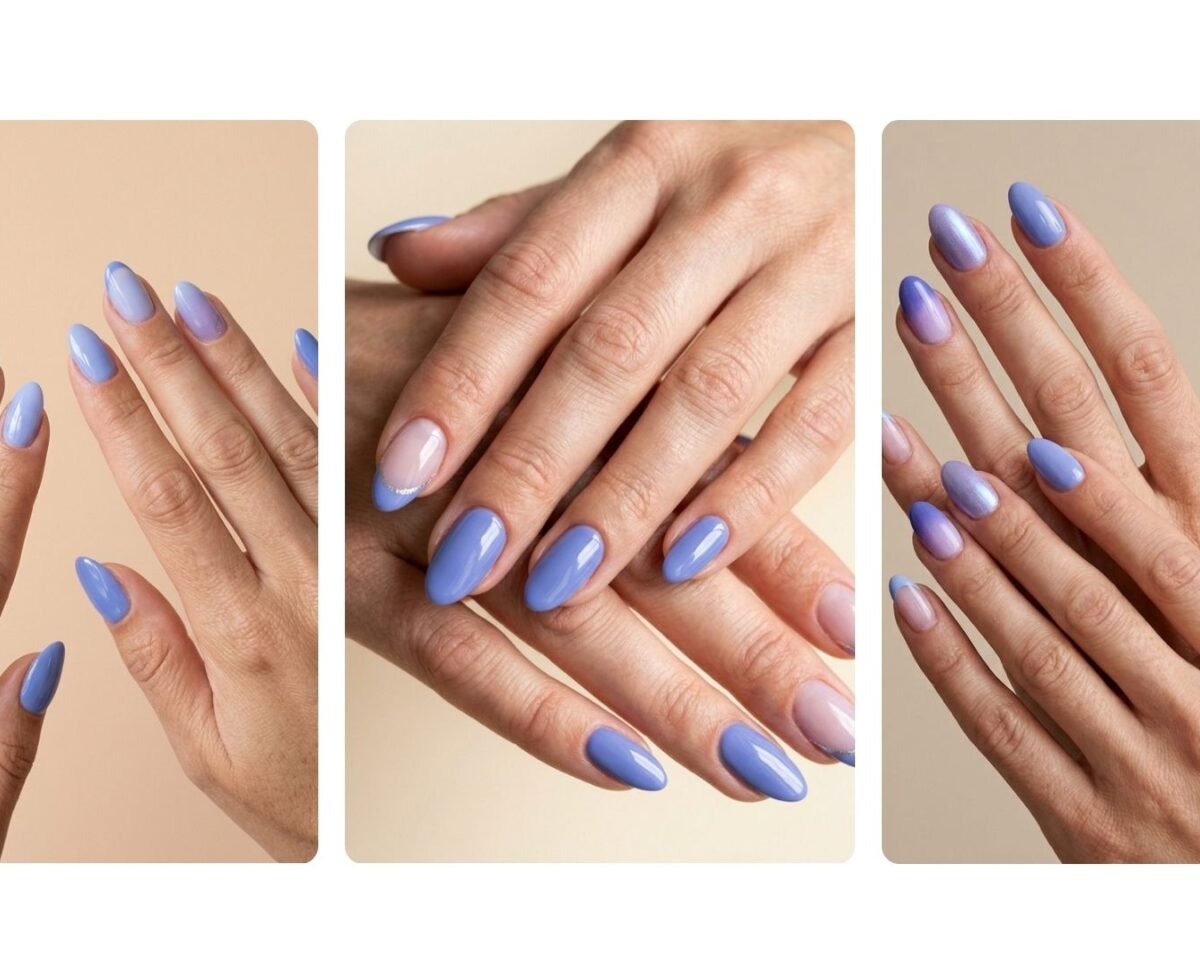
If you’re caught somewhere between loving soft lavender and dreamy pastel blue, periwinkle nails might be exactly the manicure color you’ve been looking for. This distinctive blue-violet shade brings together the calmness of blue with the romantic softness of purple, creating a color that feels delicate without becoming predictable.
Part of periwinkle’s appeal is how easily its personality changes. Give it a glassy top coat and it becomes clean and polished. Pair it with metallic detailing and suddenly it feels more sophisticated. Introduce abstract artwork, gradients, or dimensional finishes and the same pastel shade can become surprisingly artistic.
It also isn’t limited to one particular nail length or aesthetic. Short natural nails can make the color feel fresh and effortless, while almond, square, and longer shapes provide more room for detailed artwork. That flexibility makes the shade especially useful if you like changing your manicure style without constantly moving between completely different color families.
Seasonally, periwinkle feels equally adaptable. Its pastel character naturally fits spring, while its cool blue undertones look refreshing throughout summer. When combined with deeper violet, navy, silver, or reflective finishes, it can transition beautifully into cooler months too.
For a simple version, a creamy periwinkle nail polish is really all you need to let this unusual color become the focus. But if you’re ready to experiment, the designs below show just how creative this blue-purple shade can become.
Why Periwinkle Nails Are Taking Over Right Now
Pastel manicures aren’t going anywhere, but the way we’re wearing them continues to evolve. Instead of relying only on familiar baby pinks, pale blues, and milky neutrals, more interesting in-between colors are giving softer manicures additional personality.
That’s exactly where periwinkle nails come in.
Periwinkle doesn’t sit comfortably in just one color category. Depending on its undertones, polish formula, and surrounding light, it may look noticeably blue one moment and much closer to lavender the next. That subtle shift creates depth even when the manicure itself is completely simple.
The shade also works beautifully with many contemporary nail techniques. A sheer nude base can make it delicate. Silver detailing emphasizes its cool character. Deep navy creates contrast, while lavender keeps everything soft and tonal. Glossy finishes bring out the creaminess of the color, and shimmer can highlight its more ethereal side.
Another advantage is wearability. If bright cobalt feels too intense and lavender feels too sweet, periwinkle offers an appealing middle ground. It provides recognizable color without necessarily becoming the loudest part of your outfit.
Whether you prefer simple manicures or detailed nail art, these designs show just how many directions this dreamy shade can take.
1. Classic High-Gloss Periwinkle Manicure
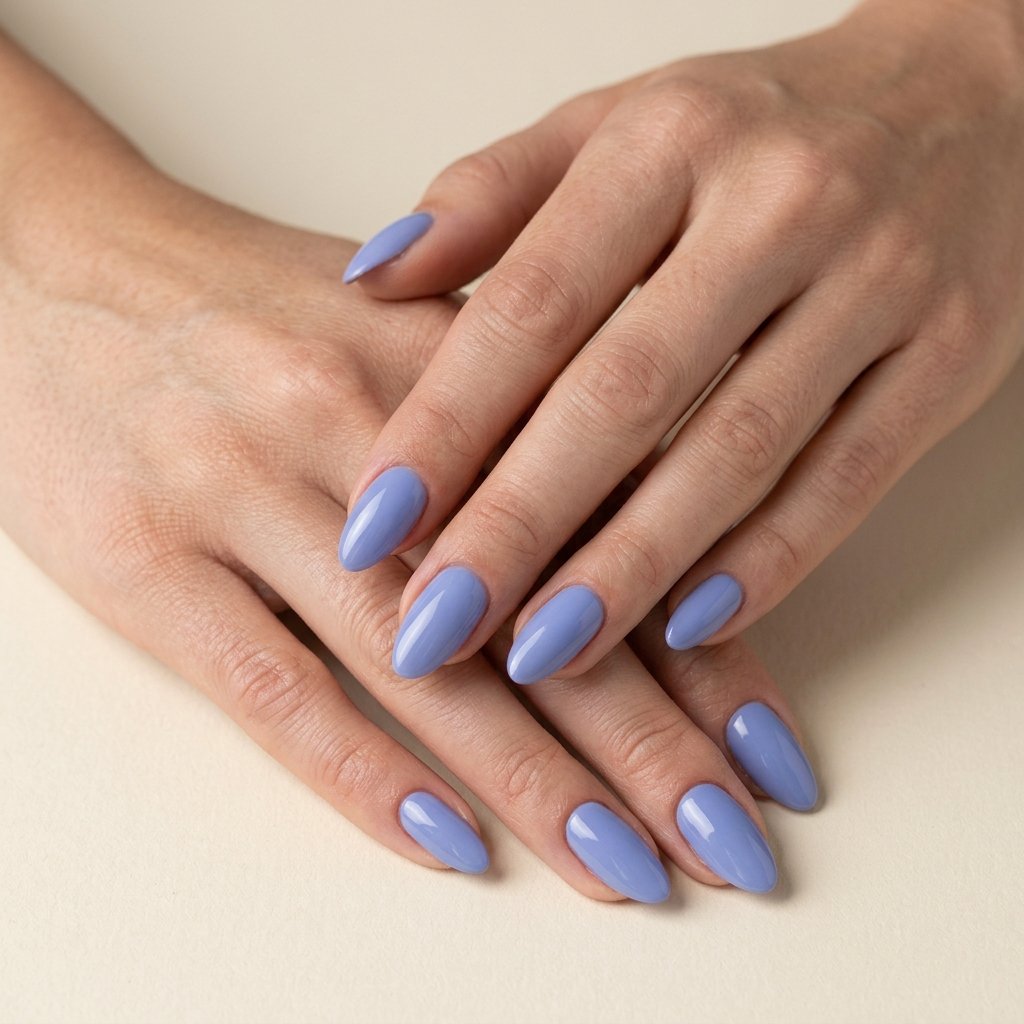
Sometimes adding more artwork doesn’t actually make a manicure better. With a color as distinctive as periwinkle, a clean solid application can create just as much impact.
A classic high-gloss manicure allows the blue-violet shade to become the entire focus. There are no rhinestones competing for attention, no patterns covering the color, and no extra shades changing its character. Instead, the manicure relies on precise shaping, clean cuticles, smooth polish, and an almost glass-like shine.
This simplicity also lets you notice the complexity of the color itself.
Under natural daylight, the manicure may lean toward a cool pastel blue. Move into warmer indoor lighting and the violet undertones can become noticeably stronger. Different skin tones can also bring forward slightly different aspects of the shade.
For periwinkle nails like these, nail shape can subtly change the overall aesthetic. Short squoval nails feel neat, practical, and modern. Soft oval shapes add femininity, while medium almond nails create a more elegant silhouette.
Polish opacity matters too. An opaque cream formula produces a saturated salon-style result, while a slightly milkier formula creates something softer and more delicate.
Finish the manicure with a generous layer of high-shine top coat to emphasize the smooth surface and give the color that freshly polished, reflective appearance.
Style Insight: Apply two or three thin layers instead of one heavy coat. Thin applications tend to level more evenly and make the finished color look smoother.
Who It Suits: Minimalists, pastel lovers, and anyone experimenting with periwinkle for the first time.
When to Wear: Everyday outfits, workdays, brunches, spring weekends, vacations, and casual dinners.
2. Silver-Lined Periwinkle French Tips
The French manicure has become less about following one strict formula and more about using its recognizable structure as a starting point for color and creativity.
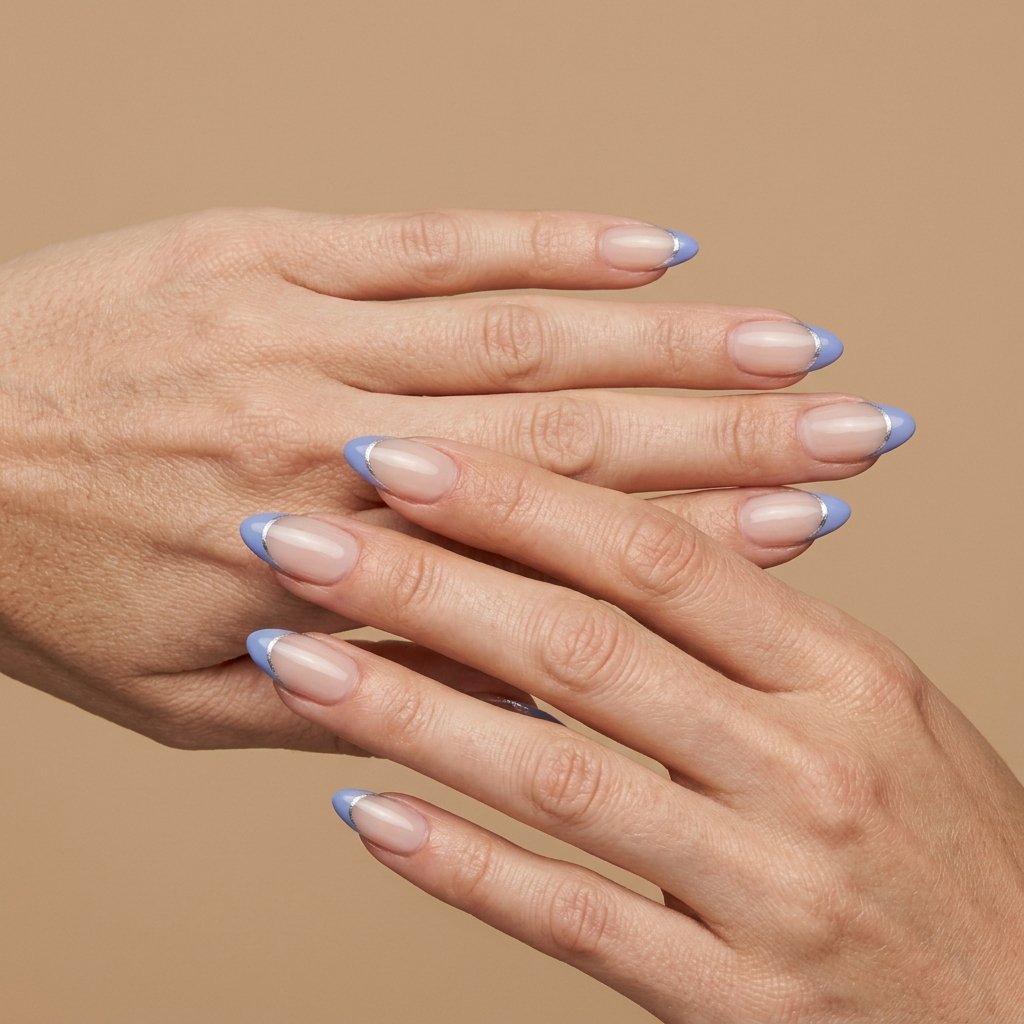
Here, a translucent nude or softly milky base replaces an opaque foundation, allowing the manicure to remain light and clean. Periwinkle then takes the place of traditional white across the tips.
But the detail that makes this design particularly special is the metallic outline.
An extremely thin silver line follows the lower curve of each colored tip, creating a crisp separation between the nude nail bed and pastel edge. Because silver and periwinkle both have naturally cool characteristics, they complement one another without creating a harsh contrast.
On shorter nails, the colored section can remain narrow and precise. Medium or long almond nails allow for a deeper curved tip, while square shapes can create a bolder, straighter interpretation.
The silver should function almost like delicate jewelry. Using a fine silver nail art liner makes it easier to create that precise metallic border without overpowering the blue-violet tip.
For an understated finish, keep every nail identical. If you want slightly more variation, one accent nail can feature a double silver line or a tiny metallic detail near the cuticle.
Style Insight: Keep the silver outline significantly thinner than the colored French tip. The metallic detail should define the design rather than compete with it.
Who It Suits: Anyone who loves classic French manicures but wants something cooler, more colorful, and contemporary.
When to Wear: Weddings, date nights, birthdays, dinners, celebrations, vacations, and polished everyday occasions.
3. Shadow Leaf Periwinkle Nails
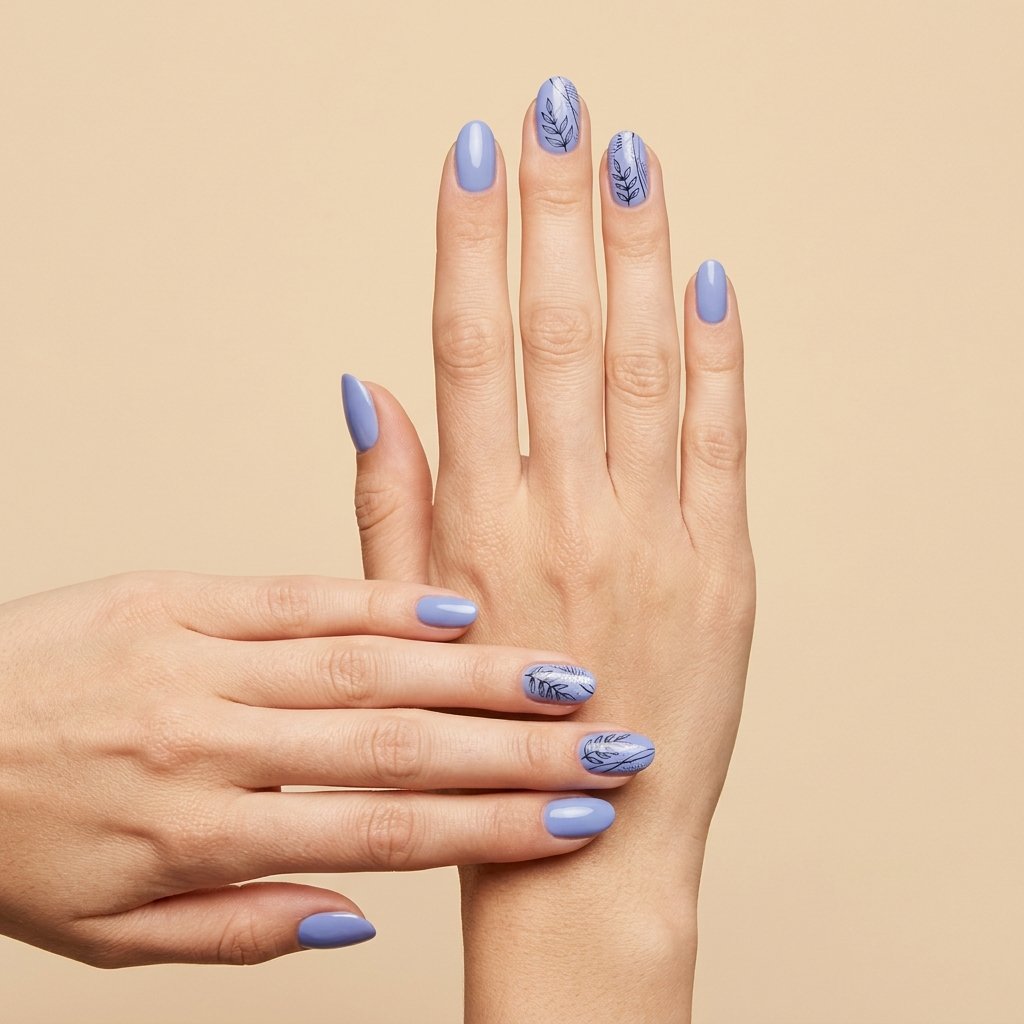
Florals may dominate spring nail inspiration, but botanical designs don’t necessarily need colorful petals.
Shadow leaf art offers a moodier, more sophisticated alternative.
Begin with a smooth periwinkle base across several nails. On selected accent fingers, introduce slim botanical silhouettes in charcoal or near-black. Fine stems can travel diagonally across the nail with elongated leaves extending naturally from each side, creating the impression of shadows falling across a pastel surface.
The contrast is what makes the design interesting.
The light blue-violet base feels calm and airy, while the darker leaves introduce definition and a slightly editorial quality. Rather than looking like traditional floral nail art, the finished manicure can resemble a botanical illustration or shadows cast by plants near a sunny window.
Negative space gives you another way to customize the look. One accent nail can remain partially nude, with a section of periwinkle and a dark branch crossing between both areas. Another can feature the botanical silhouette directly over the solid pastel color.
With periwinkle nails, darker botanical artwork remains clearly visible without taking away the unusual character of the base shade.
The key is restraint. Covering every finger with dense leaves could make the manicure feel unnecessarily busy. A few carefully positioned botanical accents allow both the artwork and color to breathe.
Style Insight: Choose fine stems and narrow leaves instead of oversized tropical foliage. Smaller botanical details maintain the refined feeling of the manicure.
Who It Suits: Nail-art lovers who appreciate nature-inspired designs but prefer sophisticated details over playful florals.
When to Wear: Creative workplaces, spring gatherings, gallery visits, weekend outings, vacations, and daytime occasions.
4. Tonal Blue Wave Accent Nails
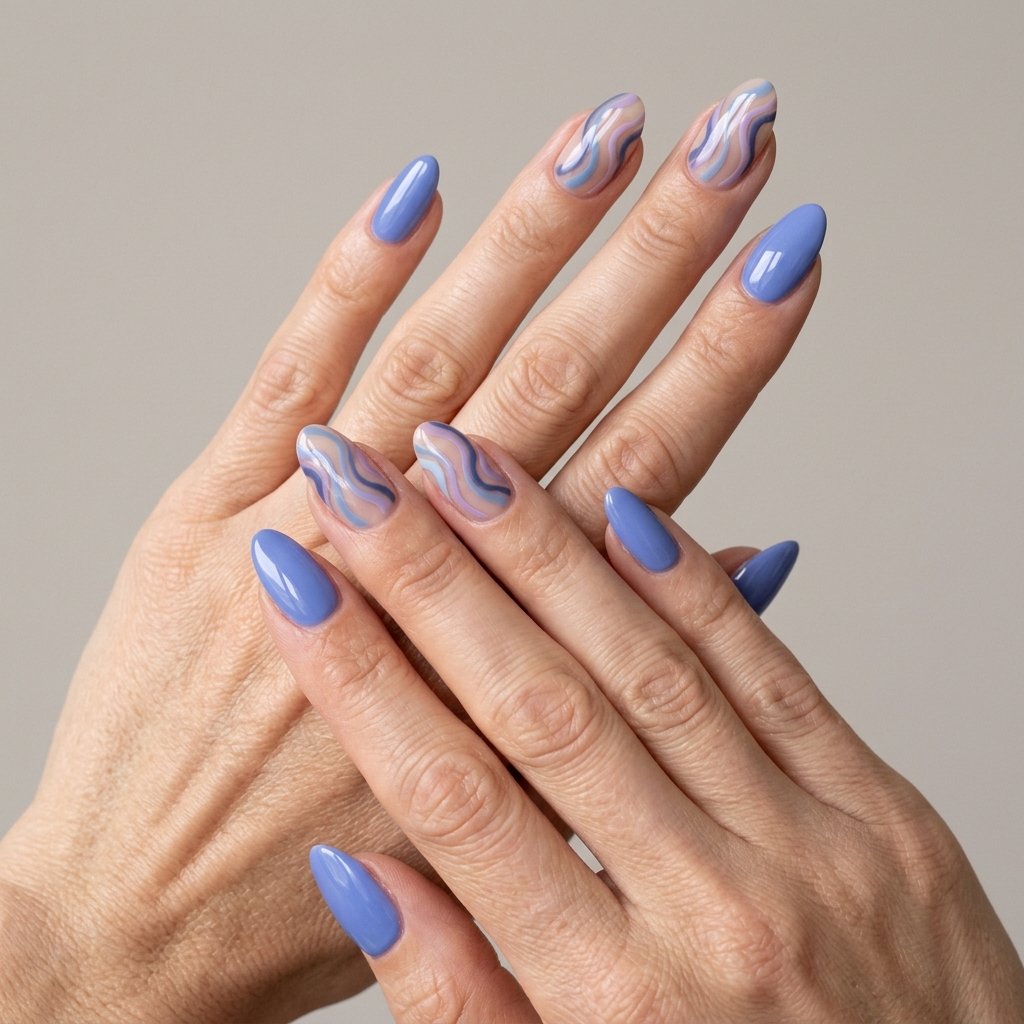
Abstract nail art gives you freedom to combine multiple colors without requiring every line or shape to be perfectly symmetrical.
For this design, periwinkle acts as the central color while several neighboring blue-purple shades create movement around it.
Keep some nails completely solid to establish the main shade. On one or two accent fingers, begin with a sheer nude base and layer free-flowing bands of dusty blue, lavender, muted navy, soft violet, and periwinkle.
Some curves can move diagonally from one side of the nail to the other. Others might travel vertically or create an elongated S-shape. Changing the direction from finger to finger prevents the artwork from looking repetitive.
The palette remains cohesive because all the colors relate to one another. Navy introduces depth, lavender brings out the purple undertones, and dusty blue emphasizes periwinkle’s cooler side.
Negative space is equally important. Leaving narrow areas of the sheer base visible between selected waves stops the design from becoming a block of overlapping color.
The finished manicure feels artistic but still wearable, especially when the more detailed accent nails are balanced by several solid-colored fingers.
Style Insight: Change the width of the waves throughout the design. Mixing narrow lines with broader curves creates more natural visual movement.
Who It Suits: Anyone who enjoys abstract artwork, tonal manicures, and designs that look different on every finger.
When to Wear: Summer vacations, festivals, weekend plans, creative events, casual celebrations, and everyday looks.
5. Reverse Double Ombré French Nails
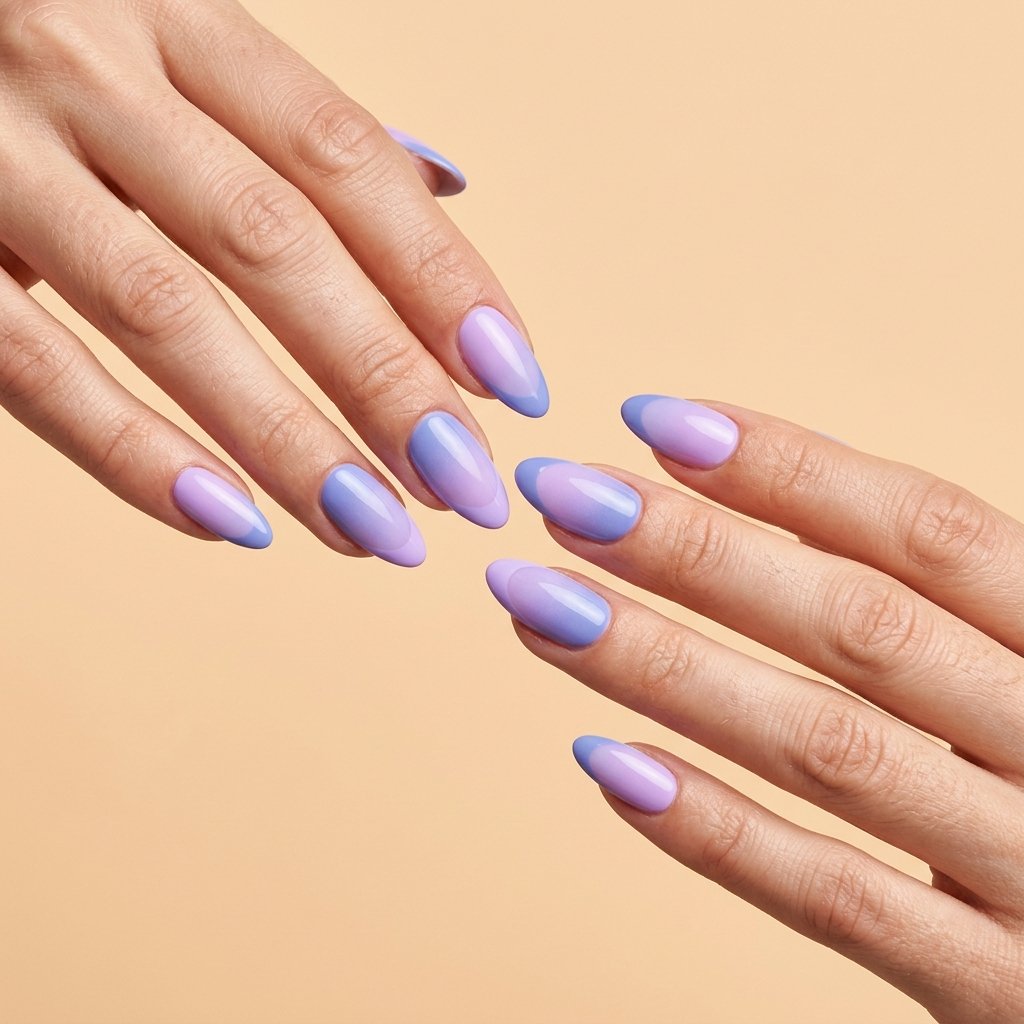
A standard ombré manicure gradually transitions from one color into another. Reverse double ombré takes that familiar idea and gives it an unexpected optical-illusion effect.
The nail bed begins with two closely related colors, for example, lavender on one side blending gradually into periwinkle on the other. Instead of allowing that gradient to continue uninterrupted, the colors reverse once they reach the French tip.
The side that appeared lavender through the nail bed becomes periwinkle at the tip, while the periwinkle side switches back toward lavender.
That reversal creates the illusion that two gradients are crossing each other.
Although the finished periwinkle nails can look technically complex, limiting the palette to neighboring blue-purple tones keeps the design harmonious rather than chaotic. The effect becomes particularly beautiful when both shades have similar softness and saturation.
Medium and long almond, coffin, or square nails provide enough surface area to make the color transition easy to see. A shorter manicure can still use the concept, but the French section needs to remain carefully defined so the reversed gradient doesn’t disappear.
Blending is the most important part of this design. A soft nail ombré sponge can help diffuse the two shades gradually rather than leaving an obvious border between them.
For a subtle result, combine pastel lavender with a light blue-leaning periwinkle. For something more dramatic, use a saturated blue-violet against a noticeably lighter lavender.
Style Insight: Keep the French edge crisp even though the colors inside it are blended. That contrast between a defined tip shape and soft internal gradient makes the optical illusion easier to see.
Who It Suits: Trend-focused nail lovers who enjoy gradients, unusual French manicures, and technically detailed nail art.
When to Wear: Birthday celebrations, vacations, concerts, parties, fashion events, and special weekends.
6. Blue-on-Blue Crocodile Print Nails
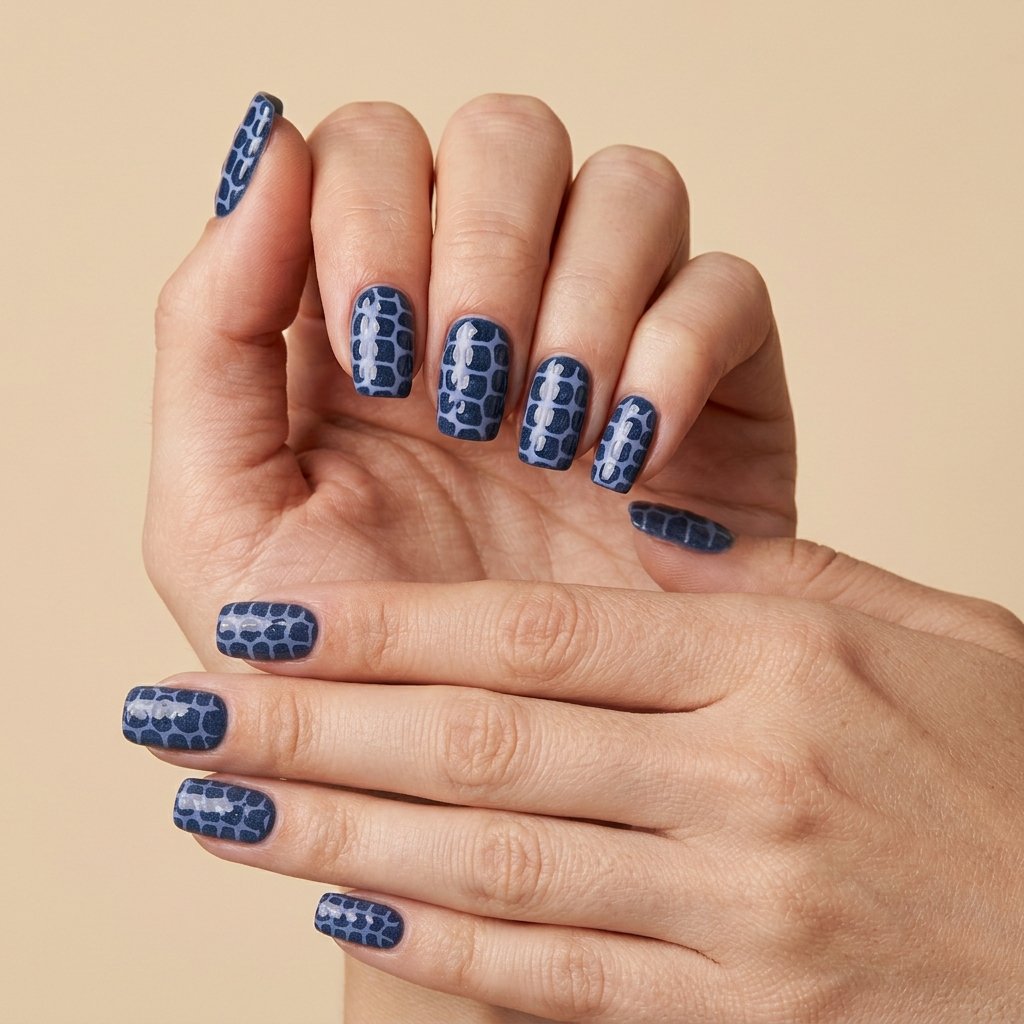
Animal-print manicures don’t always have to rely on leopard spots or zebra stripes. Crocodile-inspired texture offers a more unexpected approach, especially when the entire design stays within the same blue-purple color family.
Instead of placing dark croc print over a neutral base, begin with a deeper denim or navy-blue foundation. Then layer irregular periwinkle scale shapes across selected nails. The difference between the darker background and lighter pattern allows the texture to stand out while keeping the palette coordinated.
What makes this look particularly interesting is the option to introduce dimension.
Small amounts of clear builder gel can be carefully placed over individual scale shapes, giving parts of the pattern a slightly raised surface. Under natural light, those glossy sections catch reflections differently from the surrounding polish and make the texture much more noticeable.
You don’t necessarily need the crocodile pattern on every finger. Alternating textured accent nails with solid periwinkle nails can make the manicure feel more balanced while giving the detailed artwork enough space to become the focal point.
The scale pattern should also remain slightly imperfect. Realistic crocodile-inspired texture contains different shapes and sizes, so perfectly uniform rows can make the design look overly mechanical.
Style Insight: Mix smaller scales near the sides with slightly larger irregular shapes toward the center. This variation gives the pattern a more organic appearance.
Who It Suits: Fashion-forward nail lovers who want to move beyond conventional floral, French, or glitter manicures.
When to Wear: Fashion events, nights out, concerts, parties, vacations, and statement-making occasions.
7. Periwinkle Duo-Chrome Shimmer Nails
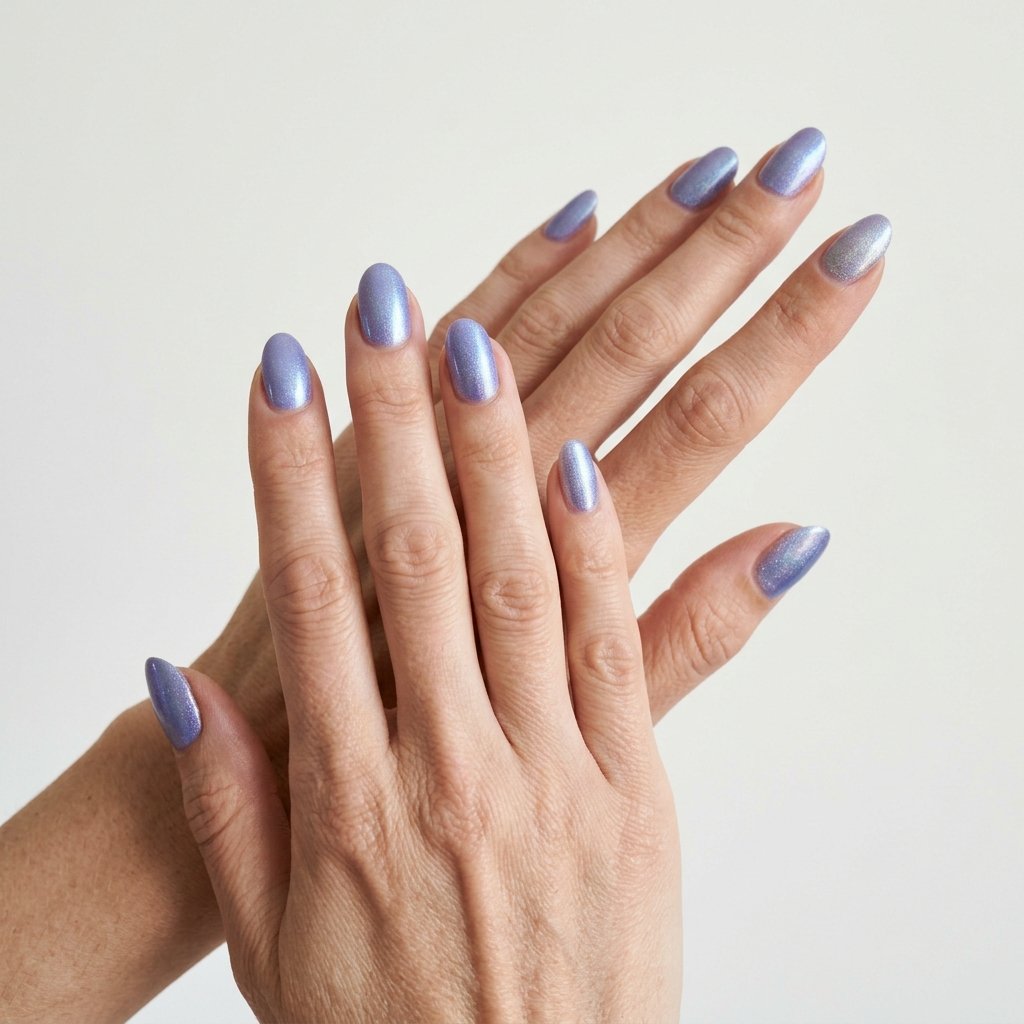
Not every statement manicure requires detailed hand-painted artwork. Sometimes the finish itself can create all the visual interest you need.
Duo-chrome shimmer gives periwinkle an entirely different personality by allowing the surface to shift between several related tones as your hands move.
From one angle, the manicure may appear predominantly blue-violet. Under stronger light, flashes of lavender, icy silver, or deeper violet can emerge. The effect changes constantly instead of looking exactly the same from every direction.
Unlike chunky glitter, a fine reflective shimmer doesn’t necessarily cover the base color. It enhances it.
For the richest effect, start with a slightly deeper periwinkle foundation and layer a thin coat of duo-chrome nail polish or shifting pigment over the top. A darker base can intensify the reflective particles, while a pale foundation produces a softer, more ethereal result.
The manicure is especially effective on almond and oval shapes because their curved surfaces naturally catch light at different angles. However, short square nails can make the same finish feel modern and compact.
Keep additional decorations minimal. Rhinestones, decals, and elaborate artwork can compete with the shifting surface when the reflective pigment already provides plenty of movement.
Style Insight: Photograph or view the manicure in both direct and indirect light. Duo-chrome finishes reveal their strongest color shifts as the lighting angle changes.
Who It Suits: Anyone who wants noticeable nail art without complicated patterns or dimensional embellishments.
When to Wear: Evening events, holiday parties, dinners, vacations, celebrations, and nights out.
8. Milky Periwinkle Micro-French Nails
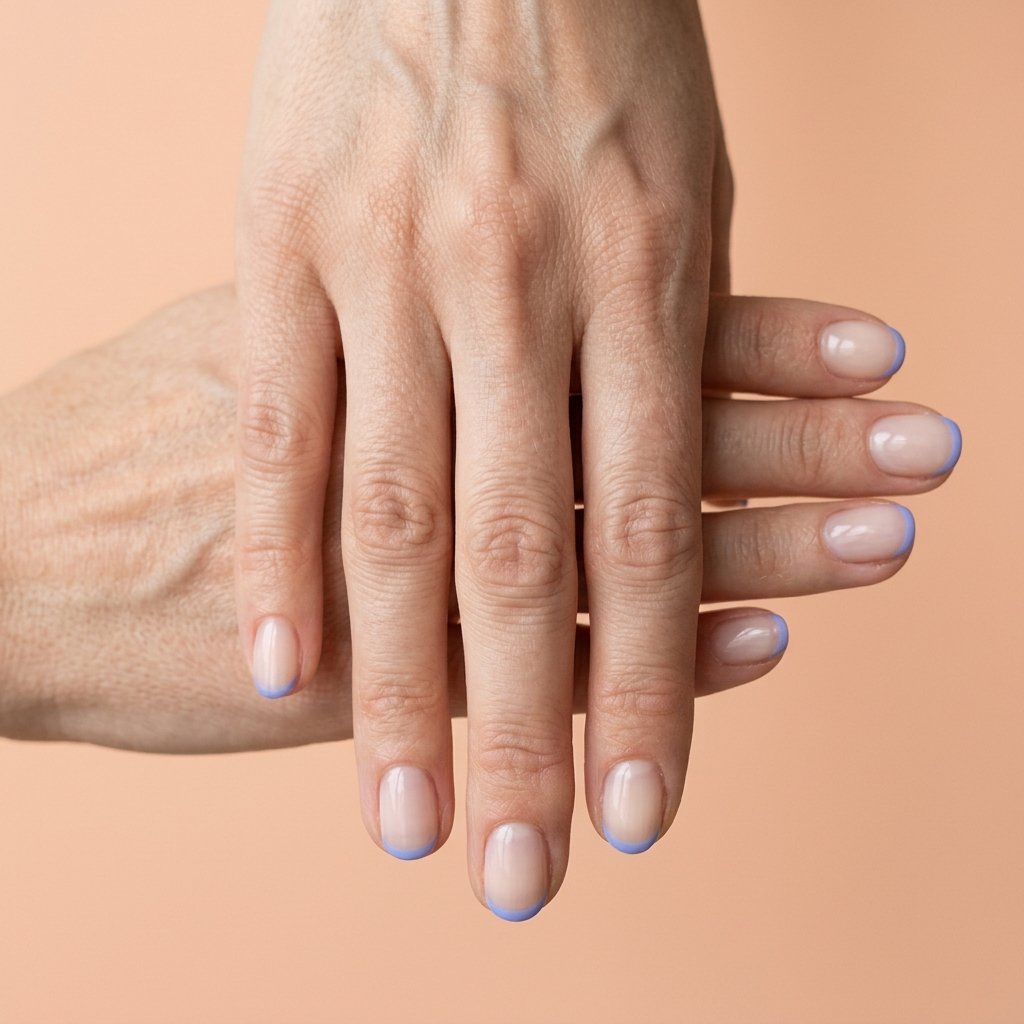
For anyone who prefers quiet details over bold nail art, a micro-French manicure offers one of the most delicate ways to introduce this blue-violet shade.
Rather than painting the entire nail, begin with a sheer milky nude base that allows some of the natural nail to remain visible. Then add an extremely thin periwinkle line along the free edge.
The result is minimal, but it isn’t boring.
Because the tip is so narrow, even a slightly more saturated version of periwinkle feels understated. The colored edge quietly defines the nail shape while the translucent base keeps the manicure looking clean and airy.
This is also one of the easiest periwinkle nails ideas to adapt to shorter lengths. Round, oval, and squoval nails all provide enough room for a precise micro-tip without requiring extensions.
If you want the manicure to feel slightly more distinctive, vary the design on one or two fingers. A tiny curved line near the cuticle can echo the French tip, or one accent nail can use a double micro-line with a narrow area of negative space between the two colors.
The key is maintaining restraint. The appeal comes from how little color is needed to transform an otherwise natural-looking manicure.
Style Insight: Choose a periwinkle polish with enough pigment to remain visible in one or two thin passes. An overly sheer formula may disappear against the nude base.
Who It Suits: Minimalists, short-nail lovers, professionals, and anyone who prefers subtle manicures.
When to Wear: Workdays, everyday wear, brunch, travel, daytime events, and occasions where you want something polished but understated.
9. Periwinkle Glass Jelly Nails
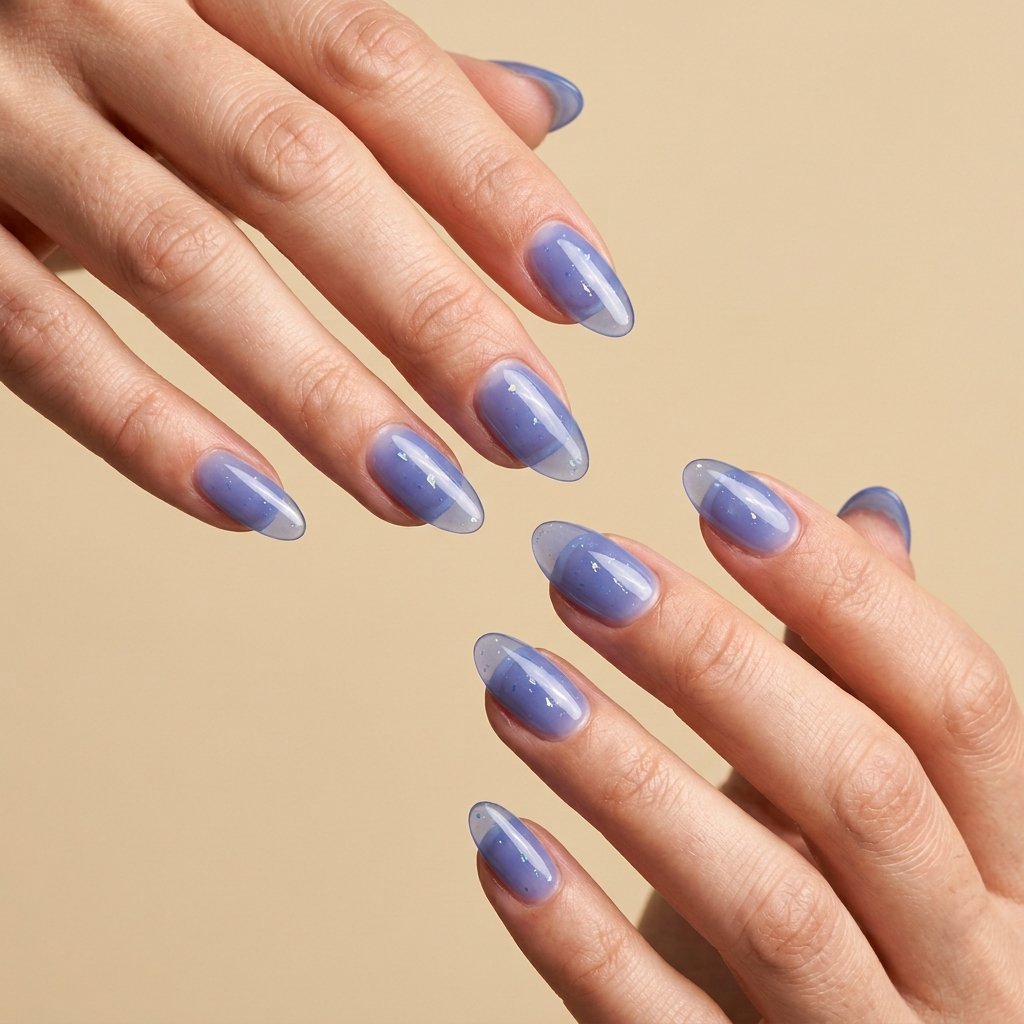
Jelly polish changes the way we experience color.
Instead of creating a completely opaque surface, the translucent formula allows light to travel through the nail, giving the manicure a juicy, glass-like appearance. When that effect is combined with periwinkle, the result feels fresh, dimensional, and noticeably different from a traditional pastel cream.
The technique begins with thin layers of transparent blue-violet color. Each coat gradually increases the saturation while maintaining some translucency. Depending on how many layers are applied, the finished manicure can range from a faint lavender-blue tint to a richer glassy periwinkle.
That transparency is what makes these periwinkle nails special.
On medium almond or oval shapes, the free edge can remain slightly more translucent than the nail bed, adding another layer of dimension. If extensions are being used, a clear base underneath the jelly color can intensify the stained-glass effect even further.
For additional detail, tiny iridescent flakes can be suspended between sheer layers rather than placed directly on top. Because they appear to float inside the color, the reflective pieces add depth without taking away from the transparent finish.
A thick glossy top coat completes the design and helps create that smooth, almost liquid-looking surface.
Style Insight: Build the color gradually. Applying one thick opaque layer defeats the purpose of a jelly manicure, while several thin translucent coats preserve its glass-like depth.
Who It Suits: Anyone who loves glossy, modern, youthful manicures and translucent nail finishes.
When to Wear: Spring trips, summer vacations, beach weekends, festivals, casual outings, and warm-weather events.
10. Twilight Periwinkle Gradient Nails
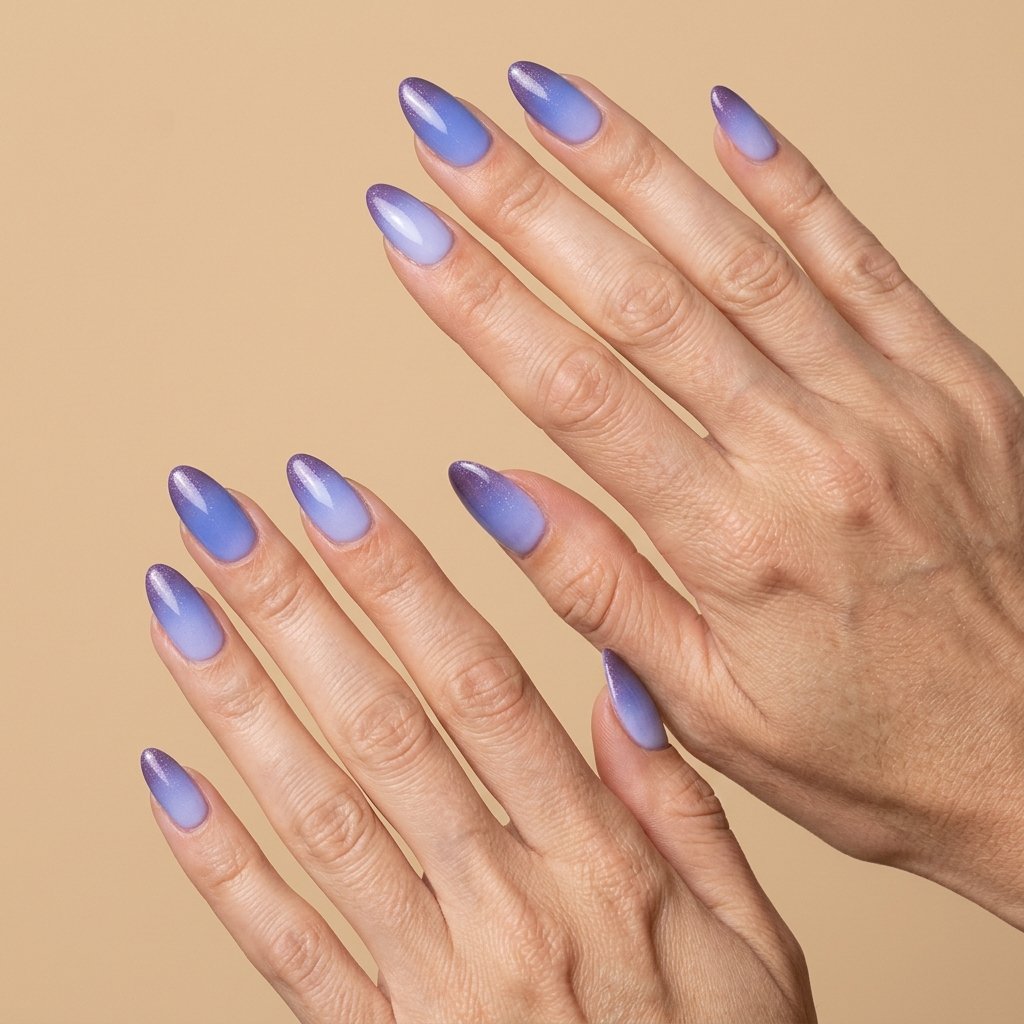
Periwinkle already sits naturally between blue and violet, which makes it an ideal starting point for a manicure inspired by the changing colors of the evening sky.
Rather than creating a sharp two-tone ombré, this design moves gradually through several neighboring shades. Begin with a lighter lavender-blue near the cuticle, allow true periwinkle to dominate the center, and deepen the tips into smoky violet.
The transition should be extremely soft.
When properly blended, there shouldn’t be an obvious point where one shade ends and another begins. Instead, the manicure should resemble the sky slowly becoming deeper and cooler after sunset.
A tiny amount of ultrafine shimmer can make the design even more atmospheric. Rather than covering the nails in glitter, scatter subtle reflective particles through the darker portions so they become noticeable only when they catch the light.
This gives the manicure the impression of the first distant stars appearing at twilight.
Long almond nails provide plenty of room for all three colors to transition gradually, but shorter oval nails can create an equally beautiful version by keeping the differences between shades subtle.
A glossy finish makes the colors appear deeper, while a soft satin top coat can produce a hazier, almost painted-sky effect.
Style Insight: Use three closely related shades rather than jumping directly from pale blue to dark purple. The middle periwinkle tone is what makes the gradient appear seamless.
Who It Suits: Anyone drawn to dreamy, atmospheric manicures and color-focused nail art.
When to Wear: Romantic dinners, evening events, vacations, transitional seasons, celebrations, and special occasions.
Which Periwinkle Nail Design Matches Your Energy?
The beauty of periwinkle nails is that one blue-violet shade can take on completely different personalities depending on how it’s styled.
If you’re drawn to clean, timeless manicures, the classic high-gloss look allows the color itself to become the statement. A milky micro-French takes that simplicity even further, using only a narrow line of color for a delicate everyday finish.
For something sophisticated, silver-lined French tips combine pastel color with a subtle metallic detail. Shadow leaf art introduces a moodier botanical influence, while tonal waves give the manicure a more creative, free-flowing personality.
Those who prefer bolder nail art can experiment with blue-on-blue crocodile texture or reverse double ombré. Both designs rely on technique and pattern rather than excessive embellishment, making them distinctive without losing the dreamy character of the color.
Duo-chrome shimmer and jelly finishes are ideal when you want the surface itself to create the effect. One changes as light moves across the nails, while the other uses transparency to make the color appear almost glass-like.
And for something softer and more atmospheric, the twilight gradient turns periwinkle’s natural relationship with lavender and violet into a manicure inspired by an evening sky.
There isn’t one correct way to wear this shade. Your nail length, finish, artwork, and surrounding colors can all change its mood, which is exactly what makes it such an interesting addition to your manicure rotation.
Frequently Asked Questions
What color are periwinkle nails?
Periwinkle nails feature a shade that sits between blue and violet, often appearing like a soft lavender-blue. Some formulas contain stronger blue undertones, while others lean closer to lilac or purple. The exact appearance can also change slightly depending on lighting, finish, and surrounding colors.
Is periwinkle more blue or purple?
Periwinkle is generally considered a blue-violet color, so it contains characteristics of both. Nail polish interpretations vary considerably. A cooler formula may resemble pastel blue with a subtle violet undertone, while a warmer version can look closer to lavender. If you’re choosing polish online, comparing swatches in natural daylight can give you a better idea of its true undertone.
What colors pair well with periwinkle?
White, silver, navy, lavender, nude, charcoal, cream, pale yellow, and soft gray can all complement the shade. Silver emphasizes its cool undertones, while nude and cream allow the color to become more prominent. Deeper blues create tonal contrast, and small yellow accents can provide an unexpected complementary pop.
Can you wear periwinkle on short nails?
Absolutely. Short periwinkle nails can look particularly clean and modern. A glossy solid manicure works beautifully on round or squoval shapes, while micro-French tips add color without making short nails feel crowded. Jelly finishes and minimal accent art are also excellent options when there isn’t much surface area for complicated designs.
What season is best for periwinkle manicures?
Spring is an obvious match because periwinkle fits naturally among pastel colors, but the shade can work throughout the year. A sheer jelly finish feels fresh for summer, deeper blue combinations transition nicely toward fall, and silver or duo-chrome accents can give the color an icy winter character.
Ready to Try Periwinkle Nails?
There are some nail colors that only seem to work with one season or one particular aesthetic. Periwinkle nails, however, offer much more flexibility.
The color can be soft enough for a minimal everyday manicure, sophisticated enough for metallic French tips, artistic enough for abstract waves, and bold enough for crocodile texture or an optical-illusion ombré. Changing nothing more than the finish can take it from creamy and understated to translucent, reflective, or multidimensional.
That means you don’t necessarily need to follow one trend exactly. You can take the elements that suit your personal style and adapt them to your preferred nail length and shape.
Save the designs that immediately catch your attention, compare the finishes and details you like most, and show your favorites to your nail artist before your next appointment. Whether you choose a simple glossy finish or something much more detailed, this dreamy blue-violet color has plenty of ways to make your next manicure feel fresh.
Hi, I’m Amber, the creator behind Dazzle Me Nails. I started this site because I’ve always believed nails aren’t just about beauty, they’re about confidence, self expression, and feeling put together in the simplest way. Like many of you, I’ve struggled with weak nails, chipped polish, and designs that looked good online but didn’t work in real life. That’s why I created Dazzle Me Nails to share nail ideas that are practical, wearable, and easy to recreate.
Here, you’ll find minimalist nail designs, trend inspired looks, and simple nail care tips to help you achieve clean, polished nails without over complicating your routine. If you love soft, classy, and effortless nail styles, you’re in the right place.