
If there’s one animal-print manicure proving that playful nail art can still look incredibly stylish, it’s cow print nails. Once known mainly for bold black spots over a crisp white base, this recognizable pattern has evolved into something far more versatile. Today’s versions experiment with chocolate brown, milky pink, sheer neutrals, French tips, mixed patterns, and unexpected color combinations that completely change the personality of the classic cowhide look.
Part of what makes this trend so appealing is its imperfection. Unlike geometric nail art that depends on precise lines and identical shapes, cow spots are naturally uneven. Some can be small and rounded, others wide and abstract, and no two nails need to look exactly alike. That organic quality gives each manicure a custom appearance while making the pattern surprisingly approachable for anyone who enjoys experimenting with nail art.
The Western and cowgirl aesthetics have also helped bring the pattern back into the beauty spotlight. Denim, cowboy boots, earthy colors, vintage belts, rodeo-inspired fashion, and country influences have all made their way into modern wardrobes. Spotted manicures fit naturally into that world, but the newest interpretations prove you don’t have to dress Western to wear them.
A translucent pink base can make the pattern feminine and delicate. Chocolate spots over clear polish create a minimalist neutral manicure. French tips give it a polished salon feel, while combining cowhide with another pattern turns it into statement nail art.
That versatility is exactly why this manicure continues to feel fresh. Whether your personal style is minimal, colorful, feminine, retro, or bold, there’s a way to adapt the print without losing what makes it instantly recognizable.
Why Cow Print Nails Are Taking Over Right Now
Animal-print beauty trends tend to return again and again, but cowhide has a particularly playful quality. Instead of following a perfectly repetitive pattern, it relies on irregular markings scattered naturally across the nail. The placement can change from finger to finger, allowing nail artists to make every manicure feel slightly different.
That freedom also makes the design incredibly customizable. Traditional black and white remains iconic, but chocolate brown has become an appealing alternative for anyone who prefers warmer neutrals. Cream, beige, blush pink, caramel, espresso, and translucent nude shades can soften the pattern even further.
The print also works across different nail lengths and shapes. Long almond or square nails provide plenty of room for larger markings and elaborate combinations, while short natural nails can carry tiny spots, partial accents, or negative-space versions without looking crowded.
Another reason cow print nails have become so wearable is how easily they move between minimalist and maximalist aesthetics. You could wear a few tiny chocolate markings over a sheer base for an understated manicure or cover longer nails in contrasting spots, florals, metallic details, and colorful accents for something much more expressive.
For anyone experimenting at home, the irregular pattern is an advantage rather than a challenge. The spots aren’t supposed to match perfectly, so slight differences can actually make the design look more authentic. Using a Nail Art Dotting Tool Set can make it easier to create a mixture of tiny dots, curved patches, and larger organic shapes without needing professional-level precision.
The result is a manicure trend that can be adapted rather than simply copied. These ten designs explore that versatility through unexpected palettes, softer bases, mixed patterns, and creative placements that take the classic spotted look in fresh directions.
1. Milky Multicolor Cow Spot Nails
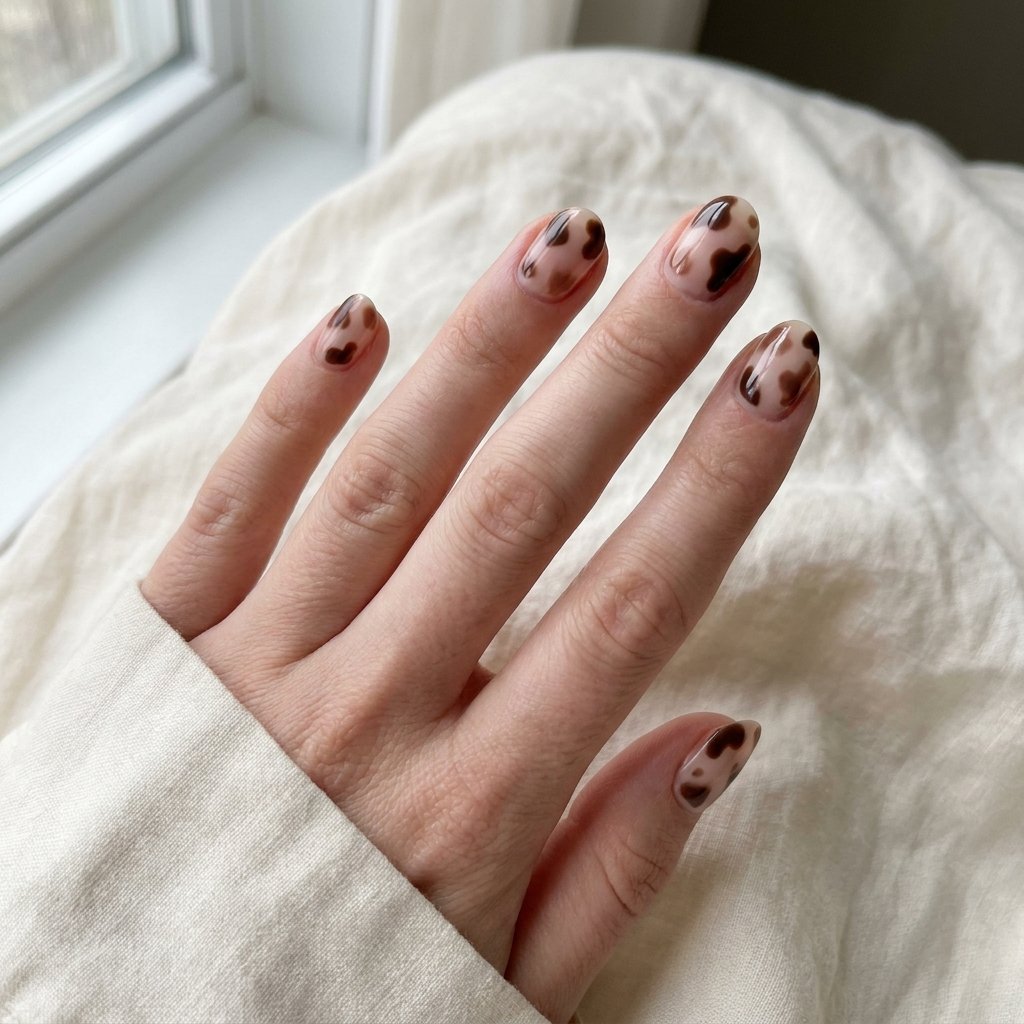
A milky multicolor manicure is an ideal starting point if you like traditional cowhide but want more dimension than a simple black-and-white combination. Begin with a translucent milk-white foundation rather than an opaque white polish. The slight transparency gives the nails a softer appearance and creates creamy depth underneath the artwork.
Then comes the interesting part: combining black and chocolate-brown markings within the same manicure.
Some fingers can feature predominantly espresso-brown spots, while others use smaller black patches. You can even place both colors on selected nails, as long as enough of the milky foundation remains visible between them. This keeps the manicure light and prevents the pattern from becoming visually crowded.
The markings should feel organic rather than carefully measured. Think curved edges, irregular blobs, tiny isolated marks, and larger patches that disappear partially around the sides of the nail. That variation is what gives the design its characteristic cowhide appearance.
A glossy finish works especially well here. Applying a smooth High-Shine Gel Top Coat over the completed artwork can enhance the creamy foundation while making the espresso and black details appear richer and more defined.
Medium almond nails give this combination an elegant silhouette, while short square nails make it more playful and casual. Because the palette stays grounded in cream, black, and chocolate, it also coordinates easily with denim, beige knitwear, leather accessories, and simple gold jewelry.
Style Insight: Don’t divide the brown and black markings perfectly evenly. Let one shade dominate while the second appears occasionally for a more natural, less calculated result.
Who It Suits: Anyone who loves neutral animal prints but wants something more dimensional than the traditional black-and-white version.
When to Wear: Everyday outfits, coffee dates, transitional seasons, casual weekends, and relaxed Western-inspired looks.
2. Strawberry Milk Cow Print Nails
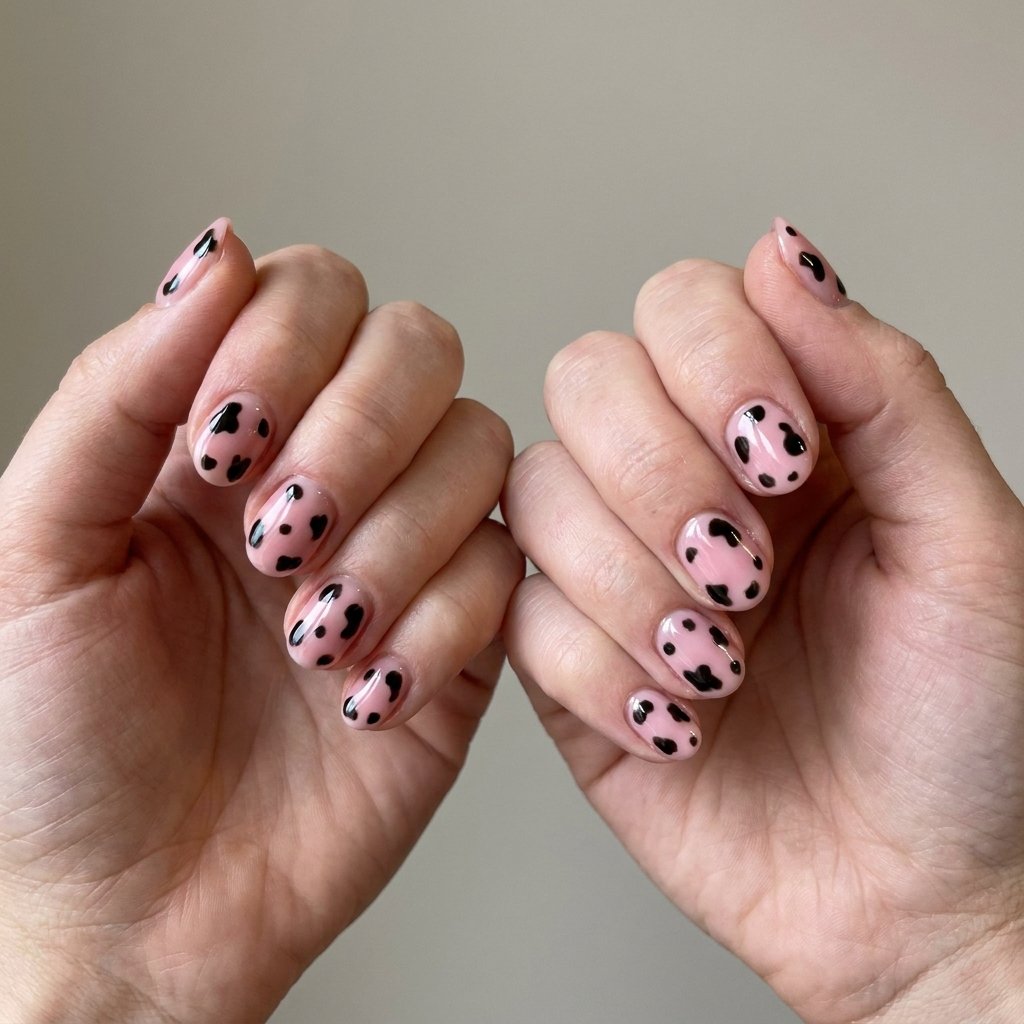
Traditional cowhide gets a surprisingly feminine transformation when crisp white polish is replaced with a translucent strawberry-milk pink.
The base should be soft rather than intensely saturated. Think sheer blush with just enough pink pigment to give the manicure a fresh, delicate appearance while allowing the darker markings to remain clearly visible. Against this background, irregular black spots create an eye-catching contrast between sweet and graphic.
A Sheer Strawberry Pink Gel Polish can help create that translucent, milky foundation instead of the heavy coverage you would get from a fully opaque pink. Two thin coats usually give this type of manicure more visual depth than one thick layer.
Keep the markings varied across each finger. One nail might feature a larger black patch near the cuticle, another could have several smaller spots around the tip, while another might leave most of the pink base untouched. Avoid making each finger a duplicate of the previous one.
The finished cow print nails feel playful without becoming childish because the soft pink foundation balances the bold black pattern. A glossy almond shape makes the design especially feminine, while a short oval shape creates a more natural everyday interpretation.
You could also soften the contrast further by replacing pure black with deep espresso brown. That small adjustment produces a warmer manicure while preserving the recognizable spotted effect.
Style Insight: Choose a sheer blush or strawberry-milk base rather than opaque bubblegum pink if you want the manicure to look soft and dimensional.
Who It Suits: Pink-manicure lovers who want to introduce animal print without giving up their feminine aesthetic.
When to Wear: Spring weekends, brunch, birthdays, vacations, casual dates, and everyday manicures.
3. Brown Cow Print French Tips
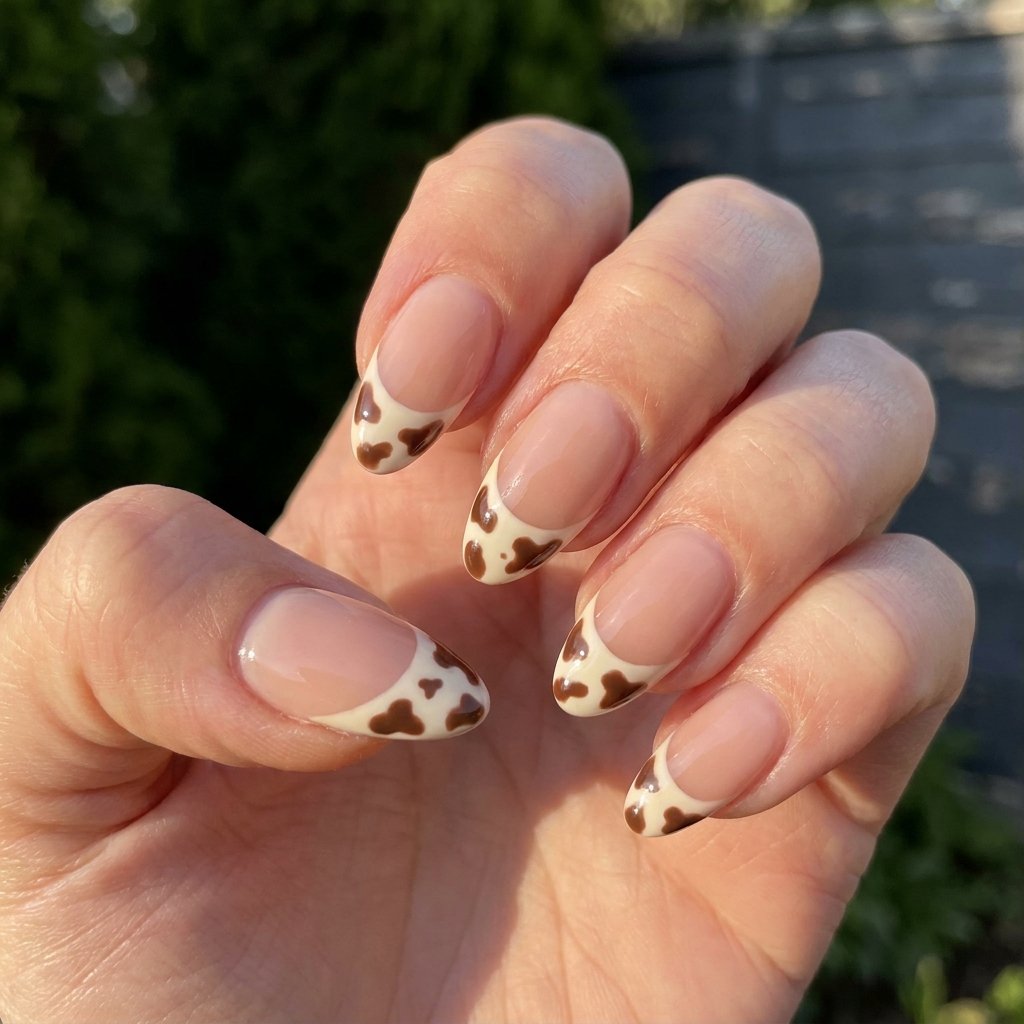
French manicures are one of the easiest ways to make a bold pattern feel polished, and the same principle works beautifully with cowhide.
Start with a sheer nude or natural pink base that closely complements the wearer’s skin tone. Instead of painting a traditional solid-white French edge, create a creamy tip and decorate it with irregular chocolate-brown markings.
Keeping the pattern concentrated toward the ends leaves plenty of negative space around the nail bed. This visual breathing room makes the manicure feel cleaner than an all-over print while still allowing the cowhide design to be immediately noticeable.
The width of the French tip matters. An extremely thin micro-French line doesn’t provide enough room for the markings to develop properly. A slightly wider curved tip gives the artist enough space to create several irregular brown patches without making them look squeezed together.
Almond nails work beautifully because their curved silhouette complements the flowing edge of the French tip. Square nails offer a more graphic alternative, particularly if you prefer a wider tip with slightly larger chocolate markings.
For creating precise edges while keeping the individual spots intentionally irregular, a Fine Nail Art Detail Brush Set can be useful for controlling where the pattern begins and ends without making every marking look identical.
The result is one of the most versatile versions of the trend. It has enough animal print to feel fun but enough sheer negative space to retain the clean quality people associate with a French manicure.
Style Insight: Make the French tips wide enough to showcase the pattern properly, but keep the nail bed sheer and uncomplicated for balance.
Who It Suits: French-manicure loyalists who want to experiment with Western-inspired nail art without committing to a fully patterned set.
When to Wear: Everyday styling, weekend events, country concerts, casual dinners, and Western-themed occasions.
4. Clear-Base Chocolate Cowhide Nails
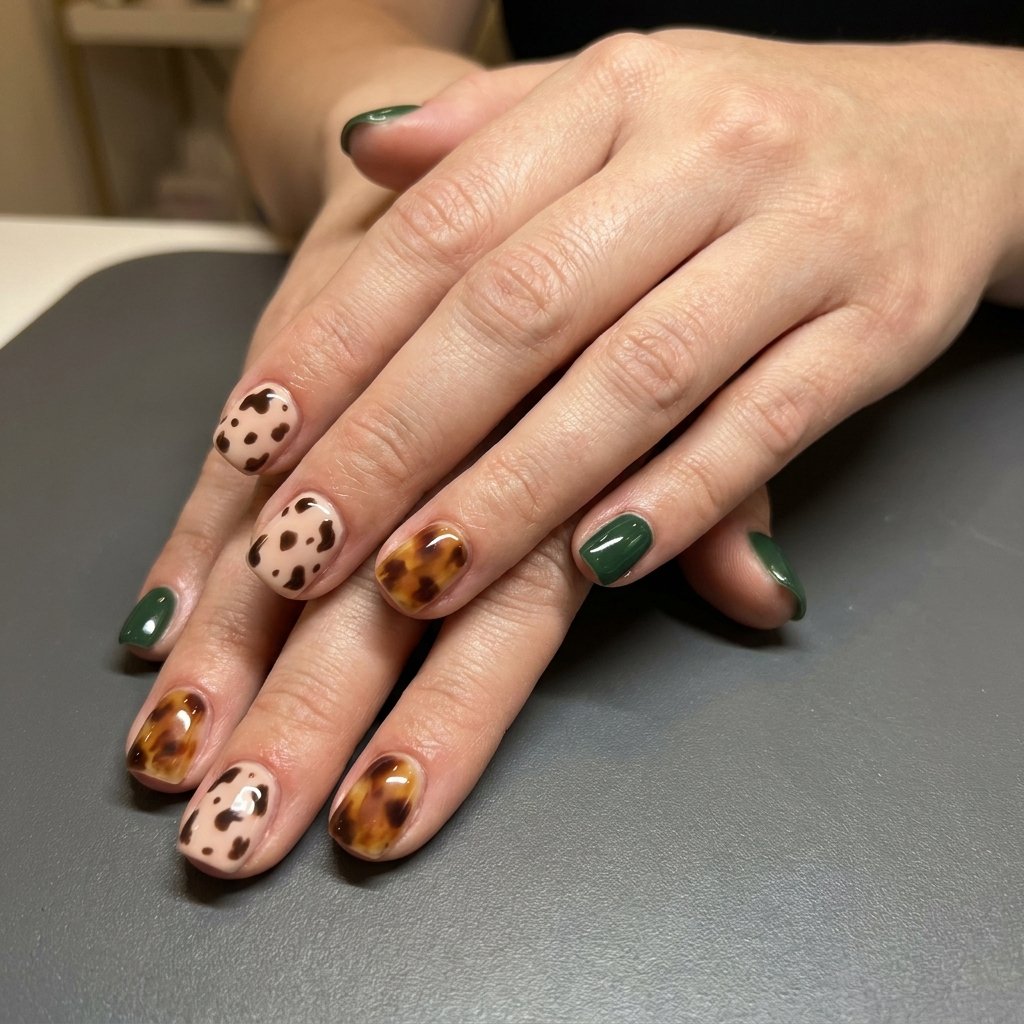
If a full black-and-white pattern feels too bold, stripping away the opaque base can completely transform the design.
A transparent or barely tinted nude foundation allows the natural nail to become part of the manicure. Chocolate-brown markings are then scattered across the clear surface, leaving generous areas of negative space between each one.
The result feels cleaner, softer, and more understated than traditional cow print nails, yet the irregular brown patches make the inspiration immediately recognizable.
Placement is particularly important with a minimalist design because there are fewer elements competing for attention. Instead of positioning every marking in the center, let some begin at the sidewall, curve around a corner, or disappear partially beyond the tip. Others can remain small and isolated toward the middle of the nail.
This uneven placement creates the illusion that the pattern continues beyond the visible nail surface. It also prevents the manicure from looking like identical dots were stamped onto every finger.
Chocolate brown is especially flattering here because it brings warmth to the transparent foundation. Espresso creates stronger contrast, while caramel produces an even softer result. You could also alternate two closely related brown shades for subtle dimension without turning the design into a multicolor manicure.
Short natural nails suit this look particularly well. The transparent base prevents a smaller nail plate from feeling overloaded, while the brown pattern provides enough visual interest to make the manicure noticeable.
Style Insight: Keep a significant portion of each nail transparent. Negative space is what gives this version its minimalist character.
Who It Suits: Neutral-nail lovers, minimalists, and anyone trying animal print for the first time.
When to Wear: Workdays, everyday errands, casual lunches, coffee dates, and understated autumn manicures.
5. Cow Print and Tortoiseshell Mix
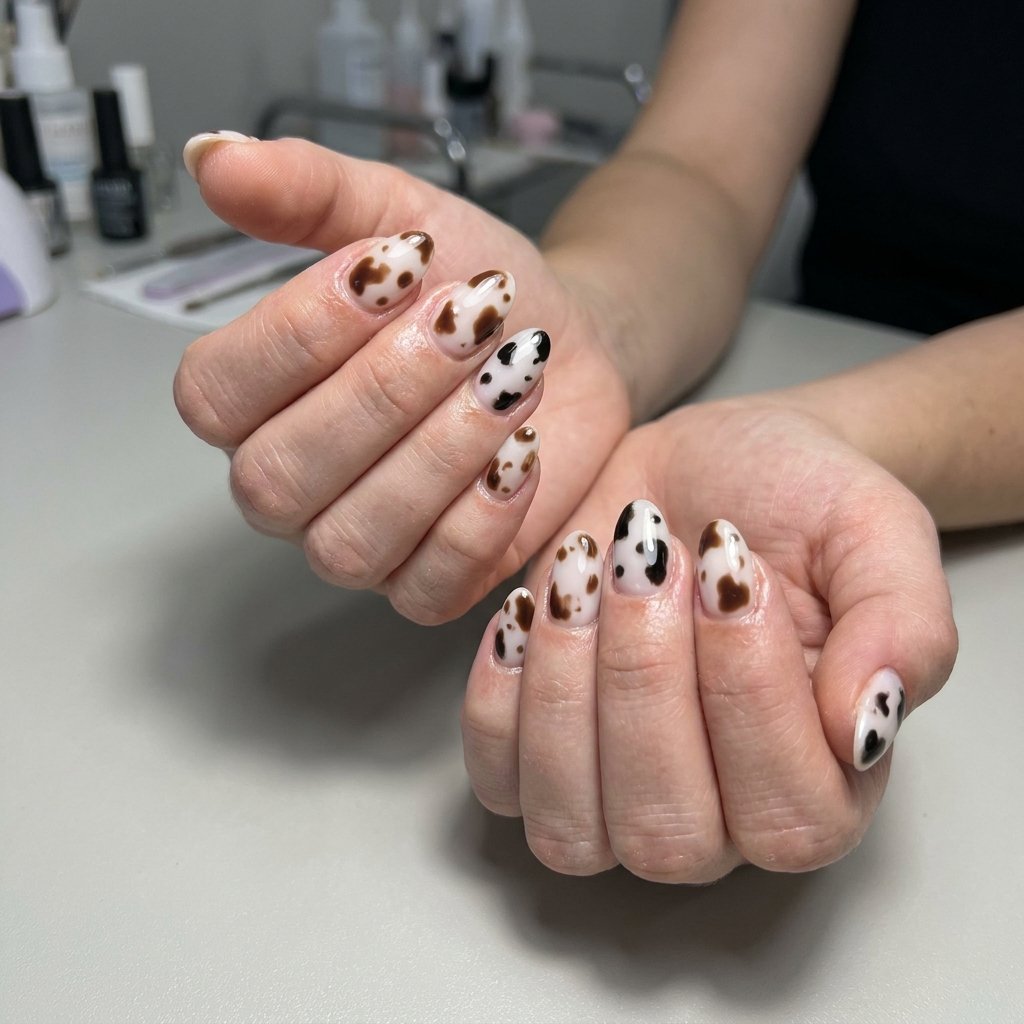
Combining two animal-inspired patterns might sound maximalist, but cowhide and tortoiseshell can look surprisingly sophisticated when they share the same earthy palette.
The key is using color to connect the two designs. Cowhide nails can feature creamy beige foundations with espresso-brown markings, while tortoiseshell accent nails layer translucent amber, caramel, chocolate, and touches of black. Because both patterns use warm natural shades, the transition from one finger to another feels intentional rather than random.
Instead of splitting the manicure exactly in half, vary the arrangement. Three nails might showcase spotted cowhide, one could feature glossy tortoiseshell, and another could be painted solid espresso brown. Alternatively, alternate the two prints and use a neutral nail in the center to create visual breathing room.
Tortoiseshell depends heavily on transparency and layering. A warm amber base should remain visible underneath darker irregular markings rather than being completely covered. Applying a Clear Builder Gel for Layered Nail Art between thin color layers can help create the dimensional, glassy depth associated with this style while keeping the surface smooth.
On almond nails, the warm colors create an elegant autumnal look. A medium square shape gives the patterns more visible surface area and makes the contrast between the two prints more noticeable.
This combination also moves the cowhide trend away from its obvious country associations. Paired with neutral clothing, leather accessories, or gold jewelry, it can feel more like editorial animal-print fashion than a themed Western manicure.
Style Insight: Keep both patterns within a warm palette of cream, amber, caramel, chocolate, and black so the mismatched artwork still feels cohesive.
Who It Suits: Nail-art lovers who enjoy unusual pattern combinations, warm neutrals, and manicures that look different on every finger.
When to Wear: Fall, fashion events, dinners, weekend outings, and any occasion where you want a sophisticated statement manicure.
6. Cherry Cow Print Nails
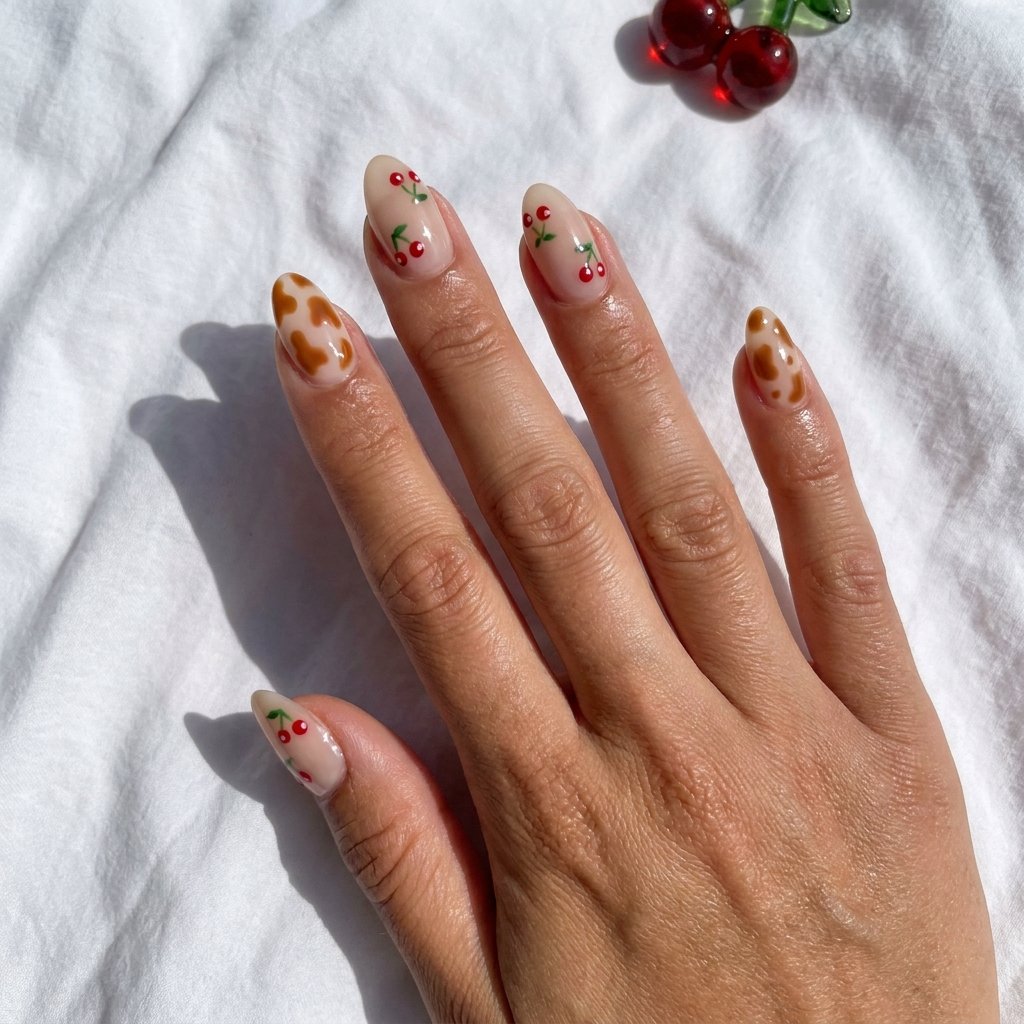
Cherries and cowhide might seem like an unexpected combination, but together they create a playful manicure with a slightly retro personality. The graphic black-and-white pattern provides a bold foundation, while tiny glossy red cherries introduce just enough color to make the entire design feel fresh.
The most effective approach is to avoid placing both motifs on every finger. Instead, allow some nails to feature scattered cow spots, while others showcase miniature cherries over a sheer nude or milky base. One or two accent nails can combine both elements, helping connect the two themes without making the manicure feel overloaded.
Negative space is particularly useful here. A translucent nude foundation gives the cherry artwork room to stand out while preventing the design from becoming too busy. On the spotted nails, creamy white polish can create a stronger contrast with the black markings.
Keep the cherries relatively small and delicate. Tiny red circles connected by thin green stems feel more refined than oversized fruit illustrations, especially when paired with irregular animal print. A high-gloss finish enhances the red and gives the manicure that juicy, almost candy-like appearance that makes cherry nail art so appealing.
You can also experiment with placement. A pair of cherries near the cuticle on one finger, a small motif toward the tip on another, and a partially spotted accent nail can make each finger unique while maintaining a clear visual connection.
Medium almond nails provide enough space for both motifs without requiring extremely long extensions. Short square nails can also work beautifully when the artwork is scaled down.
Style Insight: Let the cow spots remain mostly monochrome and use cherry red as the primary accent color. This keeps the two patterns from competing for attention.
Who It Suits: Anyone who enjoys playful nail art, retro details, and manicures that feel youthful without looking overly themed.
When to Wear: Summer outings, picnics, vacations, casual parties, festivals, and fun weekend plans.
7. Matte Abstract Cow Print Nails
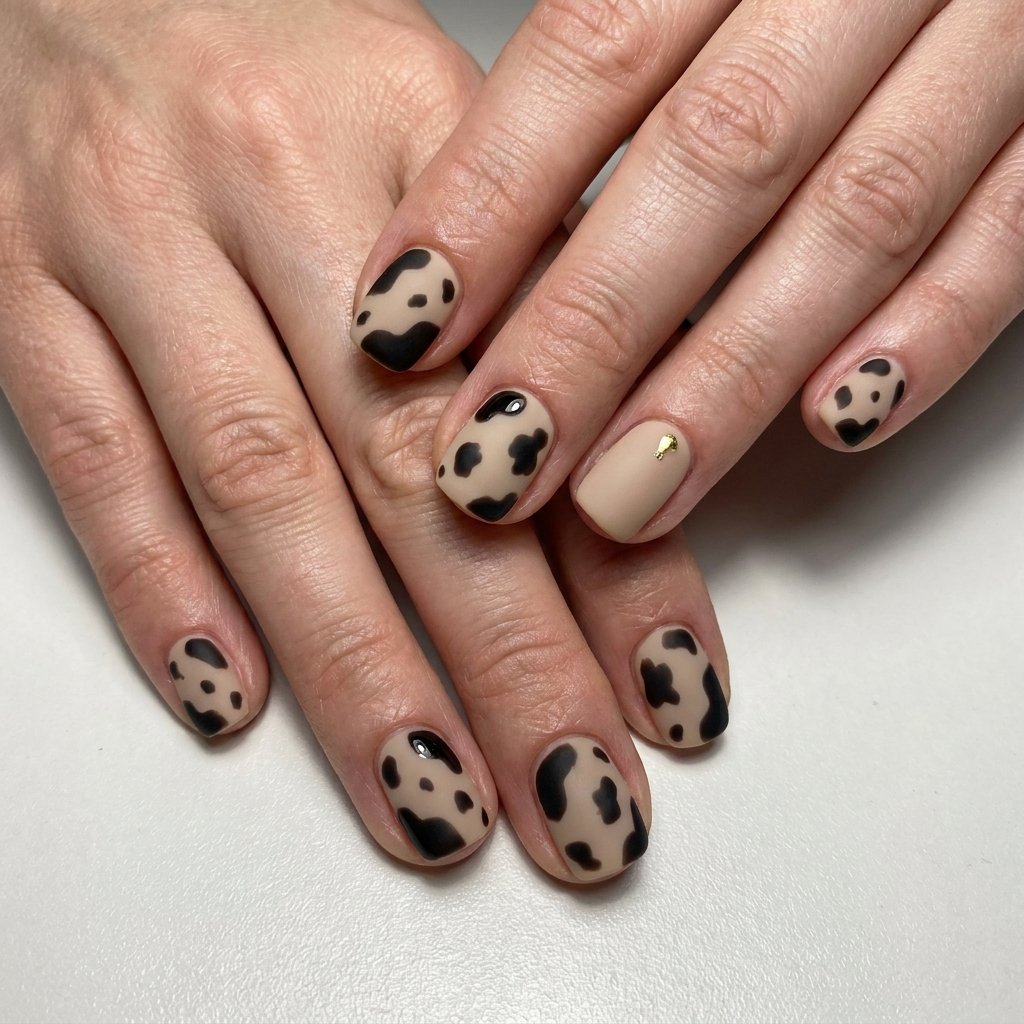
A matte finish can take cow print nails in an entirely different direction. Instead of glossy black markings over bright white, imagine a muted beige or warm taupe foundation decorated with abstract espresso or black patches and finished with a soft velvet-like top coat.
The reduced shine immediately makes the pattern feel more artistic. It also works beautifully with neutral colors because the matte texture allows subtle differences between beige, taupe, brown, and black to become more noticeable.
Rather than covering every nail from edge to edge, use partial shapes that curve around the sides, extend from the cuticle, or disappear beyond the tip. Some fingers can feature only two large markings, while others have several smaller shapes. Keeping the placement unpredictable gives the manicure its organic quality.
Texture can add another layer of interest. For example, most of the nail can remain matte while one or two markings receive a clear glossy finish. The difference may appear subtle when viewed straight on, but it becomes much more visible as the hands move through the light.
Small metallic or jewel-like details can also be introduced sparingly. A tiny gold accent near one abstract shape is enough to elevate the manicure without turning it into an embellished set.
The muted palette makes this design especially versatile. It can complement oversized knits and denim just as easily as tailored neutral outfits, giving animal print a more sophisticated, editorial personality.
Style Insight: Replace stark white with beige, sand, mushroom, or warm taupe to make the matte finish look softer and more refined.
Who It Suits: Fans of neutral manicures, modern nail art, and unconventional versions of recognizable trends.
When to Wear: Autumn, creative workplaces, gallery visits, dinners, coffee dates, and everyday styling.
8. Neon Floral Cow Print Nails
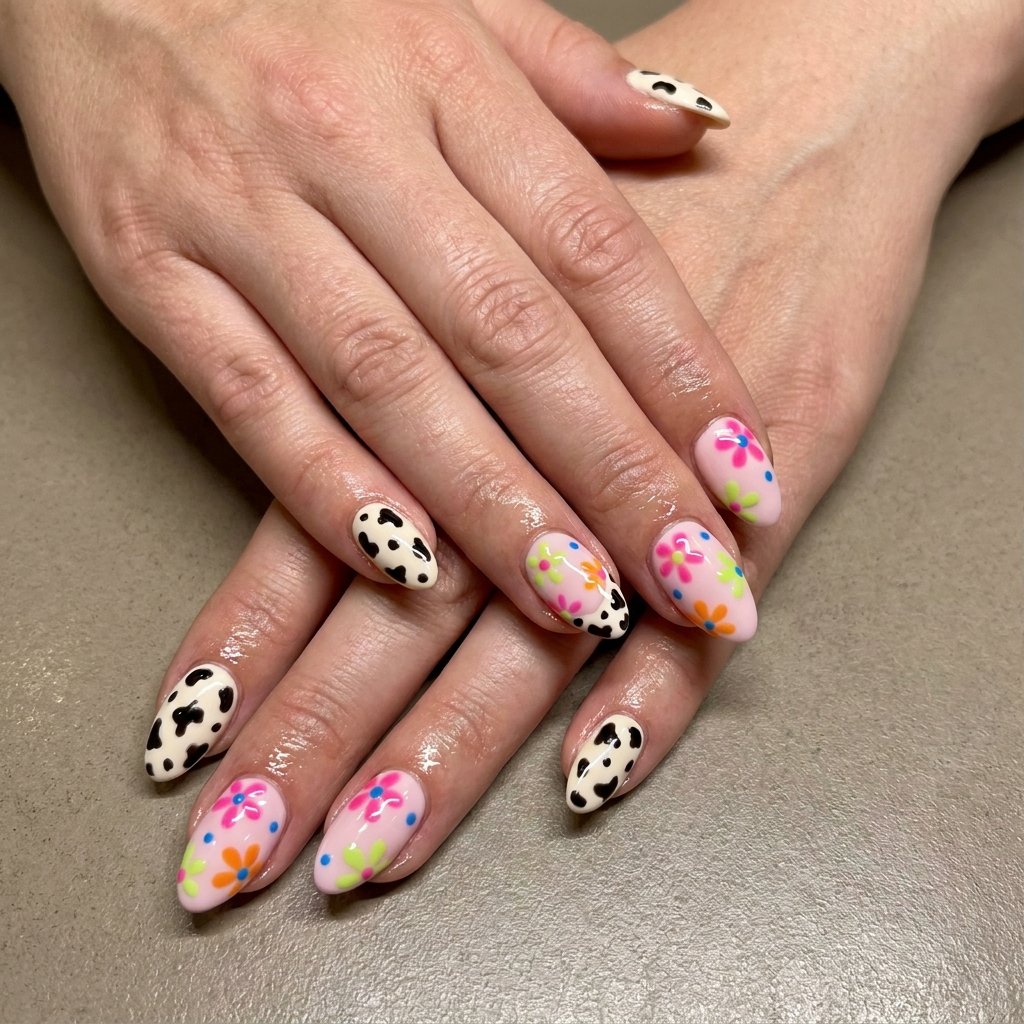
If subtle isn’t your style, combining cowhide with neon florals creates one of the boldest interpretations of the trend.
Start with a recognizable black-and-white spotted pattern, then introduce vivid flowers in shades such as hot pink, lime, tangerine, or sunny yellow. The bright colors immediately transform the Western-inspired print into something energetic and perfect for warm weather.
Balance is essential because both elements naturally demand attention. Rather than decorating every nail with spots and flowers simultaneously, divide the artwork across the manicure. A couple of nails can carry the classic animal pattern, while others feature neon flowers over a nude or translucent base. One statement finger can combine both motifs to visually connect the set.
The flowers don’t need to be highly detailed. Simple petals with small contrasting centers are often more effective because the cowhide pattern already provides plenty of visual movement.
For a slightly more coordinated result, select two dominant neon shades instead of using every bright color available. Pink and orange create a warm tropical mood, while lime and yellow feel energetic and unexpected. Repeating those colors across several fingers keeps a mismatched manicure from appearing random.
Longer almond nails provide room for detailed combinations, but medium oval nails can make the concept more wearable. Regardless of shape, a glossy finish works best because it keeps the neon colors vivid and gives the black markings crisp definition.
Style Insight: Limit the floral palette to two or three bright shades and repeat them throughout the manicure so the design feels intentionally colorful rather than chaotic.
Who It Suits: Maximalists, festival lovers, and anyone who sees their manicure as an accessory rather than a background detail.
When to Wear: Summer vacations, festivals, concerts, beach trips, parties, and colorful weekend outfits.
9. Tricolor Western Cow Print Nails
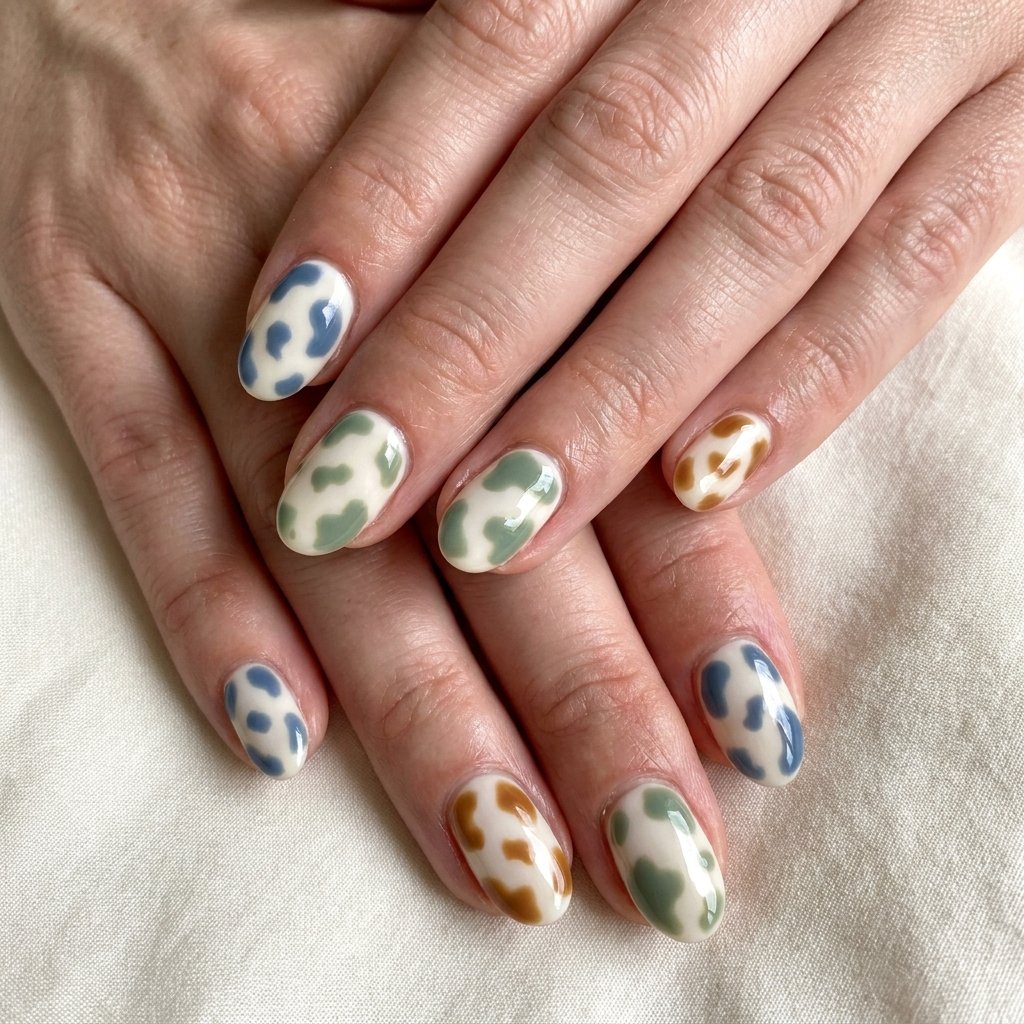
A three-color palette offers a creative alternative to both traditional monochrome and full rainbow designs. Instead of using every shade possible, choose three complementary colors and distribute them thoughtfully across the manicure.
Muted denim blue, sage green, and warm chocolate brown make an especially attractive Western-inspired combination. A creamy nude or off-white foundation can act as the connecting element, keeping the manicure grounded while the three colors provide personality.
The spots themselves don’t have to follow the same arrangement on every finger. One nail could feature mostly blue markings with a touch of brown, while another focuses on sage with smaller blue details. A third might use chocolate as the dominant shade. This creates variation while the restricted palette keeps everything cohesive.
The same concept can be adjusted for different seasons. Terracotta, mustard, and chocolate feel perfect for autumn. Dusty pink, lavender, and caramel create a softer spring interpretation. Deep burgundy, forest green, and espresso can make the pattern feel richer during winter.
This is also a good opportunity to play with scale. Larger markings make the color combinations immediately noticeable, while smaller irregular spots create a busier, more playful manicure. Medium-length square nails provide plenty of room for the three shades, whereas almond nails make the colorful pattern feel slightly softer.
Because the manicure already contains multiple colors, additional rhinestones or heavy embellishments aren’t necessary. Let the palette and organic markings become the focal point.
Style Insight: Choose one dominant shade and treat the other two as supporting accents. This creates hierarchy and prevents all three colors from fighting for attention.
Who It Suits: Color lovers who want something more curated and wearable than a rainbow animal-print manicure.
When to Wear: Road trips, country concerts, festivals, vacations, casual weekends, and transitional seasons.
10. Side-Accent Negative-Space Cow Print Nails
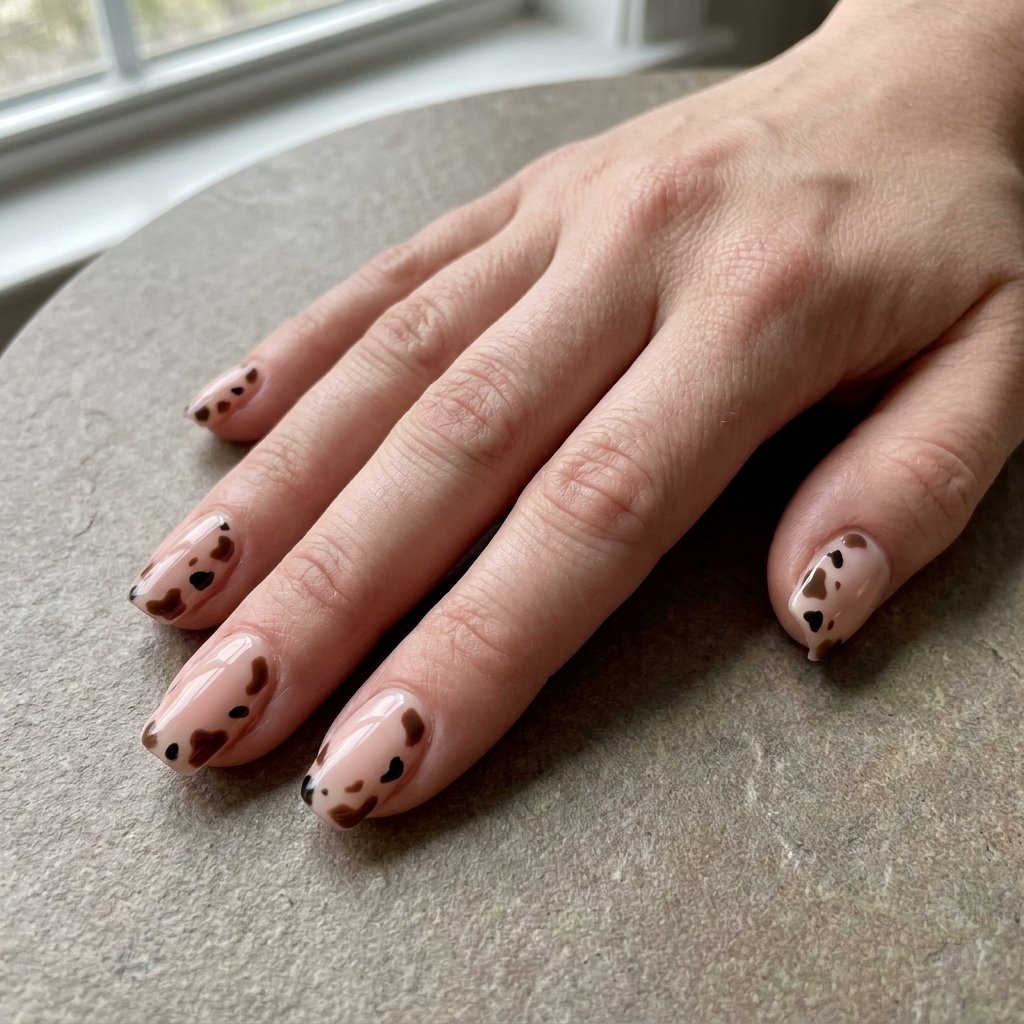
Sometimes the most modern way to wear a recognizable pattern is to use less of it.
For this minimalist interpretation, begin with a sheer nude, transparent pink, or almost-clear foundation. Instead of covering the entire nail in spots, concentrate irregular markings along only one side. The opposite half remains mostly bare, creating intentional negative space.
This asymmetry gives cow print nails a cleaner, more contemporary appearance while preserving the organic character of the pattern. It also works particularly well on shorter nails because the open area prevents the design from visually shrinking the nail plate.
Placement is what makes this look interesting. A large chocolate patch might begin along one sidewall and disappear beyond the edge, while two smaller markings sit closer to the tip. On the next finger, the pattern can start near the cuticle instead. Changing the position slightly on every nail creates movement across the complete manicure.
Classic black markings produce the strongest contrast, but chocolate brown is ideal if you want a softer neutral effect. You can even alternate black and brown between fingers while keeping the same sheer foundation.
The design looks especially polished on short square, squoval, and oval shapes. Longer almond nails can also work, although the additional surface area may tempt you to add more artwork. Resist that urge if you want to preserve the minimalist quality, the empty space is as important as the spots themselves.
A glossy top coat provides just enough shine to make the natural-looking foundation appear healthy and polished while giving the dark accents clean definition.
Style Insight: Keep at least half of each nail visually open. The negative space isn’t unfinished area; it’s a deliberate part of the design.
Who It Suits: Minimalists, short-nail lovers, and anyone who wants animal print without committing to an all-over manicure.
When to Wear: Everyday wear, work, school, casual events, brunch, and minimalist seasonal looks.
Which Cow Print Nail Design Matches Your Energy?
The best thing about this spotted trend is that there isn’t one correct way to wear it. Your perfect version depends on how much color, pattern, and contrast you naturally gravitate toward.
If neutral manicures dominate your saved inspiration, clear-base chocolate spots or brown French tips offer an easy starting point. They preserve the recognizable pattern while using negative space and earthy colors to make it more understated.
For something softer and more feminine, strawberry-milk pink creates a completely different mood. If you prefer unusual combinations, mixing cowhide with tortoiseshell adds richness and dimension without relying on bright colors.
Then there are the designs made for people who want their manicure noticed. Cherry details introduce a playful retro twist, neon flowers bring summer energy, and tricolor spots turn the pattern into a customizable statement.
Your nail length can help guide the decision too. Short nails look particularly polished with side accents, transparent bases, and smaller markings. Medium and long shapes provide more room for mixed motifs, multicolor patterns, and detailed artwork.
Most importantly, don’t worry about making every spot identical. The uneven shapes and unpredictable placement are precisely what give the design its character. Whether you choose classic black, warm chocolate, milky pink, or an unexpected color combination, your manicure can feel personal rather than copied.
Frequently Asked Questions
What are cow print nails?
Cow print nails are manicures inspired by the irregular spotted markings associated with cowhide. The classic version uses black patches over white, but modern interpretations include chocolate brown, beige, pink, sheer bases, colorful spots, French tips, negative space, mixed patterns, and different finishes.
Unlike polka dots, the markings aren’t meant to be perfectly round or evenly spaced. Their organic shapes are an important part of achieving the recognizable look.
What colors look best with cow print nail art?
Black and creamy white create the most traditional combination, while espresso brown, caramel, beige, and nude shades produce a softer neutral result.
Pink works beautifully for feminine manicures, and muted blue, sage, burgundy, yellow, or other complementary shades can make the pattern more playful. If you’re using several colors at once, sticking to a controlled palette usually makes the finished design look more cohesive.
Can cow print designs work on short nails?
Absolutely. In fact, short nails can make the pattern look especially cute and wearable. The key is adjusting the scale of the artwork.
Smaller irregular markings, partial side accents, French tips, and negative-space designs prevent a short nail plate from looking overcrowded. Square, squoval, oval, and naturally rounded shapes all work well with the pattern.
Are cow print manicures difficult to recreate at home?
They can be relatively approachable because the markings aren’t supposed to look perfectly identical. After applying your base color and allowing it to dry, you can create uneven spots with a small dotting tool or fine detail brush.
Vary the size, direction, and spacing instead of creating uniform circles. Once the artwork has dried, finish with top coat to smooth the surface and protect the design.
Do cow print nails have to be Western-themed?
Not at all. While the pattern naturally works with cowgirl and Western aesthetics, changing the colors and surrounding details can completely alter its personality.
Sheer nude and chocolate can feel minimalist, strawberry pink can look feminine, tortoiseshell creates an editorial feel, and neon florals make the pattern playful and summery. The cowhide motif can be treated simply as an animal-print design rather than part of a themed manicure.
Ready to Try the Cow Print Nail Trend?
From creamy multicolor spots and strawberry-milk bases to chocolate French tips, mixed animal prints, cherries, florals, and minimalist negative space, cow print nails offer far more variety than the traditional black-and-white manicure might suggest.
The beauty of the pattern lies in its irregularity. Every spot doesn’t need to match, every finger doesn’t need identical artwork, and you don’t have to follow traditional cowhide colors. Those differences are what allow the manicure to feel creative and personal.
Go subtle with sheer polish and chocolate accents, embrace color with a tricolor design, or turn your manicure into a statement with neon florals and mixed motifs. Save the designs that match your style, show your favorites to your nail artist, and use them as inspiration for a spotted manicure that feels completely your own.

Hi, I’m Amber, the creator behind Dazzle Me Nails. I started this site because I’ve always believed nails aren’t just about beauty, they’re about confidence, self expression, and feeling put together in the simplest way. Like many of you, I’ve struggled with weak nails, chipped polish, and designs that looked good online but didn’t work in real life. That’s why I created Dazzle Me Nails to share nail ideas that are practical, wearable, and easy to recreate.
Here, you’ll find minimalist nail designs, trend inspired looks, and simple nail care tips to help you achieve clean, polished nails without over complicating your routine. If you love soft, classy, and effortless nail styles, you’re in the right place.