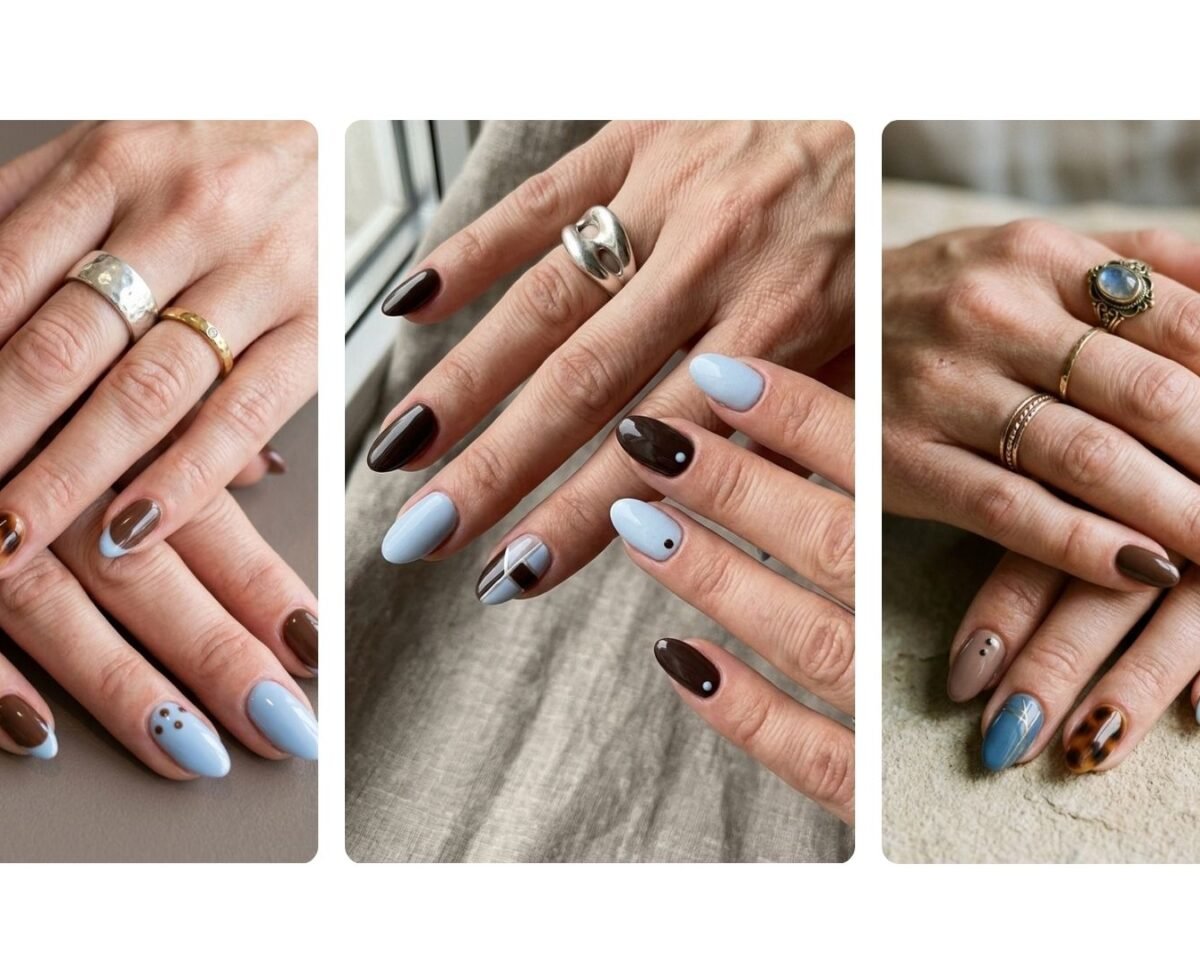
If you’re ready to move beyond predictable neutrals, brown and blue nails might be the unexpected color combination your next manicure needs. Brown brings warmth, richness, and an effortlessly sophisticated feel, while blue introduces cool contrast that can make even the simplest nail design feel fresh and modern.
What makes this pairing especially interesting is the variety of shades you can work with. Deep chocolate looks striking beside baby blue, mocha becomes sophisticated when paired with navy, and caramel takes on a playful retro quality alongside faded denim tones. For something bolder, espresso can be combined with turquoise, while saturated cobalt makes chocolate brown feel surprisingly fashion-forward.
The possibilities go far beyond simply alternating two polish colors. French tips, tiny dot details, geometric color blocking, checkerboards, retro patterns, tortoiseshell effects, aura accents, and mismatched designs can all completely change the personality of the manicure.
Whether you prefer understated nail art or designs that immediately catch attention, these brown and blue nails offer plenty of inspiration for creating a manicure that feels distinctive without being difficult to wear.
Why Brown and Blue Nails Are Taking Over Right Now
Brown has become one of those modern nail neutrals that can feel every bit as polished as nude, black, or classic red. Chocolate, espresso, mocha, cocoa, caramel, and cinnamon shades bring warmth to the nails while still being versatile enough to complement an everyday wardrobe. Blue offers almost the opposite energy. Depending on the shade, it can feel delicate, cool, playful, dramatic, or intensely vibrant.
That contrast is exactly what makes the two colors work so beautifully together.
A dark chocolate manicure can feel quite rich on its own, but adding baby or icy blue immediately introduces softness and light. Pale caramel becomes more grounded when paired with navy, while almost-black espresso takes on a completely different personality beside turquoise.
You can also control how noticeable the contrast becomes. If your style is understated, muted mocha and dusty denim create a soft combination without a dramatic difference between the shades. If you prefer something that catches attention, chocolate and cobalt deliver much stronger visual impact. Creamy brown paired with powder blue sits somewhere in the middle—noticeable, but still easy to wear.
Another reason brown and blue nails feel so versatile is that the palette isn’t limited to one particular nail aesthetic. It can look minimalist with tiny dots, sophisticated with geometric color blocking, nostalgic with checkerboards, artistic with abstract curves, or fashion-forward with unexpected texture.
The shades can move through the seasons as well. Espresso, cocoa, navy, and deep chocolate naturally suit cooler months, while baby blue, turquoise, faded denim, and caramel can make the combination feel much lighter for spring and summer.
Rather than treating brown and blue as two competing colors, the most successful manicures use one shade to enhance the other. These ten designs show exactly how to make that balance work.
1. Chocolate Brown Nails With Baby Blue French Tips
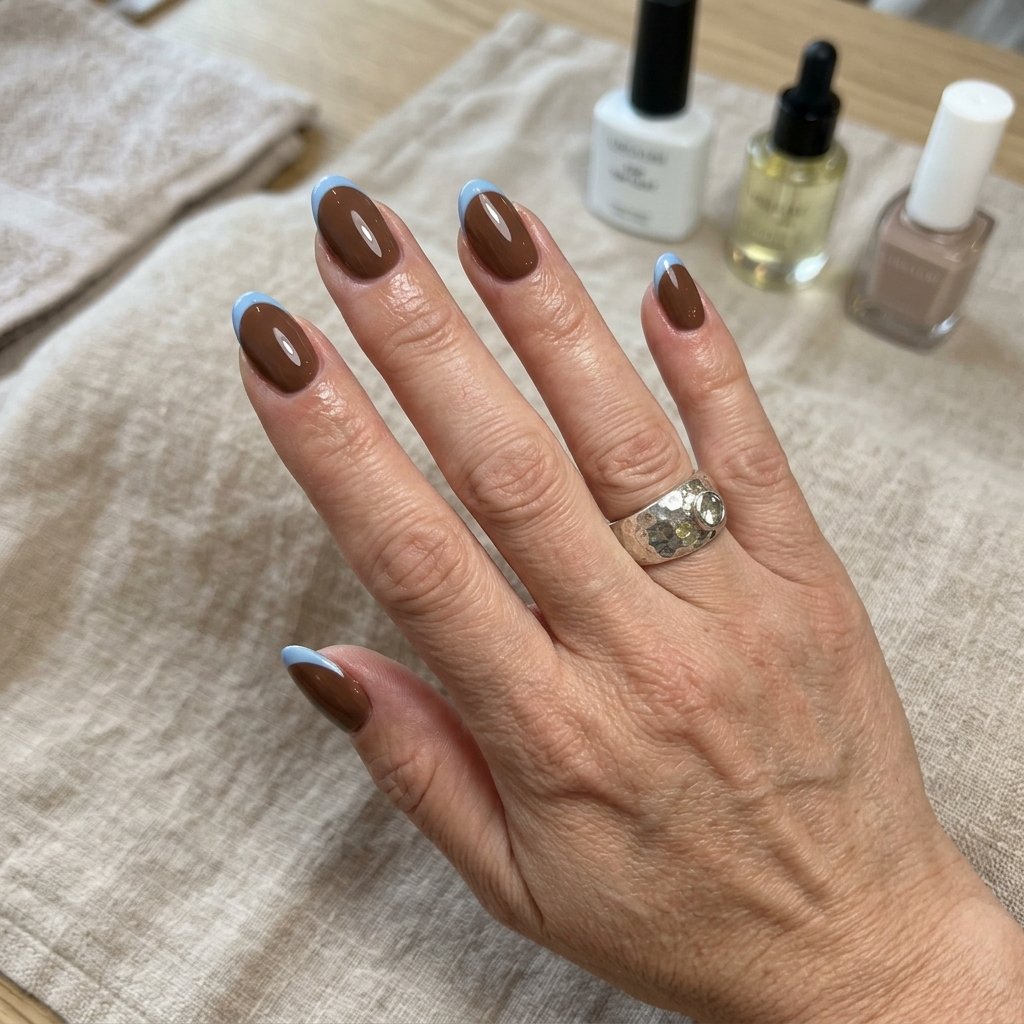
Chocolate brown and baby blue create one of the easiest introductions to this color trend. The brown provides a rich, glossy foundation while the pastel blue tips add enough contrast to prevent the manicure from looking like a traditional dark neutral.
Instead of starting with the usual sheer pink French manicure base, cover each nail in creamy chocolate brown. Then add a precise baby-blue smile line across the free edge. On almond nails, following the natural curve of the tip creates a soft and feminine result. Square or squoval nails can handle a slightly straighter French edge for a cleaner, more graphic appearance.
The exact shades matter here. Milk chocolate works beautifully beside powdery pastel blue, while a deeper cocoa brown creates stronger contrast against an icy baby-blue tip. If you want to recreate that softer version at home, a creamy Baby Blue Gel Nail Polish can give the French tips enough opacity to stand out clearly against the chocolate base without becoming too bright.
You don’t necessarily have to repeat the same placement across all ten nails either. Most fingers can feature chocolate bases and blue tips, while one or two accent nails reverse the colors with a baby-blue base and slim chocolate French edge. The small switch makes the manicure more interesting while keeping everything coordinated.
These brown and blue nails are particularly good for anyone who loves a French manicure but wants to move beyond predictable white tips without abandoning the polished shape of the classic design.
Style Insight: Finish with an ultra-glossy top coat. High shine gives chocolate polish greater depth and makes the pastel French line look cleaner and more professional.
Who It Suits: French manicure lovers, almond-nail fans, and anyone experimenting with this color combination for the first time.
When to Wear: Brunch dates, everyday outfits, casual dinners, transitional seasons, and polished weekend occasions.
2. Brown and Blue Single-Dot Nails
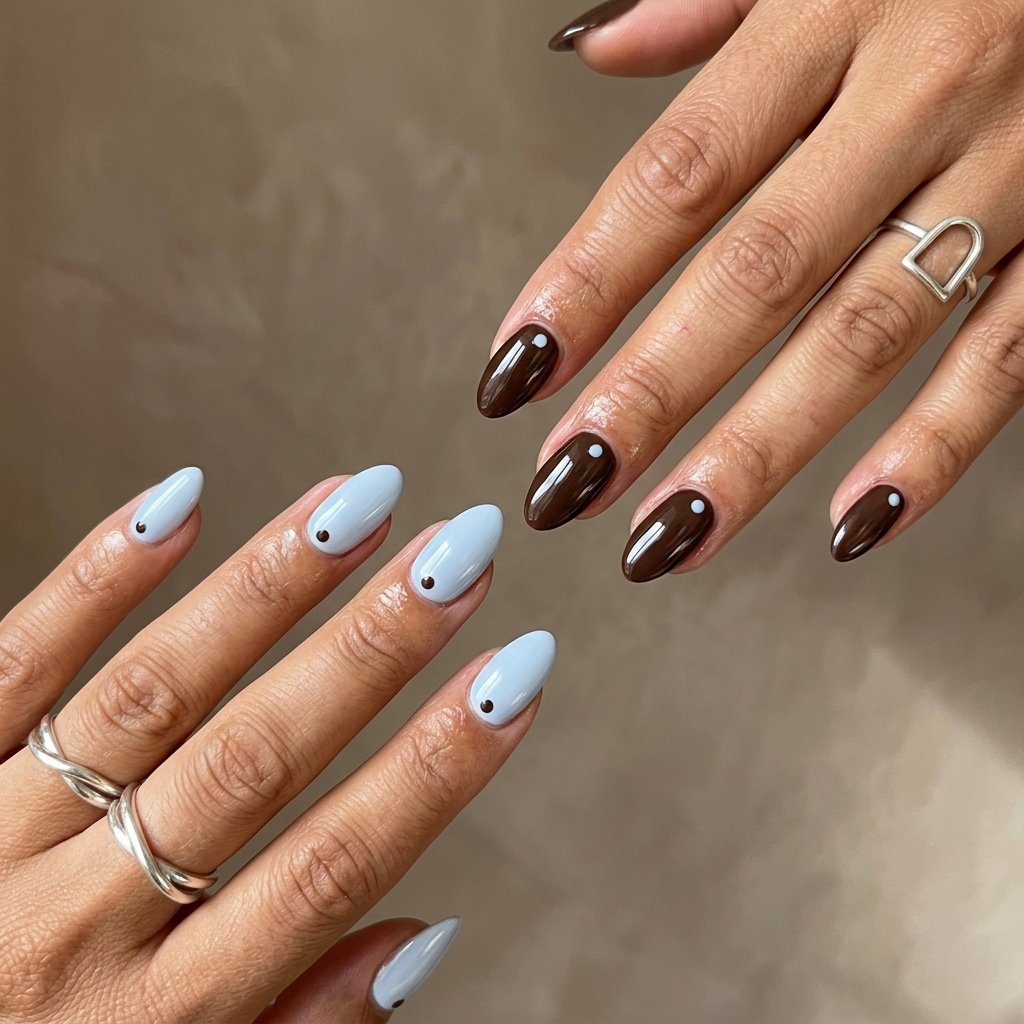
Sometimes one tiny detail is enough to transform an otherwise simple manicure. Single-dot nail art takes this palette in a minimalist direction, giving you visible color contrast without filling every nail with patterns.
Start with alternating cocoa-brown and soft powder-blue nails. On each brown nail, place one tiny blue dot close to the cuticle. Reverse the colors on the blue fingers by adding a small cocoa dot in approximately the same position.
A second version is even more understated. Keep the nails sheer or milky nude and use brown and blue only for the tiny details. One finger could carry an espresso dot, the next a powder-blue dot, and so on. Because so much of the natural-looking base remains visible, this variation works especially well on short nails.
If you’re recreating the deeper accents yourself, choose an opaque Cocoa Brown Nail Polish so the tiny brown details remain clearly defined even when applied in a very small amount. A watery or overly sheer brown can disappear against a nude base and make the design look less precise.
Placement also changes the mood. A dot centered directly above the cuticle feels neat and balanced, while positioning it slightly to one side gives the manicure a more contemporary editorial quality. You can even alternate placement from left to right across the fingers.
The key is keeping each detail genuinely tiny. Once the circles become larger or multiply across the nail, the manicure starts moving into traditional polka-dot territory. A single miniature accent is what gives this version its understated charm.
Style Insight: Use a fine dotting tool and apply very little polish at a time. Consistent dot size makes such a minimal design look much more intentional.
Who It Suits: Minimalists, short-nail lovers, professionals, and anyone who prefers subtle nail art.
When to Wear: Workdays, school, coffee dates, casual outings, and simple everyday manicures.
3. Mocha Brown and Navy Color-Block Nails
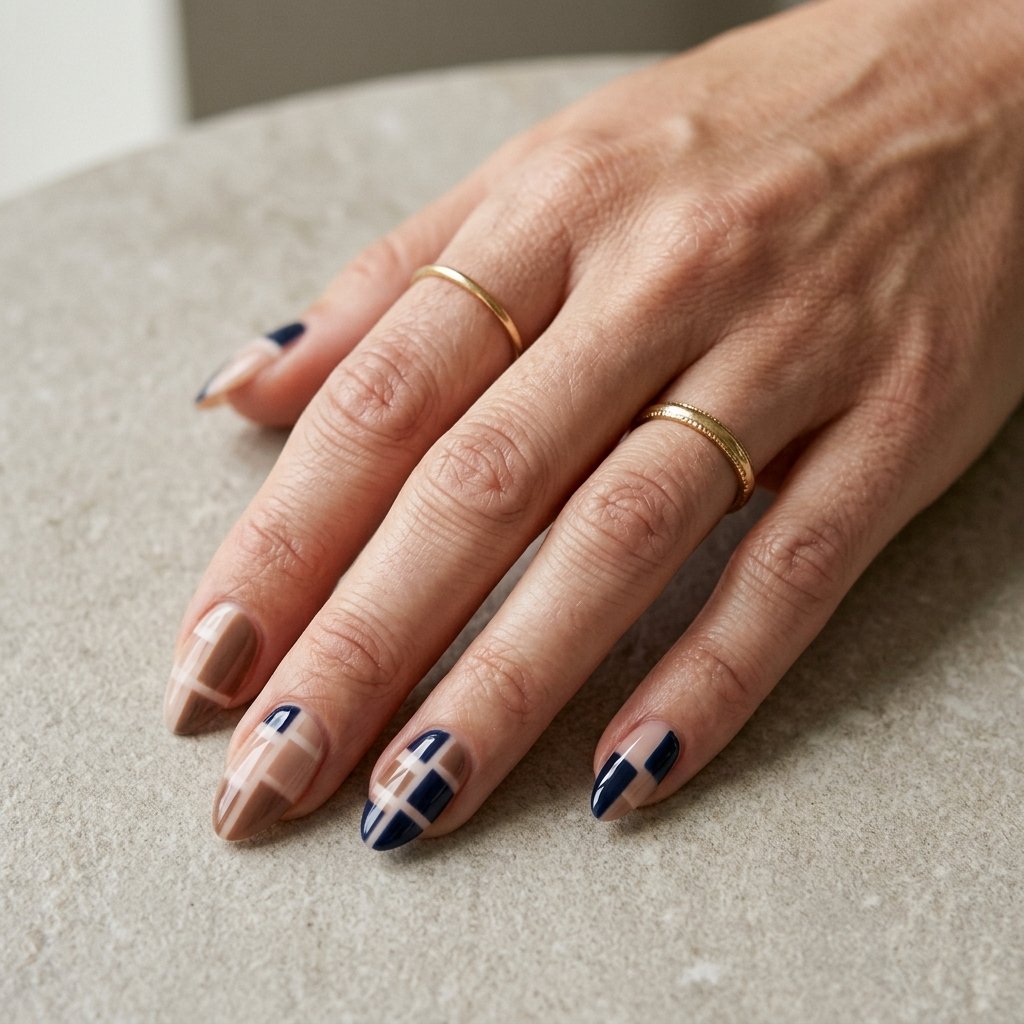
For something deeper and more sophisticated, mocha and navy make an unexpectedly elegant pair. Both shades have enough richness to behave almost like neutrals, but placing them side by side creates just enough contrast to keep the manicure visually interesting.
Rather than simply alternating solid colors, use geometric color blocking. Begin with a sheer nude base and divide selected nails diagonally, filling one section with creamy mocha and the other with deep navy. Leaving a narrow strip of the nude base between the two colors creates negative space and helps each shade maintain its definition.
Another approach is to use solid mocha nails throughout the set and reserve two or three fingers for navy geometric panels. Curved blocks can make the design feel softer, while straight diagonal sections give it a sharper, more architectural appearance.
Navy selection is important. You want something clearly blue rather than a shade so dark that it reads as black. A rich Deep Navy Blue Gel Nail Polish can provide that inky depth while still showing its blue undertone whenever light hits the surface.
The mocha should also remain noticeably warmer than the navy. Coffee-inspired brown with a creamy undertone creates a softer contrast than almost-black espresso would, helping the manicure stay sophisticated rather than overly dramatic.
These brown and blue nails work particularly well with a neutral wardrobe because both shades complement colors you may already wear regularly. Navy naturally pairs with denim, white, gray, and black, while mocha works effortlessly beside cream, camel, beige, and other warm neutrals.
Style Insight: Clean edges are essential. Use a fine detailing brush to perfect the border between each block before applying your top coat.
Who It Suits: Minimalist dressers, professionals, and anyone who loves structured, sophisticated nail art.
When to Wear: Office days, dinner plans, business events, fall outfits, and polished everyday occasions.
4. Caramel Brown and Denim Blue Checkered Nails
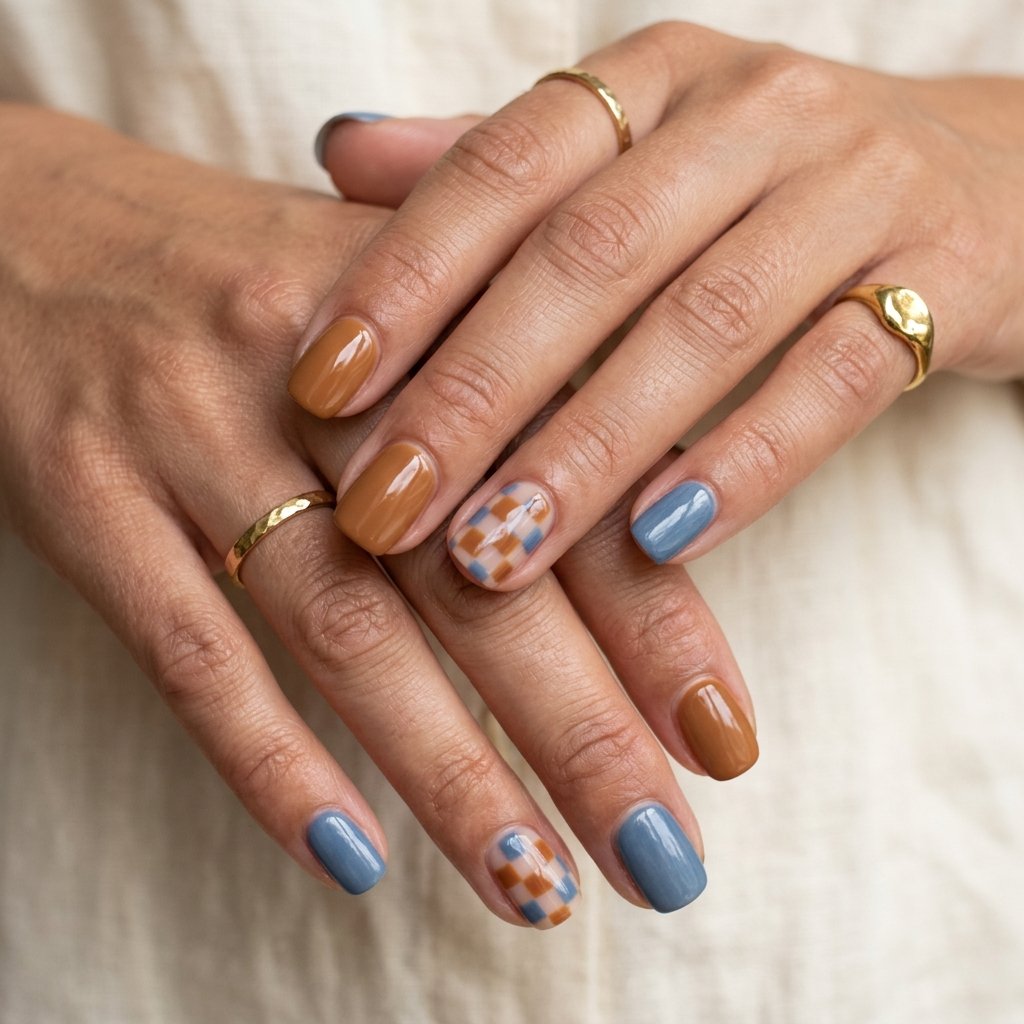
Caramel and denim blue bring a completely different mood to the palette. Instead of creating strong contrast, these slightly muted colors work together in a softer, more relaxed way that feels nostalgic without becoming overly themed.
Use warm caramel polish across several nails and muted denim blue across others, then combine both shades on one or two checkerboard accent nails. Keeping the checks relatively small gives the pattern detail without letting it dominate the entire set.
You can also introduce a sheer nude background underneath the checkerboard pattern. Leaving a few squares unpainted creates breathing room and makes the nail art feel lighter. If you want a more obvious retro effect, alternate caramel and denim across every square.
For the blue, avoid anything too bright or electric. A slightly dusty Denim Blue Nail Polish will sit more naturally beside caramel and create the faded, lived-in quality that makes this pairing distinctive.
The brown should lean warm rather than dark. Think caramel latte, toffee, or light cinnamon instead of deep chocolate. Those golden undertones complement the muted blue and prevent the checkerboard pattern from looking too harsh.
Although checkerboards can easily become playful, limiting the pattern to accent fingers makes this version much more wearable. Solid-colored nails around the artwork give the eye somewhere to rest and keep the overall manicure cohesive.
Style Insight: Use small, evenly sized checks rather than oversized squares. The finer scale makes the pattern look more detailed and polished.
Who It Suits: Anyone who loves retro details, casual styling, creative manicures, and slightly playful patterns.
When to Wear: Spring weekends, casual summer looks, festivals, coffee dates, and relaxed vacations.
5. Espresso Brown and Turquoise Retro Nails
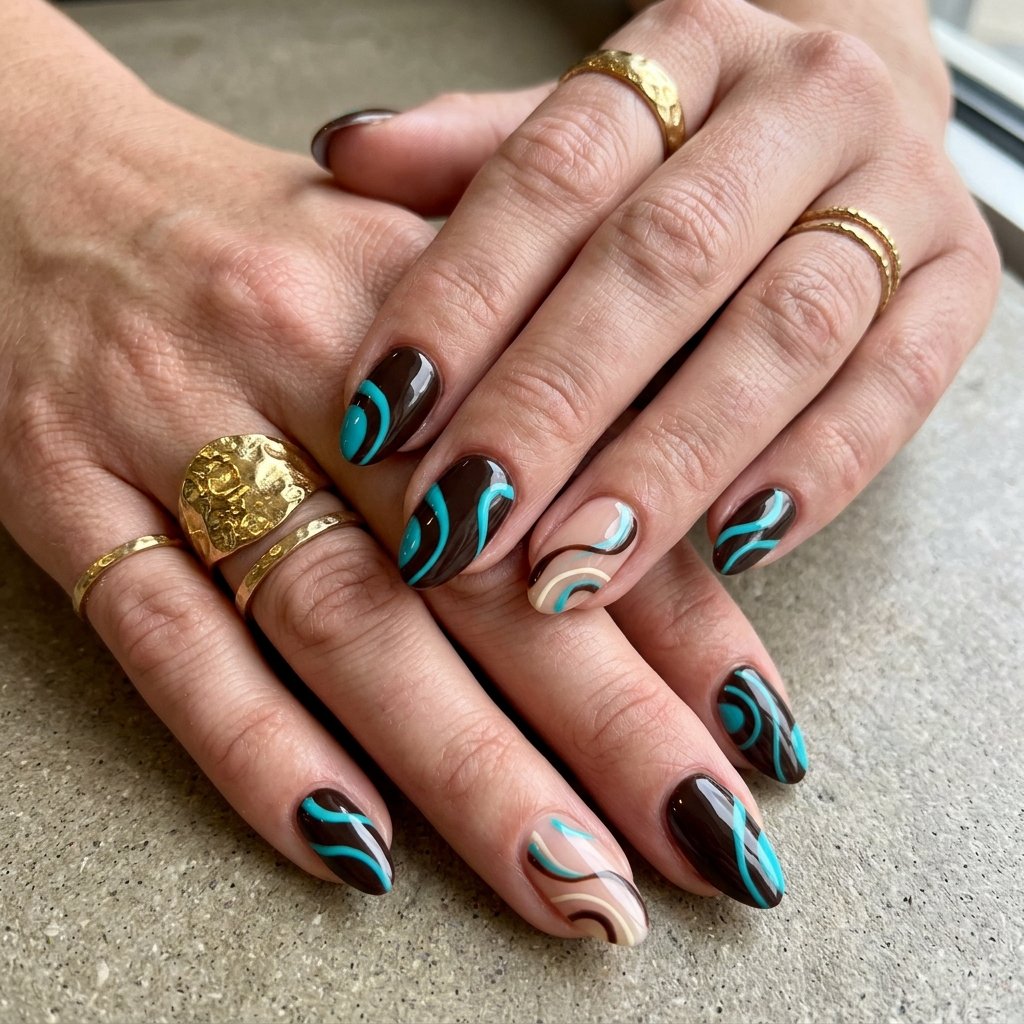
Espresso and turquoise take brown and blue nails into much bolder territory. Dark espresso creates a dramatic almost-black foundation, while turquoise introduces a vibrant blue-green accent that immediately lifts the entire manicure.
Instead of simply alternating solid colors, lean into the retro personality of the combination. Start with glossy espresso nails and add flowing turquoise curves, rounded waves, or asymmetric shapes across selected fingers. Keep a couple of nails sheer nude and decorate them with smaller espresso-and-turquoise details to prevent the set from feeling too dark.
A tiny amount of cream can also work as a supporting color. Thin cream outlines between espresso and turquoise help separate the shades while giving the manicure a vintage-inspired finish. The cream should remain secondary, though, the brown and turquoise need to stay visually dominant.
Because turquoise is the attention-grabbing shade in this design, choose one with strong pigmentation. A vivid Turquoise Blue Gel Nail Polish will create clean retro lines over the espresso base without requiring so many layers that the artwork becomes raised or uneven.
Long almond nails give the curves plenty of room to flow naturally, but the same idea can work on shorter nails if you simplify the artwork into one or two sweeping lines per finger.
Style Insight: Let espresso cover more surface area than turquoise. Using the brighter shade as an accent keeps the design bold without making it visually overwhelming.
Who It Suits: Creative dressers, retro-style lovers, and anyone looking for a more unusual interpretation of this color combination.
When to Wear: Vacations, concerts, creative events, weekend plans, and statement-making outings.
6. Chocolate Brown and Cobalt Graphic Nails
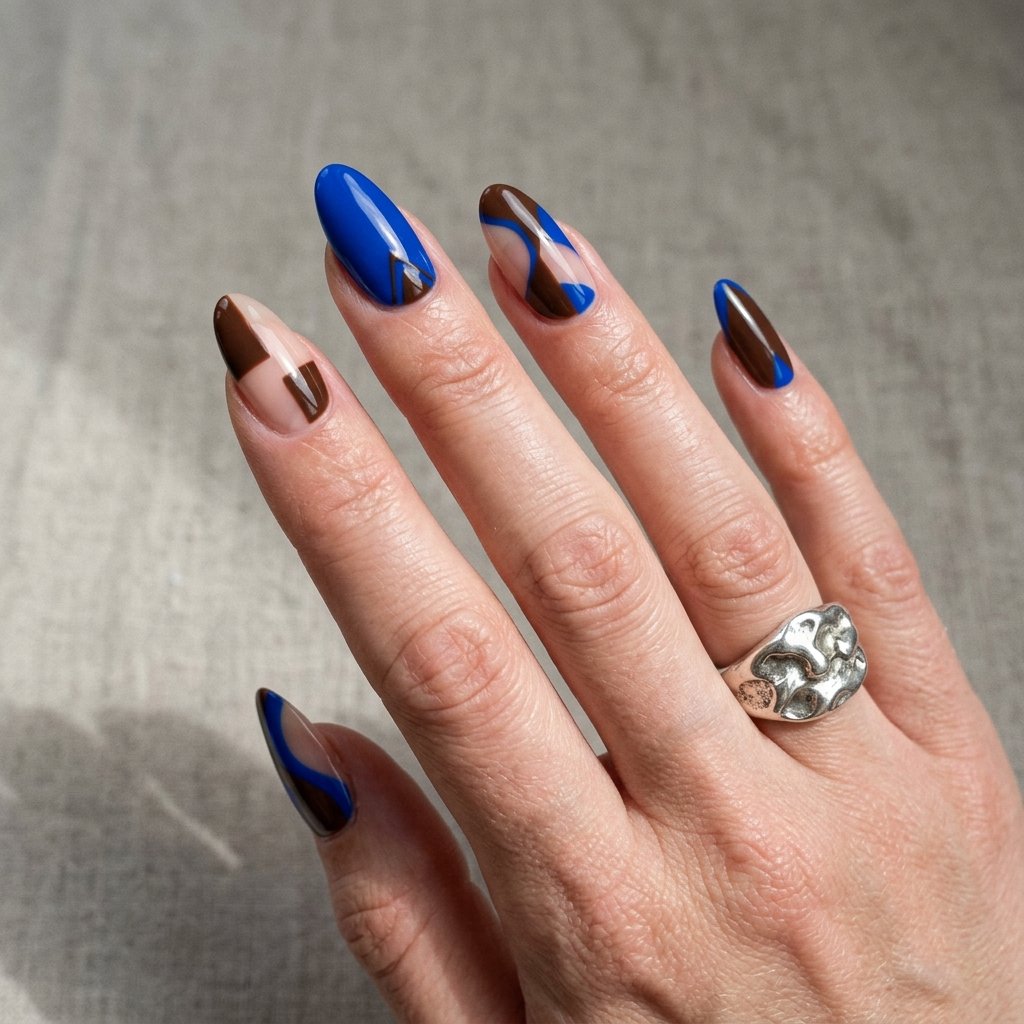
If the softer combinations in this trend feel too understated for your style, chocolate brown and cobalt blue deliver a much stronger contrast. Chocolate keeps the manicure grounded and luxurious, while vivid cobalt brings an energetic pop that makes even simple artwork look intentional.
Instead of covering every nail with complicated details, let the colors themselves create the statement. Paint a few nails in glossy chocolate brown, then use cobalt for curved lines, asymmetrical blocks, half-moon details, or clean geometric shapes. A sheer nude base on selected fingers can give the stronger colors enough negative space to stand out.
For a more editorial approach, try oversized cobalt curves sweeping across a chocolate base. Another option is to divide individual nails into irregular sections of nude, chocolate, and cobalt. Keeping the shapes different from finger to finger gives the manicure an artistic feel while the consistent color palette ties everything together.
The blue shade is particularly important here. Baby blue would soften the effect, while navy could become too close in depth to dark chocolate. Cobalt sits in the sweet spot: saturated, unmistakably blue, and bright enough to create immediate contrast.
Long almond or oval nails provide plenty of room for larger graphic details, but the idea translates beautifully to short square nails when the shapes are simplified.
These brown and blue nails are proof that the pairing doesn’t always need to feel earthy or understated. With the right blue, brown can become the foundation for something bold and fashion-forward.
Style Insight: Avoid adding glitter, rhinestones, or extra colors. Chocolate and cobalt already create enough visual impact, so clean graphic artwork will make the manicure feel more refined.
Who It Suits: Fashion lovers, maximalists who still appreciate clean design, and anyone who enjoys bold color combinations.
When to Wear: Parties, fashion events, city weekends, dinners, vacations, and occasions when you want your nails to become part of your outfit.
7. Brown Tortoiseshell With Blue Aura Accents
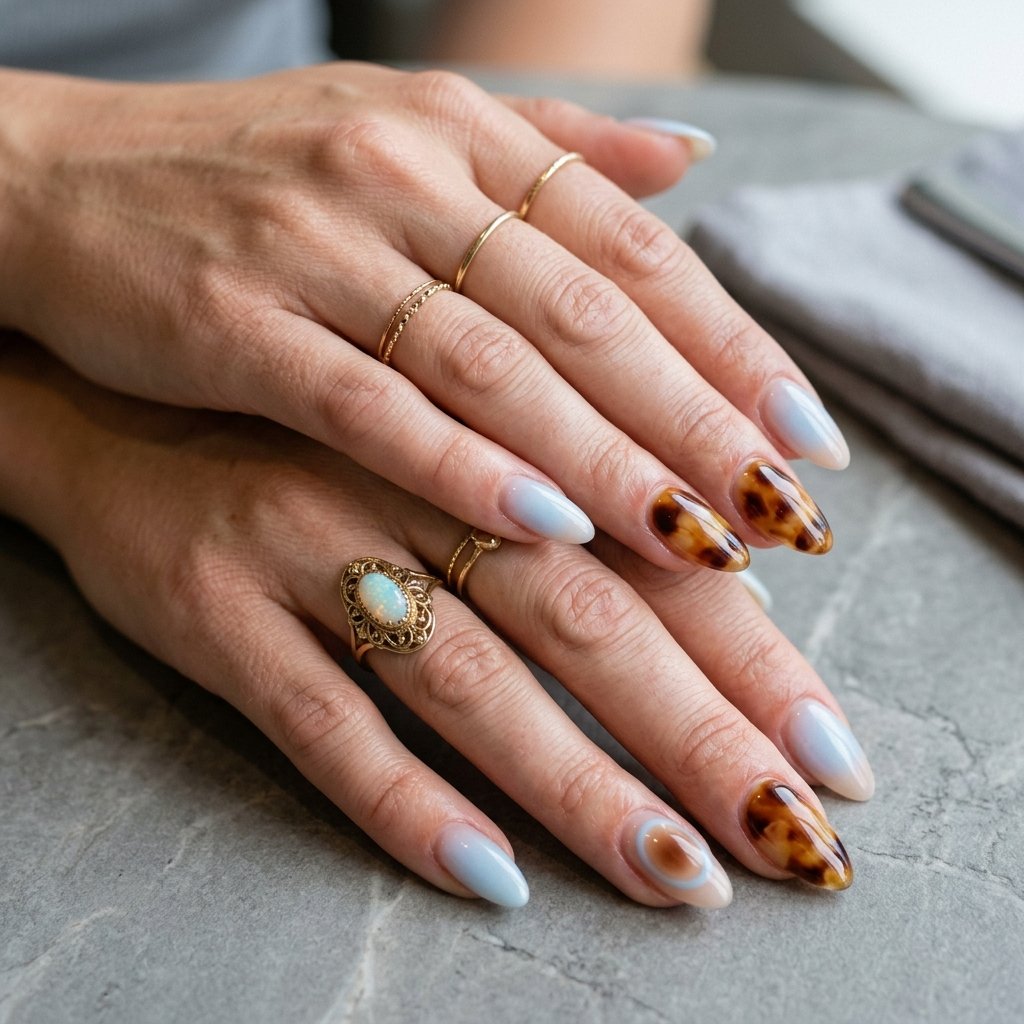
Tortoiseshell nail art is already known for its rich amber, caramel, and dark-brown layers, but adding soft blue aura accents gives the familiar pattern a completely different personality.
Rather than covering every nail in tortoiseshell, use it strategically. Two or three nails can feature translucent amber-brown layers with irregular chocolate markings, while neighboring nails carry a diffused blue aura over a sheer neutral base. Bringing a tiny touch of brown onto the aura nails helps connect both sides of the manicure.
The tortoiseshell effect should have visible depth. Layer honey, caramel, and deeper brown rather than painting flat dark spots over a single-colored base. Leaving areas slightly translucent creates the glassy dimension associated with real tortoiseshell.
For the aura portion, avoid a hard circle of blue. The color should appear softly airbrushed, with the strongest concentration near the center before fading toward a nude or milky edge. Powder blue creates a dreamy result, while icy blue makes the contrast with warm tortoiseshell more noticeable.
You can even reverse the placement on one accent nail by creating a warm brown aura surrounded by a pale-blue edge. That subtle variation prevents the set from looking like two unrelated manicures placed side by side.
The finished design combines two different visual textures, organic tortoiseshell and hazy aura color, without requiring heavy embellishment.
Style Insight: Keep the top coat extremely glossy. Tortoiseshell depends on translucent depth, and a glass-like finish makes the layered brown details appear much more realistic.
Who It Suits: Trend-focused nail lovers, tortoiseshell fans, and anyone who enjoys artistic manicures with noticeable depth.
When to Wear: Transitional seasons, dinners, creative events, autumn outings, and occasions when you want something unusual but still sophisticated.
8. Brown and Blue Split-Hand Manicure
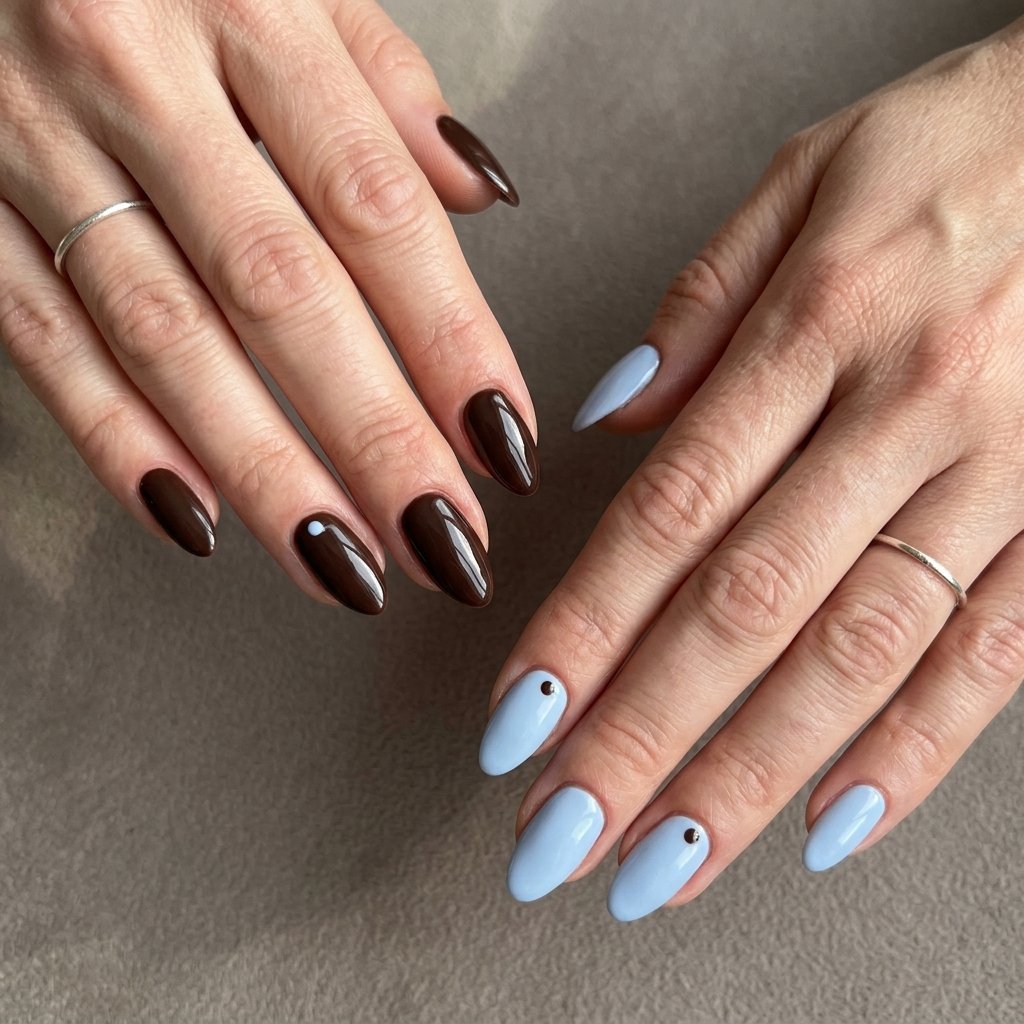
Sometimes you don’t need complicated nail art to make two colors interesting. A split-hand manicure lets the shades become the entire design by giving each hand its own dominant color.
Paint one hand in rich chocolate, cocoa, or espresso brown and the other in a contrasting blue. Baby blue creates a soft light-versus-dark effect, while navy gives the manicure a moodier and more sophisticated personality. Cobalt makes the contrast much more dramatic.
The trick is making the two hands look connected rather than accidental. One simple way is to add a tiny contrasting detail to each side. A blue micro-dot or thin line can appear on the brown hand, while the blue hand receives the same detail in chocolate.
Another option is to create one reversed accent nail on each hand. If your left hand is predominantly espresso, one finger could be completely blue. On the blue hand, repeat that finger in espresso. This small exchange visually ties the entire manicure together.
Shape and finish also help create cohesion. Keeping all ten nails the same length and using the same ultra-glossy top coat makes even dramatically different colors feel like part of one deliberate set.
This approach works especially well when you can’t decide which shade should dominate your manicure. Instead of choosing, you allow each color to have its own moment.
For anyone who wants brown and blue nails without detailed artwork, this is one of the easiest ways to make the combination feel intentional and modern.
Style Insight: Choose shades with noticeably different depths. Dark espresso against powder blue creates stronger visual impact than two medium-depth shades that may appear muddy together.
Who It Suits: Minimalists, indecisive color lovers, and anyone who prefers solid polish over detailed nail art.
When to Wear: Everyday styling, casual events, vacations, weekend outings, and whenever you want an easy manicure with an unexpected twist.
9. Brown and Blue Y2K Mixed-Pattern Nails
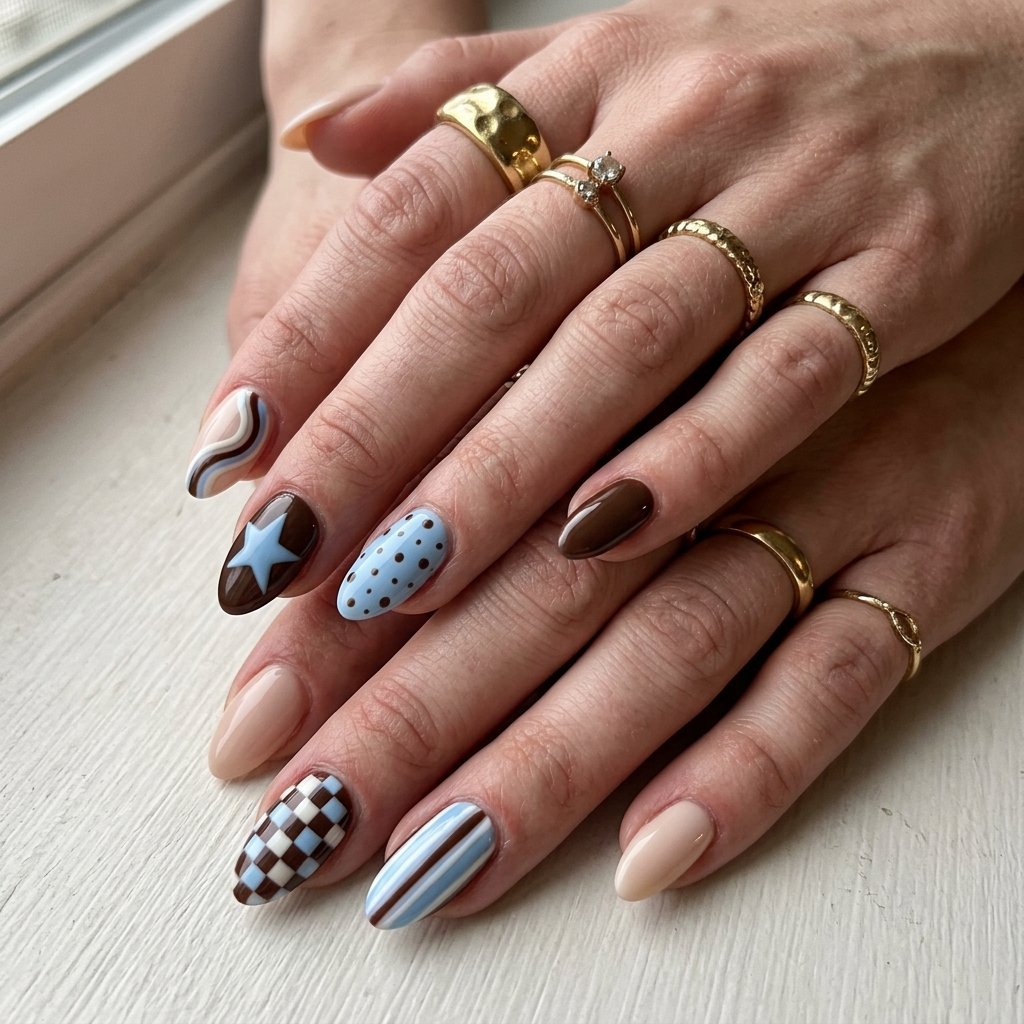
For a more playful take on the trend, mixed-pattern nail art brings Y2K energy into the brown-and-blue palette. Instead of repeating one design across all ten fingers, every nail can feature a slightly different detail while remaining connected through color.
Start with a palette of chocolate brown, creamy beige, and baby or powder blue. One nail might feature a tiny star, another a wavy checkerboard, another simple stripes, and another an abstract curved pattern. You could leave one or two nails solid to give the eye somewhere to rest.
Stars work especially well with this aesthetic. A chocolate base with a centered baby-blue star immediately feels nostalgic, while a nude nail covered with one or two irregular brown-and-blue curves gives the manicure the hand-painted quality associated with playful Y2K designs.
Checks and stripes can be incorporated without repeating the full checkerboard manicure from earlier. Think one tiny checked corner, a single vertical stripe, or a small grid rather than covering the entire nail.
The secret is controlling the palette. Mixed patterns can become chaotic when every finger introduces another color. Keeping everything within brown, blue, cream, and occasional nude negative space allows you to experiment with several motifs without losing cohesion.
Short square nails make the design feel especially nostalgic, while medium almond nails give it a softer modern update. Either shape works as long as the individual artwork remains proportional to the nail.
Style Insight: Don’t force every nail to contain both colors. Some can be mostly brown and others mostly blue, the repetition of the overall palette will still connect the manicure.
Who It Suits: Y2K lovers, creative personalities, and anyone who gets bored with identical nail art across every finger.
When to Wear: Concerts, birthdays, casual parties, vacations, festivals, and fun weekend plans.
10. Brown and Blue Glass-Effect Nails With Gold Details
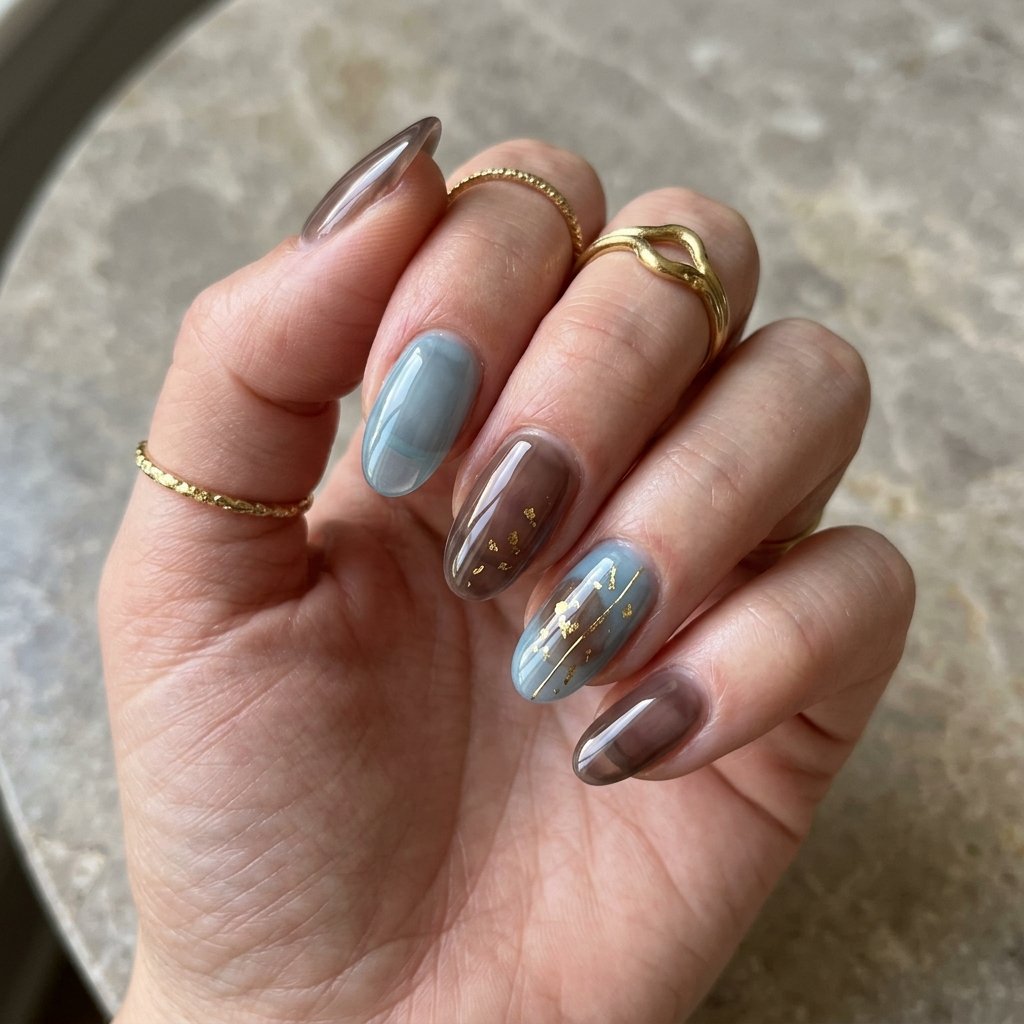
For the final design, take the palette in a more luxurious direction with translucent glass-effect color and delicate gold accents.
Instead of using fully opaque polish, choose sheer layers of smoky brown and transparent blue. Some nails can feature a translucent cocoa wash, while others carry a cool blue tint that allows light to pass through the color. The semi-transparent finish creates depth and makes the manicure look almost jewel-like.
Gold should be treated as a detail rather than a third dominant color. Add an ultra-thin metallic line around one edge, place a tiny piece of irregular gold foil near the cuticle, or use a delicate gold curve to separate brown and blue sections on an accent nail.
You can also combine both translucent shades on a single nail. A smoky brown base that gradually transitions into transparent blue creates a beautiful layered effect, especially when the colors overlap slightly in the center. Rather than blending them into a traditional ombré, keep enough separation that both shades remain recognizable.
The manicure works particularly well on almond and oval nails because the rounded silhouette reinforces the smooth, glass-like finish. A slightly longer length also gives the transparent layers more room to catch the light.
Among all the brown and blue nails in this collection, this design feels particularly suited to someone who wants something elegant without relying on crystals or heavy embellishment. The shine, transparency, and tiny flashes of gold provide enough luxury on their own.
Style Insight: Keep the gold extremely delicate. Thin foil or fine metallic lines complement the transparent finish better than chunky decorations.
Who It Suits: Anyone who loves sophisticated nail art, glossy finishes, and subtle luxury.
When to Wear: Weddings, elegant dinners, celebrations, date nights, holiday events, and special occasions.
Which Brown and Blue Nail Design Matches Your Energy?
One of the best things about this color combination is that it doesn’t belong to just one aesthetic.
If you normally gravitate toward classic manicures, chocolate with baby-blue French tips gives you a familiar silhouette with an unexpected color update. Minimalists can keep things understated with single-dot details, while mocha and navy color blocking brings a more structured, sophisticated finish.
For something playful, caramel and denim checkerboards or Y2K mixed patterns add personality without abandoning the central palette. Espresso and turquoise bring retro energy, while chocolate and cobalt create a much stronger fashion-forward statement.
Then there are the more artistic options. Tortoiseshell with blue aura details offers texture and depth, a split-hand manicure makes color itself the focus, and translucent glass-effect nails introduce a refined finish for special occasions.
The key is choosing shades that match the mood you want. Pale blue softens dark brown, navy adds sophistication to lighter mocha tones, turquoise creates a retro contrast, and cobalt turns chocolate into something much bolder.
There isn’t one correct way to wear brown and blue nails. That’s exactly what makes the combination worth experimenting with, you can make it quiet, playful, dramatic, retro, or luxurious simply by changing the shades and placement.
Frequently Asked Questions
Do brown and blue look good together on nails?
Yes. Brown usually brings warmth to a manicure, while blue provides cooler contrast. Pairing different depths can make the combination particularly effective—for example, dark chocolate with baby blue or lighter caramel with navy.
The two colors can also be adjusted to suit different styles. Muted shades create a softer result, while chocolate and cobalt offer much stronger contrast.
What blue looks best with brown nails?
It depends on the brown shade and the overall look you want. Baby blue works beautifully with chocolate, navy complements mocha and caramel, denim blue gives warm brown a relaxed feel, and turquoise creates an eye-catching contrast with espresso.
Cobalt is a strong choice when you want the manicure to feel bold and graphic rather than neutral.
What nail shapes work with brown and blue designs?
Almost every nail shape can work. Almond and oval nails provide more room for aura effects, French tips, and flowing graphic artwork. Square and squoval nails are particularly effective for checkerboards, geometric designs, and Y2K-inspired patterns.
Short natural nails can also carry the trend beautifully, especially with single dots, micro-French tips, solid colors, or simple color blocking.
Can I wear brown and blue nails on short nails?
Absolutely. You don’t need extra-long acrylics to make the color combination work. On shorter nails, simplify the artwork so the design doesn’t overwhelm the available space.
A powder-blue micro-French tip over chocolate, alternating solid shades, tiny dots, or a simple split-color manicure can all look polished on short nails.
Are brown and blue nails seasonal?
They can work throughout the year because both color families include such a wide range of shades. Espresso, chocolate, navy, and smoky blue naturally feel suited to fall and winter, while caramel, baby blue, turquoise, and faded denim can lighten the palette for spring and summer.
Rather than changing the entire color combination with the season, simply adjust the depth and finish of the shades.
Ready to Try Brown and Blue Nails?
Sometimes the most interesting manicures come from combining colors you wouldn’t automatically put together. Warm chocolate beside airy baby blue, sophisticated mocha against navy, caramel paired with faded denim, or dramatic espresso contrasted with turquoise can each create a completely different result.
And you don’t have to commit to elaborate nail art. A tiny dot, contrasting French tip, or split-hand manicure can make the pairing just as effective as checkerboards, tortoiseshell, graphic patterns, or translucent glass effects.
These brown and blue nails show just how versatile the combination can be, whether your personal style is minimal, retro, playful, artistic, or polished.
Save the designs that match your style, experiment with the brown and blue shades you already love, and take your favorite inspiration to your nail artist for your next appointment.
Hi, I’m Amber, the creator behind Dazzle Me Nails. I started this site because I’ve always believed nails aren’t just about beauty, they’re about confidence, self expression, and feeling put together in the simplest way. Like many of you, I’ve struggled with weak nails, chipped polish, and designs that looked good online but didn’t work in real life. That’s why I created Dazzle Me Nails to share nail ideas that are practical, wearable, and easy to recreate.
Here, you’ll find minimalist nail designs, trend inspired looks, and simple nail care tips to help you achieve clean, polished nails without over complicating your routine. If you love soft, classy, and effortless nail styles, you’re in the right place.