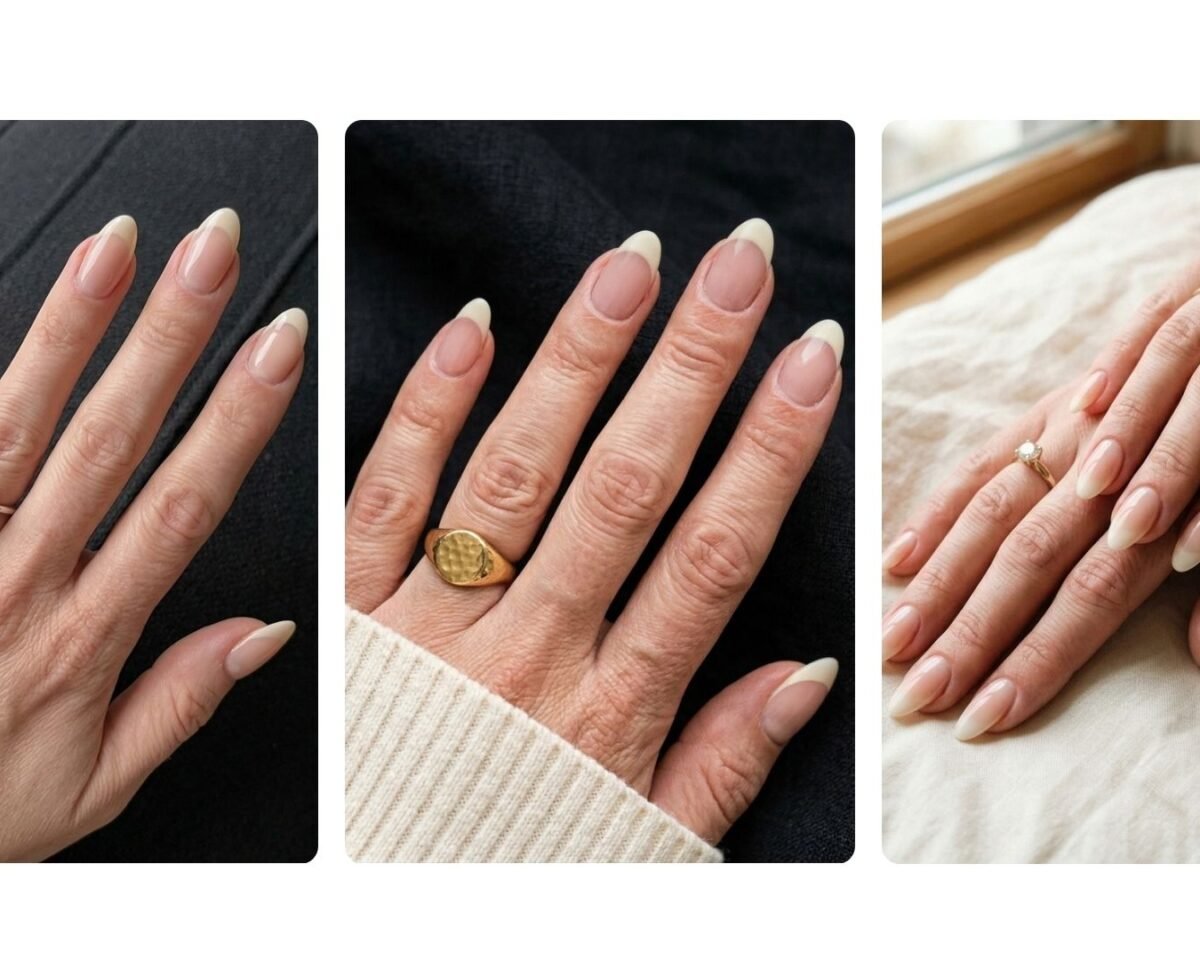
If you love the polished finish of French tips but sometimes find the bright white contrast a little too sharp, the American manicure might be exactly what you’re looking for. This understated nail style takes the familiar two-tone manicure and makes it softer, creamier, and much more natural-looking.
Instead of a stark white tip sitting against a noticeably pink base, an American manicure typically uses an ivory, creamy white, or off-white shade at the free edge of the nail. A sheer nude, beige, peach, or soft pink polish is then used to create a seamless finish that looks remarkably close to naturally beautiful nails.
That subtle difference is exactly what makes the style special. It doesn’t rely on crystals, complicated nail art, or dramatic colors to look polished. Instead, the focus is on healthy-looking color, carefully shaped nails, a soft tip, and an ultra-glossy finish.
So, what is American Manicure, how is it different from a French manicure, and what should you actually ask for when you visit your nail salon? Below, we’re breaking down everything you need to know about this timeless manicure, from its signature colors to the techniques that give it its beautifully blended appearance.
Why Is the American Manicure Getting Attention Again?
Beauty trends have moved through everything from ultra-minimalist manicures to chrome finishes and elaborate nail art, but natural-looking nails continue to have staying power. The American manicure fits perfectly into that space because it looks finished and intentional without appearing overly designed.
The effect is sometimes described as a “your nails but better” manicure. Your natural nail is still recognizable underneath the look, but the color appears more even, the free edge looks cleaner, and the entire manicure has a glossy, refined finish.
Another reason it works so well is versatility. You aren’t limited to one exact pink or one exact white. The base can be adjusted to complement different skin undertones, while the tip can range from a translucent ivory to a slightly warmer cream.
This makes the style useful for people who want something polished for work, weddings, everyday outfits, formal events, or simply a manicure that doesn’t compete with their clothes and jewelry.
If you’re recreating the look at home, a sheer nude nail polish that complements your skin undertone can help create that translucent wash of color without covering the natural appearance of the nail.
1. What Is American Manicure?
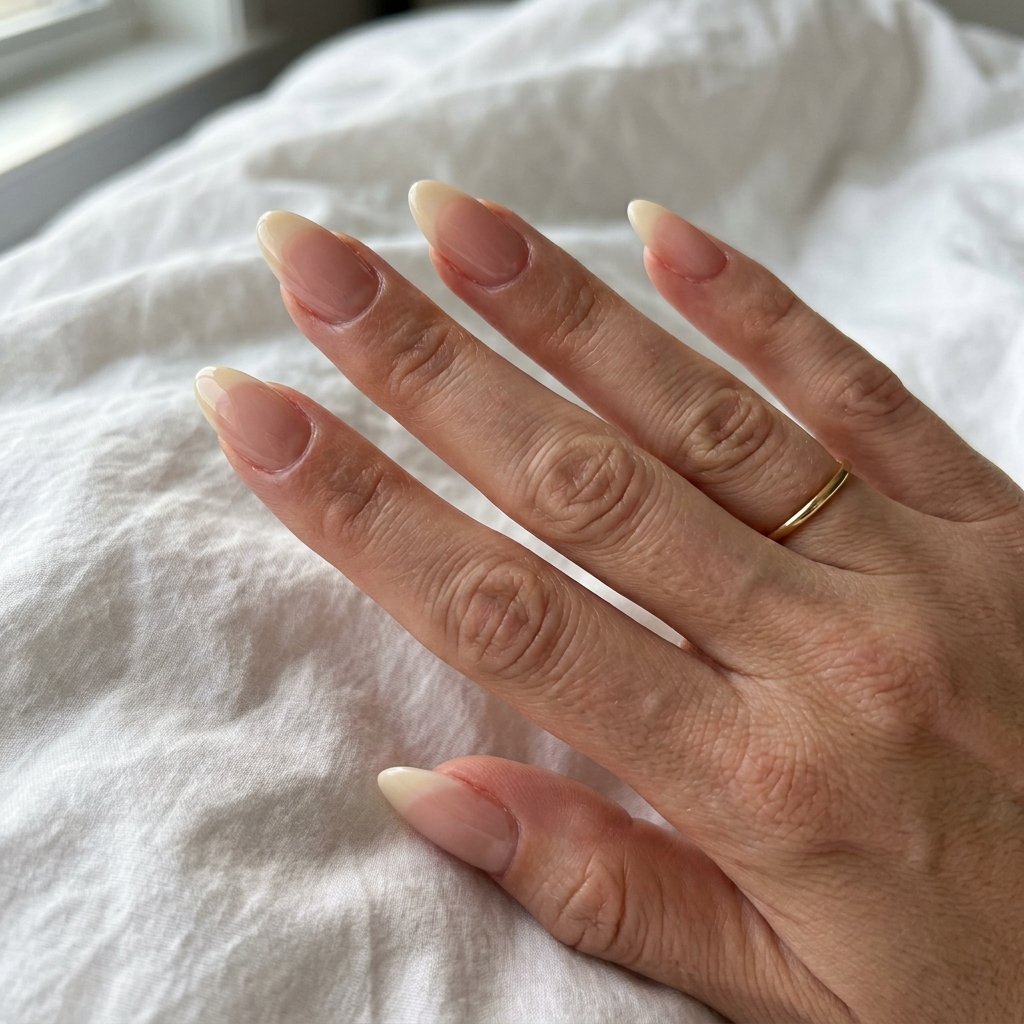
At its simplest, an American manicure is a natural-looking two-tone manicure featuring a soft off-white tip and a sheer neutral base. It shares the basic concept of a French manicure, but the colors are deliberately less contrasting.
The tip is usually painted in ivory, cream, milky white, or another softened white rather than an opaque bright white. The rest of the nail is finished with a sheer shade that resembles the wearer’s natural nail bed. Depending on the person’s complexion, that might mean a pinkish nude, warm beige, peach, or another translucent neutral.
One technique that makes the finished manicure particularly soft is applying the tip color first and then glazing a sheer neutral shade across the entire nail. Because that translucent color also covers the white edge, it slightly diffuses the line between the tip and nail bed.
The finished result should not look like someone simply painted a weaker French manicure. The goal is intentional softness. You should still be able to see the distinction between the nail bed and tip, but it shouldn’t create the bold graphic contrast associated with traditional French tips.
Style Insight: Think creamy, translucent, and blended rather than bright white and sharply defined.
Who It Suits: Anyone who prefers elegant nails that enhance the appearance of their natural nails instead of dramatically changing them.
When to Wear: Everyday outfits, work, weddings, interviews, formal occasions, vacations, or practically any setting where you want a clean manicure.
2. Where Did the American Manicure Come From?
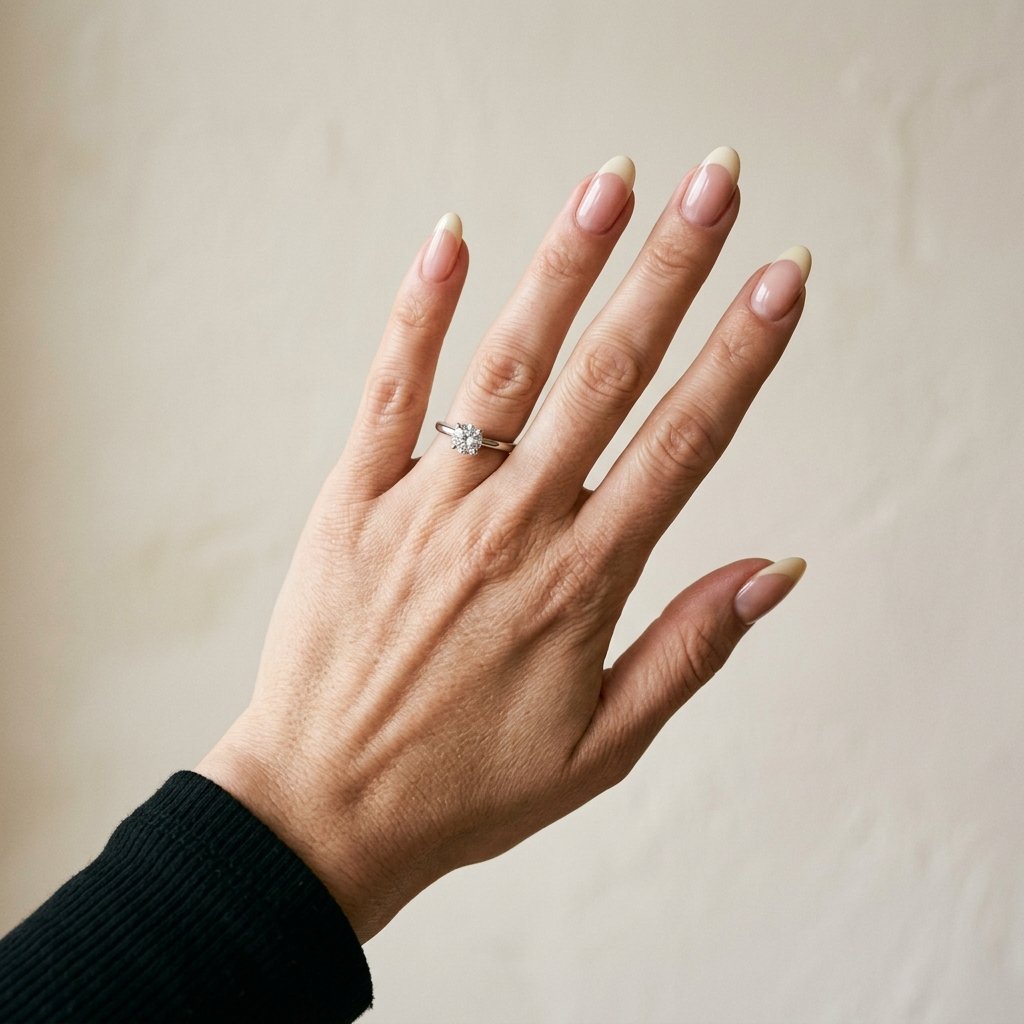
The history of this manicure is less straightforward than the name might suggest. It isn’t simply an American version of a French manicure created because people in the United States wanted different nail colors.
Modern beauty coverage frequently connects the style with celebrity manicurist Tom Bachik, who has discussed using softer nude and ivory combinations during editorial work in the 1990s. The idea was to create a polished two-tone manicure that appeared more natural and adaptable than the highly contrasted French look.
It’s worth treating that as part of the manicure’s commonly reported modern history rather than claiming that one person definitively invented every version of the style. Nail terminology evolves, and salons have not always used “American manicure” to describe precisely the same technique.
That helps explain why you may occasionally find conflicting descriptions. Some older interpretations use a clearer pink base and relatively white tip, while the version currently discussed across beauty publications usually emphasizes creamier tips, softer contrast, and a neutral overlay.
The modern interpretation is therefore less about nationality and more about the finished effect: refined, natural, and noticeably less graphic than a classic French manicure.
Style Insight: If you’re showing historical inspiration to your nail artist, focus on the finish you want rather than relying entirely on the manicure’s name.
Who It Suits: Nail lovers interested in classic styles that have been softened for a more contemporary aesthetic.
When to Wear: It’s especially good when you want a timeless manicure rather than something tied to one short-lived seasonal trend.
3. American Manicure vs. French Manicure: What’s the Difference?
This is where most of the confusion begins.
At first glance, the two manicures can look very similar. Both generally maintain a natural-looking base while defining the free edge of the nail. The difference becomes obvious once you look closely at color, contrast, and blending.
A traditional French manicure typically uses a clearly defined white tip. The white is often bright and opaque, creating an obvious separation from a sheer pink or nude nail bed. The smile line becomes an intentional part of the design.
An American manicure takes that contrast down several levels.
Instead of optic or bright white, the tip is commonly cream, ivory, soft white, or milky white. Rather than making the tip the strongest visual feature, the manicure tries to make it look like an enhanced version of the natural free edge.
The base color can also be more personalized. Instead of automatically reaching for pale pink, your nail technician can select a sheer nude that works with your skin’s undertone.
The application order can make another difference. Some nail artists paint the softened white tip and then apply a translucent neutral over the entire nail. That veil of color reduces the contrast even further.
So if you’re wondering what is American Manicure compared with French tips, remember this simple distinction:
French manicure = crisp and contrasted.
American manicure = soft and blended.
Neither approach is inherently better. They’re simply designed to create different visual effects.
If you want to soften your tips at home, consider a creamy ivory or soft-white nail polish for American-style tips rather than a highly opaque correction-fluid white.
Style Insight: Look at the tip first. A creamy, naturally blended edge is one of the easiest ways to distinguish this style from a classic French manicure.
Who It Suits: People who like French tips but want something less stark and easier to coordinate with everyday outfits.
When to Wear: Professional settings, minimalist outfits, bridal events, or whenever traditional bright French tips feel too defined for the look you’re creating.
4. The Colors That Create a True American Manicure
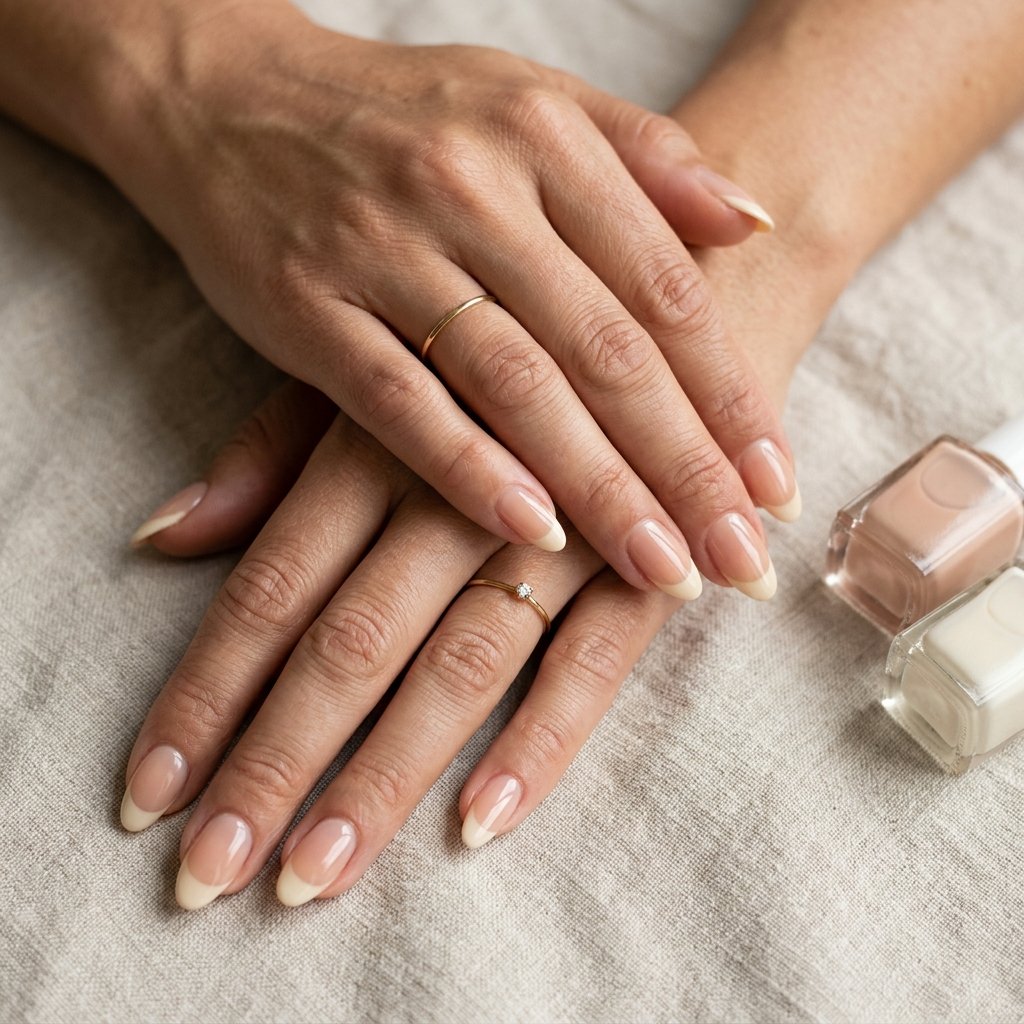
Color selection can completely change this manicure.
Because the design appears simple, there isn’t much room for the wrong shade to hide. A tip that’s too bright can immediately push the look toward a classic French manicure, while an overly opaque base can cover the subtle two-tone effect you’re trying to achieve.
For the tip, look toward:
- Cream
- Ivory
- Milky white
- Soft white
- Warm off-white
The base is where personalization becomes especially important. Rather than choosing a universal nude, consider how different translucent shades interact with your complexion.
A cool or rosy undertone may work beautifully with a sheer pink or pink-beige. Warmer complexions can often carry peach, beige, or warmer nude washes. Neutral undertones give you even more flexibility.
The important word here is sheer.
An opaque nude manicure creates a different effect because it hides much of the natural nail. With this style, the neutral color should usually behave more like a veil. It evens everything out while allowing some natural dimension to remain visible.
You can also adjust the depth of the base by adding another thin coat rather than starting with a heavy application. This gives you much better control over the final transparency.
For that reason, a buildable sheer pink, beige, or peach nail polish is more useful than a fully opaque nude when recreating the classic effect.
Style Insight: Choose your neutral according to your undertone instead of automatically using pale pink. Customizing the nude is one of the easiest ways to make the manicure look more natural.
Who It Suits: Everyone, the key is finding a tip and base combination that harmonizes with your natural nail bed and skin tone.
When to Wear: Year-round. Warmer beige and peach shades can look beautiful in warmer seasons, while milky pink and ivory combinations transition easily into cooler months.
5. Why the Tip Looks Softer Than a Traditional French Tip
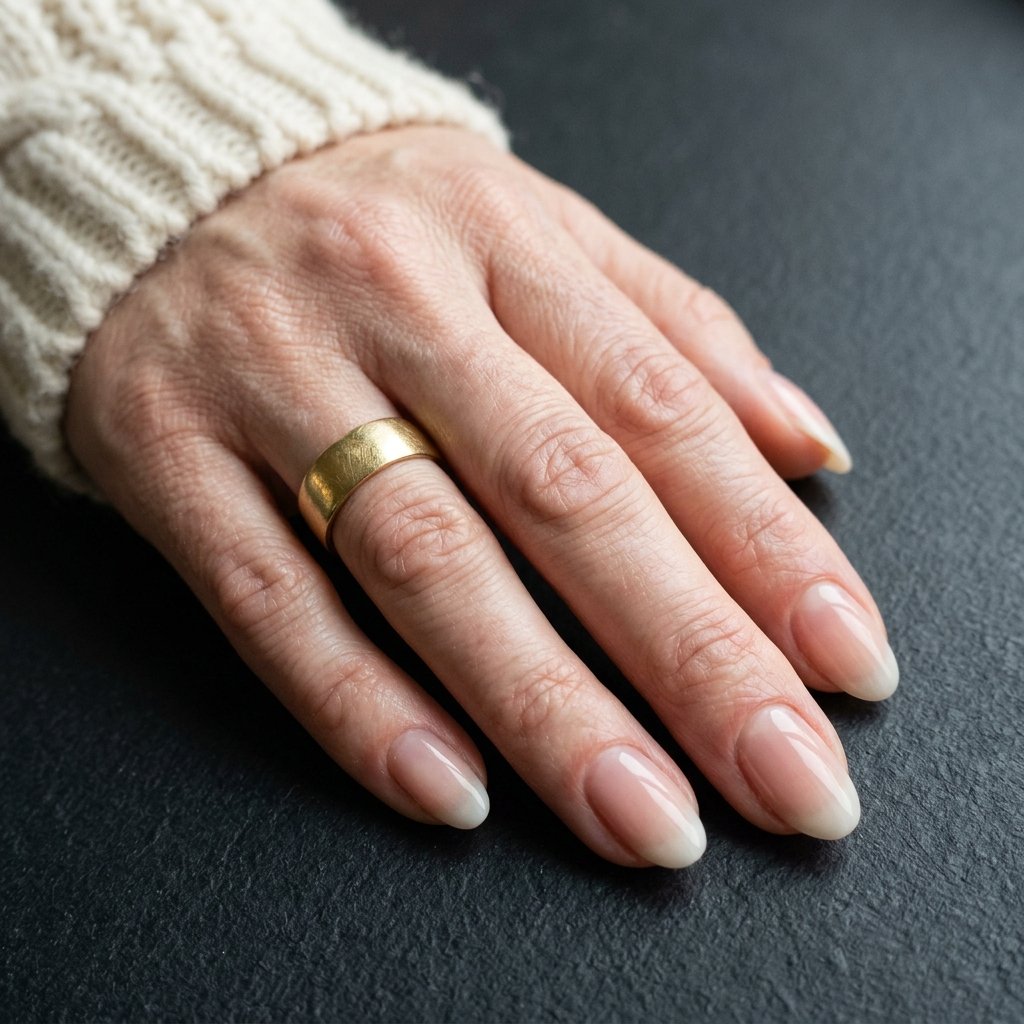
One of the most important things to understand when asking what is American Manicure is that its softness doesn’t come only from choosing a different white polish.
Technique matters too.
Imagine painting a crisp ivory line at the free edge and leaving it completely untouched. Even though ivory is softer than bright white, you’ll still have a clearly visible boundary.
Now imagine applying a translucent nude wash over the entire finished nail. The color doesn’t erase the ivory underneath, but it slightly filters it. The tip becomes less stark and the transition from nail bed to free edge looks smoother.
That’s the visual effect associated with many modern American manicures.
Your natural nail already contains subtle differences in color. The nail bed may appear pink or peach, while the free edge looks lighter. Those areas don’t usually resemble two completely separate blocks of color. A well-executed manicure mimics that natural relationship instead of exaggerating it.
The width and shape of the tip matter as well. A tip that follows the natural free edge generally looks more convincing than an excessively thick band of white. Your nail artist can adapt the line to the proportions of your nails rather than forcing every nail into an identical dramatic smile line.
For DIY manicures, a fine French manicure nail brush for controlled soft tips can make it easier to create a neat edge without making the white section unnecessarily thick.
Style Insight: Don’t chase perfect high contrast. A slight translucency and softness around the tip is part of what gives the manicure its natural character.
Who It Suits: Anyone who finds conventional French tips too bold or wants a manicure that visually blends into their natural nails.
When to Wear: Particularly useful for occasions where you want your nails to look immaculate in person and in photographs without becoming the strongest element of your overall look.
6. Choosing the Right Nude for Your Skin Undertone
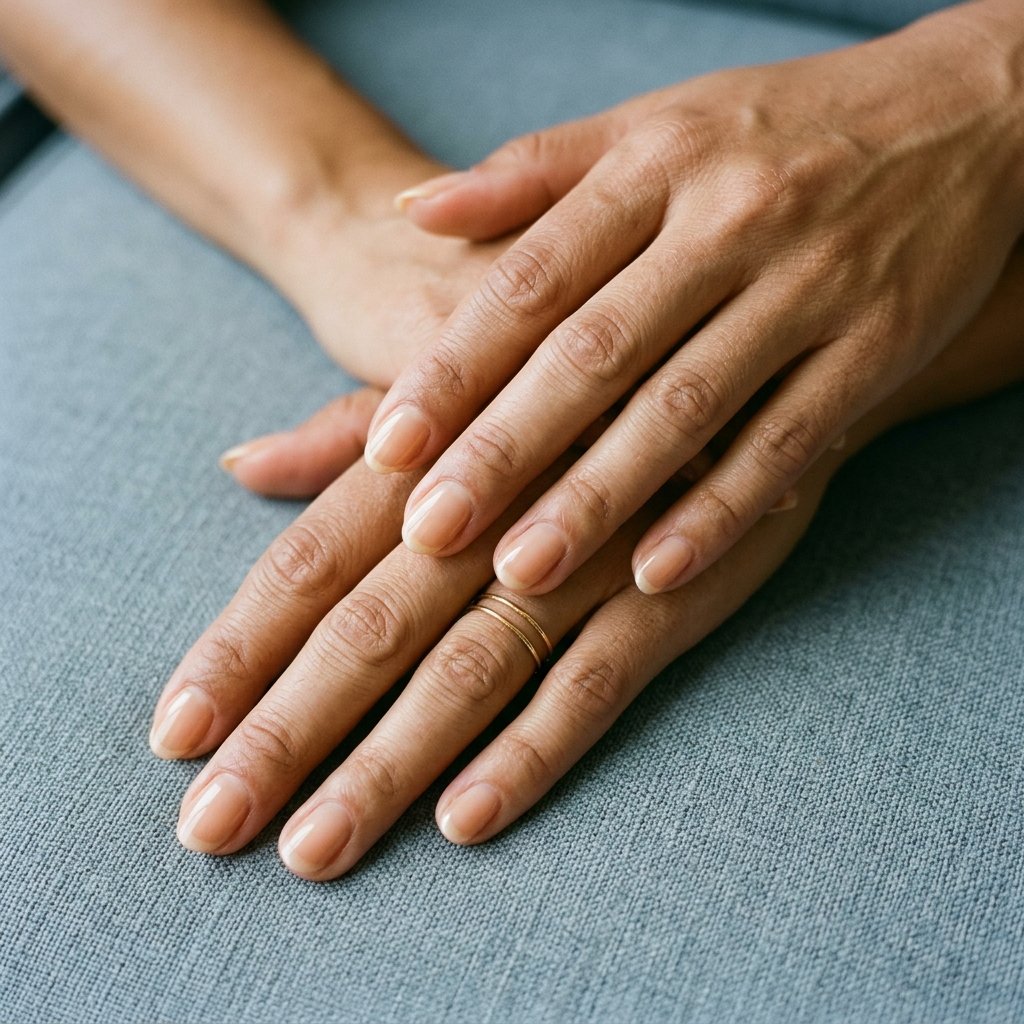
A nude manicure isn’t truly universal just because the bottle says “nude.”
Skin undertones can dramatically change the way a polish appears once it’s on your hands. A pale pink that looks beautifully neutral on one person might appear unusually cool or chalky on another. Similarly, a beige polish can look warm and seamless on one complexion but slightly gray against another.
That’s why the base of an American manicure is best treated as customizable.
For cool undertones, sheer rosy pinks, cool pink-beiges, and translucent blush shades can complement the natural coloring of the hands.
For warm undertones, peachy nude, warm beige, and softly honeyed neutrals can produce a more seamless transition.
For neutral undertones, both families can work, so you can choose according to how pink, beige, or peach you want the final manicure to appear.
You don’t necessarily need to perfectly “match” your skin. The goal is harmony. The polish sits on the nail plate, not the skin, so it should enhance the natural nail bed while still looking flattering beside your fingers.
Testing one thin coat before committing to the full manicure can be surprisingly useful. Sheer polish changes depending on the natural nail underneath it, so judging the color only from the bottle isn’t always accurate.
Style Insight: Look at the base color in natural daylight before deciding whether it’s right. Artificial salon lighting can alter the way subtle nude shades appear.
Who It Suits: This customization is especially helpful for anyone who has struggled to find nude polish that actually looks natural against their complexion.
When to Wear: Whenever you want the most personalized and seamless version of this manicure.
7. Best Nail Shapes and Lengths for an American Manicure
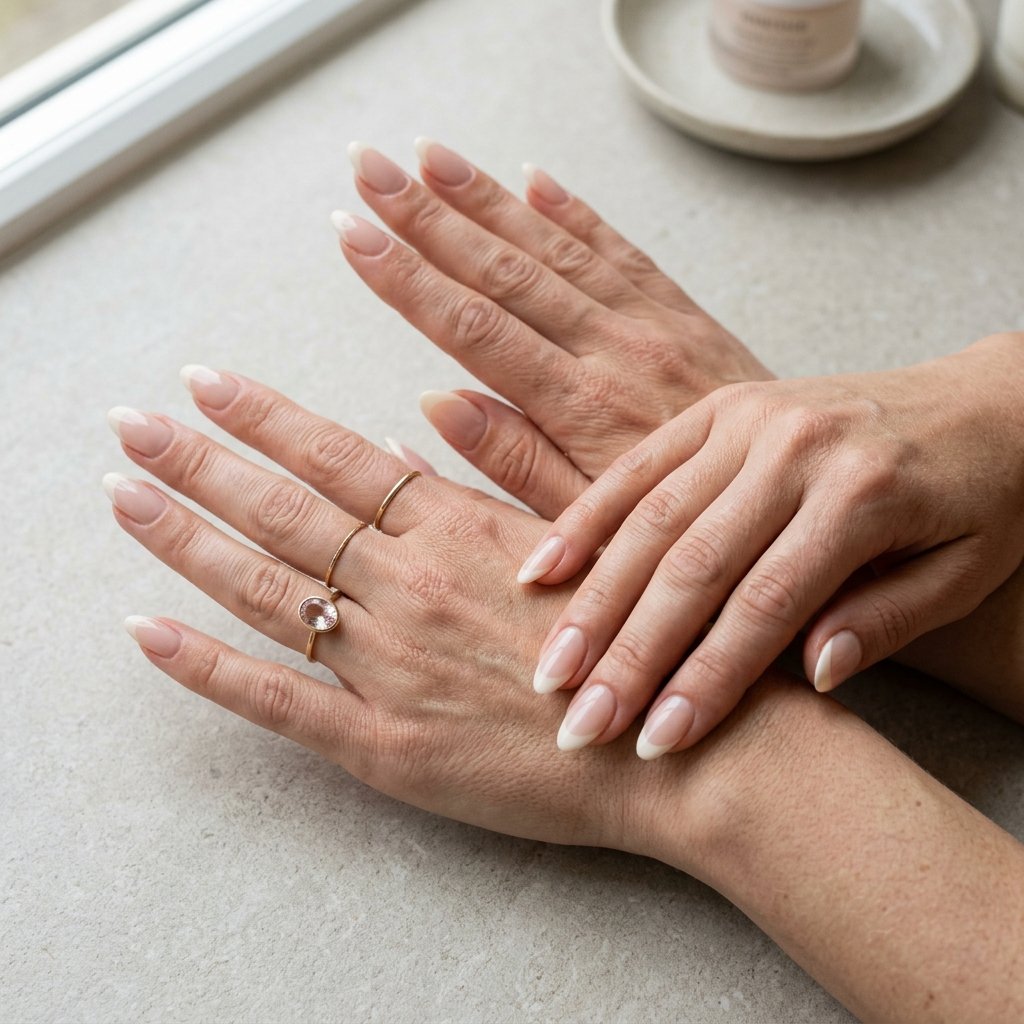
One of the biggest advantages of this style is that it doesn’t depend on extremely long nails.
Soft oval and squoval shapes are particularly effective because they reinforce the natural appearance of the manicure. Rounded edges complement the creamy tip instead of making it look overly graphic.
Short nails can also wear the look beautifully. In fact, a thin ivory edge on a neatly shaped short nail can make the manicure look exceptionally clean and understated.
Almond nails give the style a slightly more elongated, feminine appearance. The tapered shape creates more visual length while keeping the overall result elegant.
Square nails change the personality of the manicure. A straighter tip can give it a stronger late-’90s or Y2K salon aesthetic, especially when there’s enough length for the creamy edge to be clearly visible.
Long extensions are possible too, but proportion becomes important. If the tip is made excessively thick or bright, the manicure begins moving away from its natural character.
Rather than asking which shape is “correct,” think about what you want the manicure to communicate. Oval and squoval lean subtle, almond feels elegant, and square gives the same color palette a more noticeable retro edge.
Style Insight: Let the width of your tip follow the length of your nail. Shorter nails generally benefit from a finer edge, while longer nails can support slightly more visible cream coloring.
Who It Suits: Short, medium, and long nail wearers, the proportions simply need to be adjusted.
When to Wear: Short squoval versions work particularly well for everyday wear, while almond and longer square versions can make the manicure feel more occasion-ready.
8. How to Ask for an American Manicure at the Salon
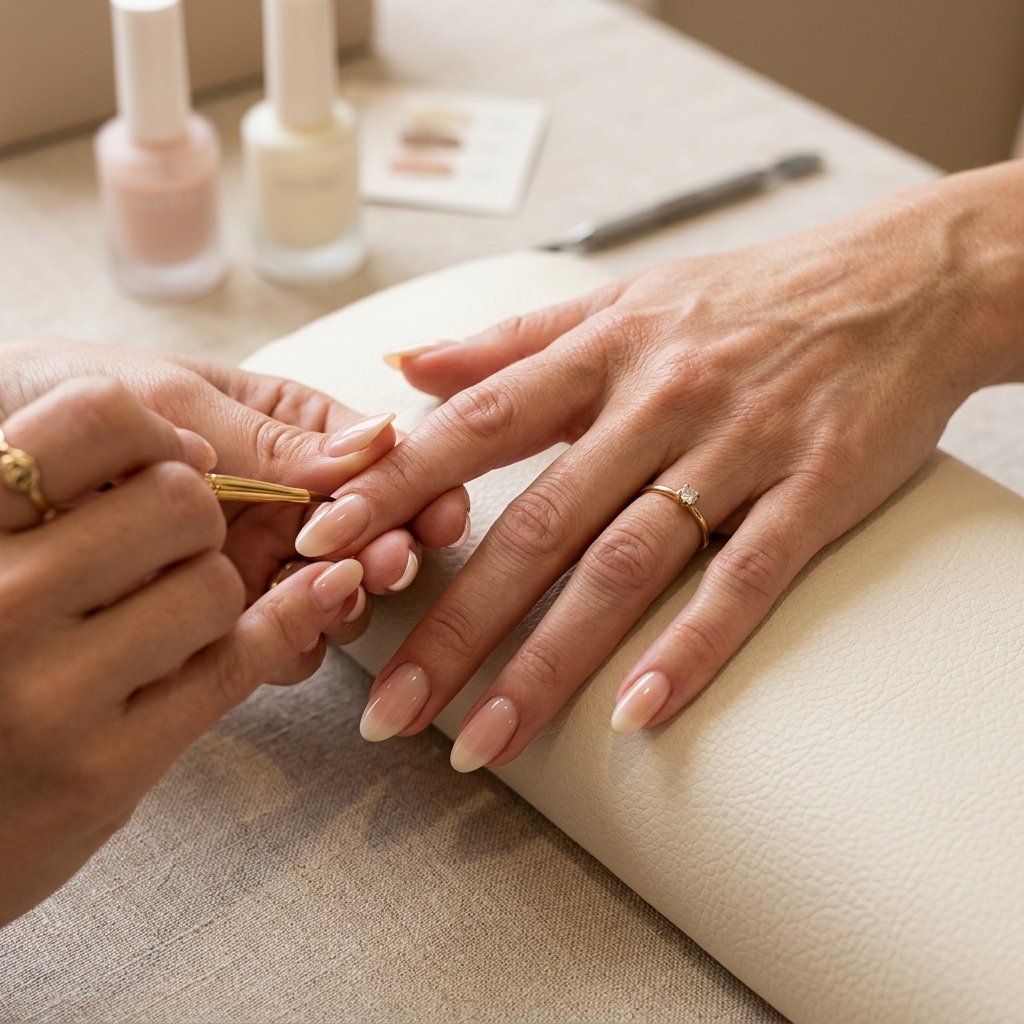
Walking into a salon and simply requesting an “American manicure” may not always produce the exact result you’re imagining.
That’s because nail terminology isn’t completely standardized. One technician may picture a creamy French-style manicure, while another may have learned a slightly different interpretation.
The easiest solution is a reference image.
Show your technician an example with the exact level of contrast you want and explain the details rather than relying solely on the name. Ask for a soft ivory or creamy white tip, not an opaque bright-white edge. Then request a sheer nude, beige, peach, or pink wash that works with your nail bed and complexion.
If you want the especially diffused modern finish, explain that you’d like the sheer neutral color glazed over the tip as well.
You can also discuss how visible you want the free edge to remain. Some people prefer a clearly recognizable two-tone effect, while others want the tip to almost melt into the rest of the nail.
A photograph communicates that difference instantly.
Style Insight: Save two or three reference photos showing the manicure in lighting similar to what you prefer. This gives your technician a much clearer visual target.
Who It Suits: Especially useful for first-time clients or anyone visiting a technician who hasn’t previously created this style for them.
When to Wear: Use this approach every time you’re trying a new salon or changing the shade, shape, or intensity of your usual manicure.
9. How to Do an American Manicure at Home
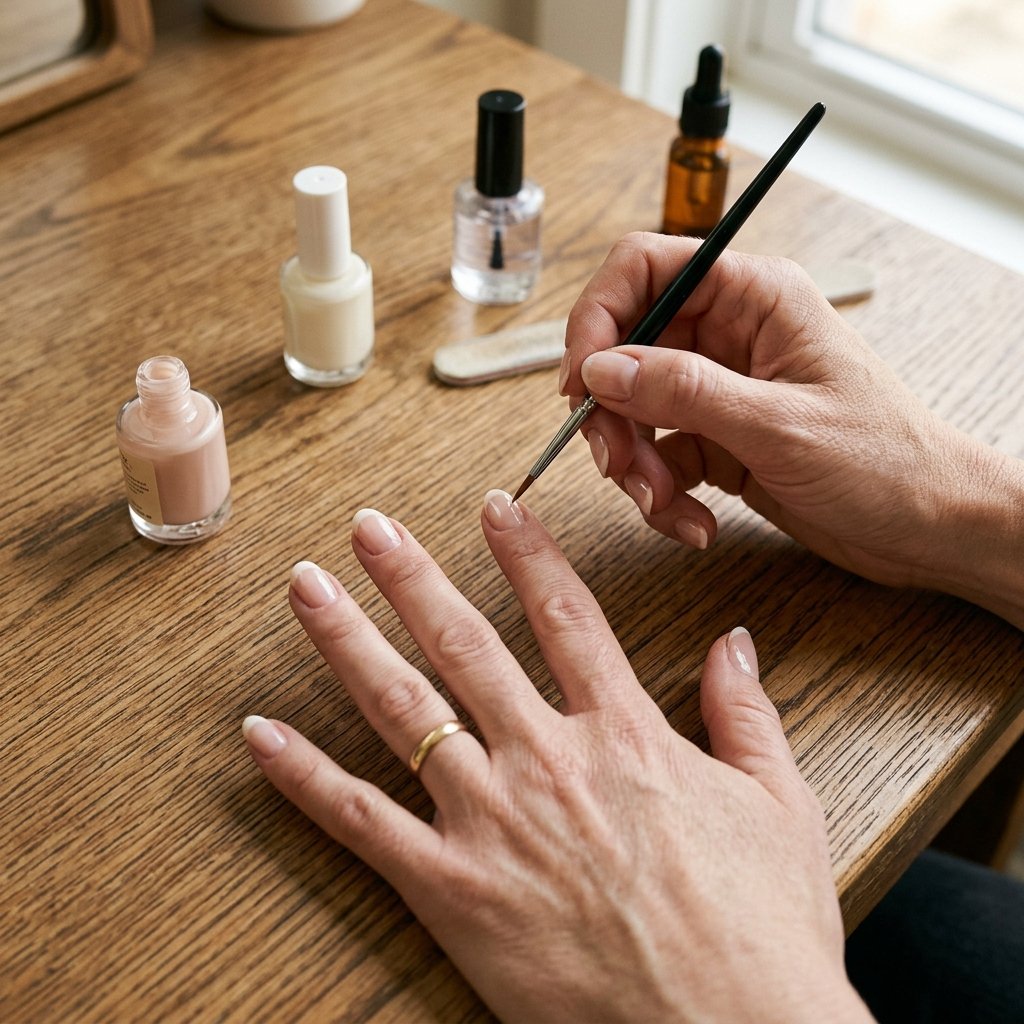
Once you understand the color layering, this is surprisingly achievable at home.
Start by removing old polish and preparing the nails. File them into your preferred shape, gently tidy the cuticle area, and make sure the nail plate is clean and free from excess oil.
Apply a thin base coat and allow it to settle.
Next comes the tip. Instead of reaching for the brightest white in your collection, choose a cream or ivory polish. Follow the natural free edge with a thin line. If freehand painting feels difficult, a fine nail-art brush can provide more control.
Allow the tip to dry sufficiently before adding the neutral layer. This matters because dragging a brush repeatedly over wet ivory polish can smear the edge.
Next, apply a thin coat of your chosen sheer nude across the entire nail, including the tip. Watch what happens to the contrast. The translucent neutral should soften the ivory without completely hiding it.
If you want slightly more coverage, add another very thin layer. Build slowly rather than applying one thick coat.
Finish with a glossy top coat to unify the layers and create that freshly polished salon effect.
Once everything is dry, apply nourishing cuticle oil for a finished salon-style manicure around the nail area. Hydrated cuticles can make a simple neutral manicure look significantly more polished because there isn’t elaborate nail art distracting from dry surrounding skin.
Style Insight: Thin layers are more important than speed. Heavy nude polish can make the manicure opaque, while thick tip polish can make the edge look raised.
Who It Suits: DIY nail lovers who enjoy classic manicures and don’t need elaborate nail-art techniques.
When to Wear: Ideal when you need a versatile at-home manicure that can transition from weekday outfits to weekend plans.
10. Modern Ways to Wear the American Manicure
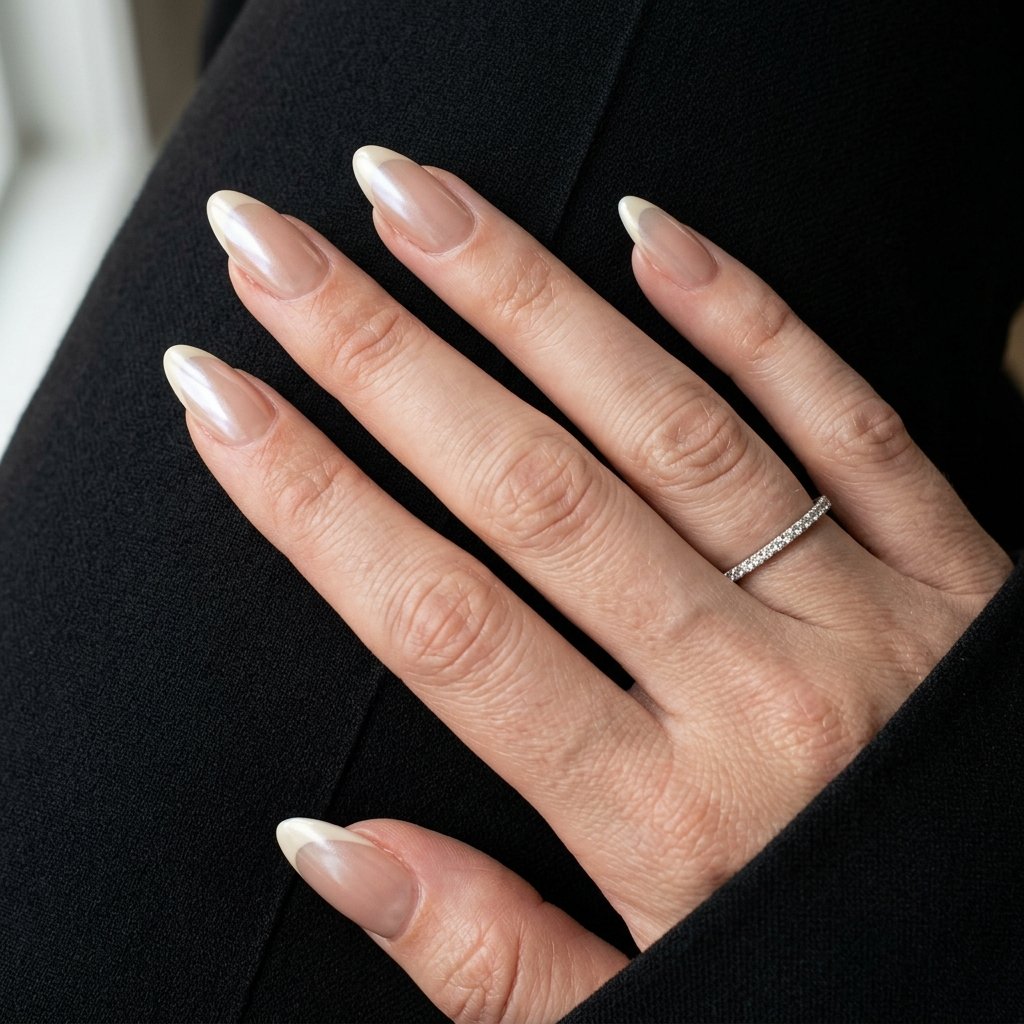
Understanding what is American Manicure doesn’t mean you have to reproduce one traditional version forever.
The core idea, natural base, softened tip, low contrast, can be interpreted in several contemporary ways while remaining recognizable.
A milky American manicure uses a slightly cloudier neutral overlay, giving the nails a soft-focus appearance. This works beautifully when you want more coverage without losing the two-tone design.
A glazed version adds a very fine pearlescent or chrome-like finish over the completed manicure. The key is restraint. The reflective layer should enhance the creamy colors underneath rather than turning the nails into full metallic chrome.
You can also experiment with warmer shades. A beige base and warm ivory tip can create a particularly seamless result on warm undertones.
For something even softer, the transition between the tip and nail bed can be gently diffused. This begins approaching an ombré effect but can still preserve enough definition to maintain the recognizable American-inspired finish.
Another option is simply changing the shape. A short squoval manicure feels clean and practical, while a medium almond version makes exactly the same colors look more elegant.
These subtle variations are useful because they preserve what makes the manicure distinctive instead of adding unrelated art simply for the sake of making it trendy.
Style Insight: Change one feature at a time, finish, shape, undertone, or level of blending, so the understated identity of the manicure remains intact.
Who It Suits: Anyone who likes the classic version but wants to personalize it without covering the nails in elaborate decoration.
When to Wear: Milky finishes are excellent for everyday looks, glazed versions work beautifully for celebrations, and softly blended interpretations can be especially elegant for bridal manicures.
Which American Manicure Style Matches Your Look?
One of the best things about this manicure is that you don’t need to change its basic identity to make it feel personal. Small adjustments to the base shade, tip color, nail shape, and finish can make the same technique look completely different from one person to another.
If you prefer a barely-there manicure, choose a sheer nude that closely complements your natural nail bed and pair it with a thin ivory tip. Keeping the nails short and softly rounded makes the finished look especially understated.
For something slightly more glamorous, try medium almond nails with a creamy tip and a high-gloss finish. The elongated shape adds elegance while the neutral colors prevent the manicure from feeling overly dramatic.
If you like a nostalgic salon aesthetic, a square shape with a slightly more visible cream tip can give the look a subtle late-’90s or early-2000s influence without recreating the stark white French tips associated with that era.
You can also adjust the finish. A classic glossy top coat keeps everything timeless, while a delicate pearlescent glaze can add light-catching dimension for weddings, parties, or other special occasions.
The most important thing is maintaining balance. The American manicure works because no single element overwhelms the others. The tip, base, shape, and finish should all contribute to the same soft and polished effect.
How to Keep Your American Manicure Looking Fresh
A subtle manicure may look effortless, but good maintenance makes a noticeable difference.
Because the colors are sheer, the overall manicure can be forgiving as your nails begin to grow. A nude shade close to your natural nail bed generally makes the gap near the cuticle less visually obvious than a dark or highly pigmented polish would.
Still, protecting the finish helps it remain polished for longer.
Try to avoid using your nails to open cans, scrape labels, or perform other tasks that place pressure on the free edge. Wearing gloves while washing dishes or using household cleaning products can also help protect both the manicure and the surrounding skin.
Cuticle care is particularly worthwhile with this style. Because there are no bold patterns or embellishments competing for attention, the overall condition of the nails and surrounding skin becomes more noticeable. Regularly applying cuticle oil and hand cream can keep the area looking smooth and cared for.
If you’re wearing traditional nail lacquer, a fresh layer of compatible top coat can help restore shine as the manicure begins to dull. Gel manicures require different care, so follow the instructions given by your nail professional rather than layering random products over the surface.
And when it’s time for removal, resist peeling or picking the product away. Proper removal helps protect the natural nail underneath, which is especially important for a manicure designed to celebrate a healthy, natural-looking appearance.
Is the American Manicure Worth Trying?
If you’ve been wondering what is American Manicure and whether it’s actually different enough from French tips to try, the answer comes down to the finish you prefer.
This isn’t the manicure for someone who wants their nail art to be visible from across the room. Its appeal comes from restraint.
The creamy tip provides just enough definition to make the free edge look clean, while the sheer neutral base helps the entire nail appear more even. Instead of creating a dramatic contrast, the two shades work together.
That makes the style particularly useful if you frequently switch between different outfits, jewelry, or occasions. A neutral manicure doesn’t demand that the rest of your look coordinate with a strong nail color.
It’s also an appealing option for people who like French manicures in theory but don’t love bright white tips on themselves.
Most importantly, it can be personalized. There isn’t one nude shade that everyone has to wear. Adjusting the base to your undertone can make the manicure look far more natural than using the same pale pink formula on every complexion.
The result is simple, but that simplicity is intentional.
Frequently Asked Questions
What is American Manicure in simple terms?
An American manicure is a softer, more natural-looking relative of the classic French manicure. It generally combines creamy or ivory-colored tips with a sheer nude, pink, beige, or peach base.
Rather than creating a sharp contrast between the tip and nail bed, the colors are chosen and layered to make the transition appear softer.
Some techniques involve applying the creamy tip first and then placing the sheer neutral shade over the entire nail. This slightly mutes the tip and helps create the characteristic blended appearance.
What is the main difference between an American and French manicure?
The biggest difference is contrast.
A classic French manicure usually features a clearly defined, bright white tip against a pale pink or nude base. The tip is intended to stand out.
An American manicure generally replaces that bright white with ivory, cream, or another softer white. The neutral base may also be selected specifically to complement the wearer’s natural coloring.
A sheer layer over the tip can further reduce the contrast, creating a more natural transition between the nail bed and free edge.
If you love the structure of French tips but want them to look less graphic, the American version offers a softer alternative.
Can you get an American manicure on short nails?
Yes. You don’t need long nails or extensions for this style.
On short nails, keeping the creamy tip relatively thin helps maintain balanced proportions. A thick band of white can make a short nail bed appear even shorter, whereas a delicate line following the natural free edge creates a cleaner effect.
Short oval and squoval nails are particularly well suited to the manicure because their softer shapes complement its understated appearance.
The design can also work on medium and long nails. The tip width simply needs to be adjusted according to the length and shape.
Can an American manicure be done with gel or acrylic?
Yes. The term describes the appearance of the manicure rather than one specific nail product.
You can create the look using traditional nail lacquer, gel polish, or over nail enhancements. Your choice should depend on the length you want, your usual nail routine, and how you prefer to maintain and remove your manicure.
Regular polish is convenient if you enjoy changing your nails frequently or want to recreate the look yourself.
Gel is often chosen when someone wants a cured salon manicure, while extensions can provide additional length or allow you to wear shapes that may be difficult to maintain on your natural nails.
Regardless of the system, the key visual features remain similar: a natural-looking base, a softened light tip, and relatively low contrast.
What should I ask for at the nail salon?
If you’re asking what is American Manicure because you’re planning your first salon appointment, don’t rely on the name alone.
Bring a clear reference image and describe the elements you like.
Ask for a sheer neutral base that complements your skin tone and nail bed, paired with an ivory, cream, or soft-white tip rather than an extremely bright white one. If you want the characteristic diffused appearance, explain that you prefer the tip to look softened rather than sharply contrasted.
You can also discuss tip width, nail shape, and finish before the technician begins.
If your reference image has an especially translucent base or a particularly subtle smile line, point those details out. Nail terminology can vary between salons, while a photograph gives your technician a much clearer idea of the result you’re expecting.
Ready to Try the American Manicure?
Now that you know what is American Manicure, it’s easy to see why this understated style continues to appeal to people who love polished, natural-looking nails.
It keeps the recognizable structure of French tips but changes the details that make traditional versions feel bold. Creamy ivory replaces stark white, sheer neutrals complement the natural nail bed, and softer layering reduces the contrast between the two.
The result can be customized for short or long nails, warm or cool undertones, and everything from soft oval shapes to elegant almond or structured square nails.
You can keep it completely classic with a glossy nude-and-ivory combination, make it softer with a milky overlay, or add a subtle pearlescent glaze when you want something a little more special.
Whichever version you choose, don’t focus on making every nail look artificially perfect. The charm of this manicure is its ability to make your own nails look refined, balanced, and naturally polished.
Save your favorite American manicure inspiration, take a reference photo to your nail artist, and choose the combination of creamy tips and sheer neutrals that looks most natural on your hands.
Hi, I’m Amber, the creator behind Dazzle Me Nails. I started this site because I’ve always believed nails aren’t just about beauty, they’re about confidence, self expression, and feeling put together in the simplest way. Like many of you, I’ve struggled with weak nails, chipped polish, and designs that looked good online but didn’t work in real life. That’s why I created Dazzle Me Nails to share nail ideas that are practical, wearable, and easy to recreate.
Here, you’ll find minimalist nail designs, trend inspired looks, and simple nail care tips to help you achieve clean, polished nails without over complicating your routine. If you love soft, classy, and effortless nail styles, you’re in the right place.